If you are searching for a 2026Upgrade 40W Foldable Solar Panel Charger review, the main question is simple: does this compact panel offer enough real-world utility to justify a spot in your travel or emergency kit?
Based on the listing evidence, the answer is yes for the right buyer, especially if portability and flexible device charging matter more than raw output.
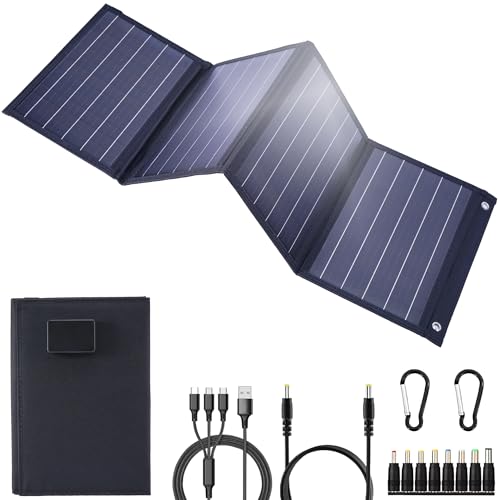
40W Foldable Panel Review Summary
The 2026Upgrade 40W Foldable Solar Panel Charger is aimed at people who want a lightweight, packable solar charger for outdoor use, temporary backup power, and emergency readiness.
It stands out most for its mix of USB-C, USB-A, and DC output options, its foldable form factor, and the manufacturer’s efficiency and weather-resistance claims.
It looks best suited to campers, hikers, road trippers, and preparedness-minded buyers who need a portable charging tool, not a storage battery.
Review Scorecard
| Category | Score | Rationale |
|---|---|---|
| Portability | 9/10 | The panel folds down to a small footprint and the listed weight is just 1.65 pounds, which is strong for a travel-first charger. |
| Charging flexibility | 8/10 | USB-C, USB-A, and 12V DC outputs give it broader device compatibility than a single-port panel. |
| Outdoor readiness | 8/10 | IP67 construction and ETFE lamination are positioned for harsher environments, though the junction box is not fully waterproof. |
| Power utility | 7/10 | The 40W class and MPPT claim are useful for small devices and some power stations, but it is still a compact panel, not a large generator substitute. |
| Ease of use | 8/10 | Hanging holes and a foldable layout suggest simple setup in camp, on a pack, or near a tent. |
| Safety and control | 8/10 | The listing claims overcurrent, overvoltage, overheating, and short-circuit protection, which is important for a direct-charge accessory. |
| Value for preparedness | 8/10 | It is a focused utility item for travel and backup kits, especially for buyers who want solar charging without bulk. |
Key Features and Specifications of 40W Foldable Panel
The strongest reason to consider this 2026Upgrade 40W Foldable Solar Panel Charger is the combination of compact size and practical output options.
The listing describes it as a foldable charger with QC3.0 USB-A, PD2.0 USB-C, and a 12V DC port, so it is meant to serve phones, tablets, power banks, GPS units, laptops, and some power stations.
That is a wider use case than many small solar panels that focus on a single phone-first output.
The manufacturer also emphasizes a Maximum Power Point Tracking controller and high conversion claims.
Those claims matter most because direct solar charging can be inconsistent when sunlight shifts, clouds move, or your setup is not perfectly aimed.
The listing says the charger can auto-detect devices and optimize current output, which should help it behave more intelligently than a basic no-controller panel.
Useful published details include:
- 40W solar charger in a foldable design
- USB-C output up to 18W
- USB-A output up to 27W
- 12V DC output up to 40W
- 25% claimed solar conversion efficiency
- IP67 dustproof and waterproof structure
- ETFE laminated coating
- Listed weight of 1.65 pounds
- Folded size of about 7.8 x 10.9 inches
- Reinforced metal hanging holes for mounting
- Listed protection against overcurrent, overvoltage, overheating, and short circuits
One important limitation is also stated clearly in the product data: this is an instantaneous energy conversion device with no energy storage.
In plain terms, it is a solar panel, not a battery pack.
That distinction matters a lot when deciding whether it fits your gear.
Pros and Cons of 40W Foldable Panel
Pros
- Very portable for a solar charger. The listed weight and foldable footprint make it easier to carry than bulkier campsite power gear.
- Multiple output types. USB-C, USB-A, and DC support broad the range of gear you can try to charge.
- Preparedness-friendly design. The combination of solar input, protection features, and hanging holes fits emergency kits well.
- Weather-oriented build. IP67 claims and ETFE coating point toward better outdoor durability than bare-bones panels.
- MPPT-based charging approach. The listing suggests smarter power management than simple direct-output panels.
Cons
- No built-in storage. You still need a device or battery to absorb power, so it is not a self-contained energy source.
- Performance depends heavily on sunlight. The listing itself notes that shade, angle, and weather materially affect charging.
- Not a heavy-duty replacement for larger solar gear. Buyers expecting to run larger appliances should look at bigger panels or a full power station setup.
- The junction box has a limitation. The product data says it is not completely waterproof and should be stored indoors during heavy rain.
Who Should Buy 40W Foldable Panel?
This 2026Upgrade 40W Foldable Solar Panel Charger makes the most sense for people who want a compact charging companion for outdoor travel, not a standalone off-grid power system.
If you camp lightly, take long road trips, fish, hike, or keep a preparedness bag ready, the size and output mix are aligned with that use.
It also fits buyers who want a solar option for small electronics and power banks without carrying a large rigid panel.
The presence of a DC port is a plus for people who already own compatible portable power stations and want a more flexible charging source.
You should probably skip it if you need reliable charging independent of weather, if you want to power demanding household devices, or if you dislike the uncertainty that comes with direct solar charging.
This is best viewed as a compact field charger, not a substitute for stored power.
Solar Charging Fit and Real-World Use
Portability First
The most compelling part of this panel is its travel profile.
At 1.65 pounds and with a folded size small enough to pack easily, it is designed for users who care about carry weight and storage more than panel acreage.
That makes it more realistic for backpacks, vehicle kits, and emergency storage than for permanent installations.
Output Flexibility
The mix of USB-C, USB-A, and DC outputs is the main practical advantage.
It lets the 2026Upgrade 40W Foldable Solar Panel Charger cover a wider range of common devices and accessories without forcing the buyer into a single charging standard.
The listing’s support for phones, tablets, power banks, GPS units, laptops, and some power stations gives it broader utility than a phone-only solar mat.
Efficiency and Sunlight Dependence
The product page emphasizes 25% conversion efficiency and MPPT optimization, which are the right kinds of features to look for in a portable solar charger.
Still, the listing also makes clear that direct sunlight, angle, and obstruction control the outcome.
That means the panel’s value depends less on spec-sheet excitement and more on whether you can place it in clean, unobstructed sun.
Durability for the Trail
The IP67 claim, ETFE coating, and reinforced hanging holes make this look built for field use rather than desk use.
At the same time, the note about the junction box not being fully waterproof is a useful reminder that buyers should treat it as weather-resistant gear, not something to leave exposed through severe rain.
Alternatives to 40W Foldable Panel
If you want a similar portable solar charger, look at the Anker Solix solar panel for a more established portable-power ecosystem.
If you want a compact panel from a widely sold solar accessory brand, the Jackery SolarSaga line is a common comparison point for camping and backup use.
If you want something from another mainstream portable-power maker, the BLUETTI solar panel range is worth checking for power-station compatibility.
If you want a more affordable solar-charging category to compare against, search for portable foldable solar panel options with similar wattage and port layouts.
Is 40W Foldable Panel Worth It?
The 2026Upgrade 40W Foldable Solar Panel Charger is worth considering if your priority is a light, foldable solar charger with multiple output types for travel, camping, and emergency kits.
Its strongest case is convenience: easy to carry, broadly compatible, and purpose-built for direct solar charging.
It is less compelling if you expect stored power, fast all-day reliability, or performance that is independent of weather.
For buyers who understand those limits, this is a sensible portable solar accessory rather than a full power solution.