If you need clean, consistent seals for frequent packaging jobs, the right machine can save time, reduce waste, and improve product presentation.
This roundup of bag sealing machines for large batches focuses on practical options for faster workflows, reliable seals, and the right fit for different bag types and materials.
Best 10 Bag Sealing Machines for Large Batches Picks for 2026
High-Volume Continuous Sealer
U.S. SOLID Continuous Bag Band Sealer

- Runs at 0-12 m/min for steady batch sealing
- Digital temperature control and counter support repeat work
- Can print dates, remarks, or logos while sealing
Best For: Semi-automatic batch sealing with counting and stamp coding
Automatic Batch Band Sealer
FR-900 Automatic Continuous Bag Sealer
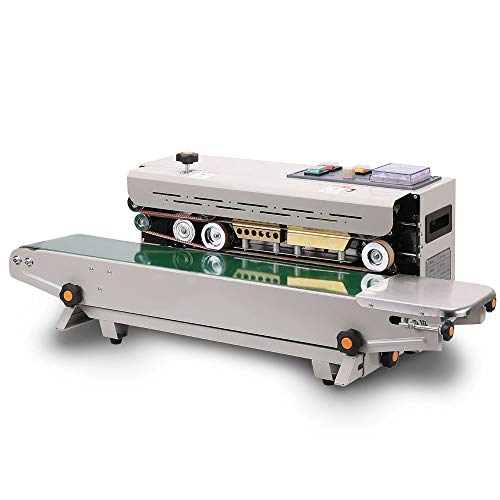
- Automatic conveyor keeps large batches moving
- Seals bags up to 0.08 mm thick at 0-12 m/min
- Can emboss and print dates, remarks, or times
Best For: Automatic continuous sealing for higher-volume packaging
Heavy-Duty Manual Sealer
16 Inch Mylar Bag Heat Sealer with Extras

- 16-inch manual sealer with 8 heat/timer levels
- Includes replacement parts, cutter wires, and Teflon cloth
- Metal body and extended cord support regular use
Best For: Manual sealing with upgraded accessories and versatility
High-Volume Continuous Sealing
VEVOR 600W Band Sealer with Digital Control

- 600W automatic band sealer for steady batch work
- Adjustable 6-12 mm seal width for varied bags
- Includes belts and accessories for maintenance support
Best For: busy packaging jobs that need faster, repeatable sealing
Budget Manual Sealing
12 Inch Impulse Sealer with Extra Element
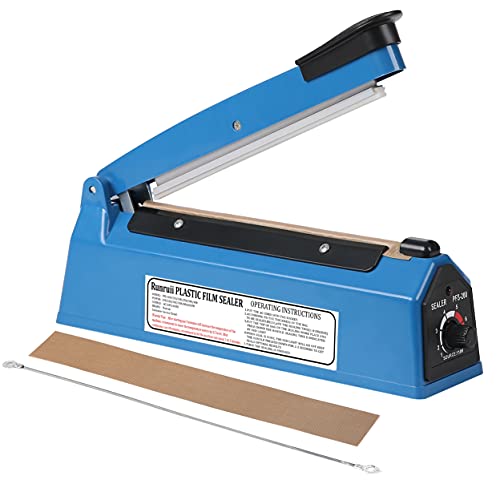
- Instant-use manual sealer with no warm-up time
- 8 temperature settings for different bag materials
- Lightweight design with extra replacement element grip
Best For: light-duty batch sealing where simplicity and low cost matter
Production-Focused Band Sealing

- 750W automatic sealer for higher-output batch work
- Adjustable 6-12 mm seal width for flexibility
- Includes 20 Teflon belts and accessory kit
Best For: dedicated packaging lines that need stronger continuous sealing
Compact Manual Option
METRONIC 8 Inch Manual Heat Sealer

- No warm-up time for quick starts
- Adjustable temperature for different bags
- Durable iron build with copper coil
Best For: Small businesses and home packaging tasks
Best for Large Batches
FRC-520 Automatic Continuous Bag Sealer

- Automatic sealing with conveyor feeding
- Up to 16 m/min output speed
- Digital temp control up to 300°C
Best For: High-volume packaging and continuous workflows
Wide Manual Sealing Bar
16 Inch Impulse Sealer with Repair Kit

- 16-inch seal length for larger bags
- 8 timer levels for material control
- Includes spare sealing and cutting wires
Best For: Moderate batch sealing with longer bag openings
High-Volume Continuous Sealer – U.S. SOLID Continuous Bag Band Sealer
If you need bag sealing machines for large batches, this U.S. SOLID continuous band sealer is built for steady throughput. It runs at an adjustable 0-12 m/min, uses digital temperature control, and can print dates, remarks, or a logo while sealing, which helps keep repetitive packing organized.
Best For: Semi-automatic batch sealing where speed, counting, and stamp coding matter.
Pros:
- Continuous sealing design supports ongoing packing runs.
- Digital temperature control and adjustable speed help match different materials.
- Counter function is useful when tracking packed bags in batches.
- Embossing/type wheel can print dates, comments, and logos during sealing.
Cons:
- Maximum bag thickness is limited to the specified range in the notes.
- Semi-automatic operation may be less convenient than fully automated systems.
- Heavier metal construction may be less portable for small workspaces.
For repetitive production work, this is a practical continuous sealer with helpful batch-friendly features. The combination of speed control, counting, and print coding makes it a strong fit when consistency matters more than portability.
Simple Manual Heat Sealer – Jinhong 16 Inch Impulse Heat Sealer
For smaller-scale bag sealing machines for large batches, this 16-inch impulse sealer keeps the process simple and controlled. It uses an electronic circuit to manage heat and timing automatically, so once you set the knob for the bag thickness, you can seal PE, PP, Mylar, foil, and other compatible bags with a quick press.
Best For: Basic manual sealing jobs in food service, retail, and small workshops.
Pros:
- 16-inch sealing length handles a wide range of bag sizes.
- No warm-up time needed, which helps keep sealing moving.
- Works with many common bag types, including PE, PP, Mylar, and foil.
- Automatic power-off behavior helps simplify operation.
Cons:
- Manual handle operation is slower than continuous sealing systems.
- Best suited to smaller-scale workflows rather than high-speed production lines.
- Requires knob adjustment for different bag thicknesses.
This model makes sense when you want a straightforward sealer that is easy to use and versatile across materials. It is a solid pick for businesses that need dependable sealing without stepping up to an automated machine.
Automatic Batch Band Sealer – FR-900 Automatic Continuous Bag Sealer
This FR-900 is a strong fit for bag sealing machines for large batches because it is built for continuous, automatic sealing. It supports bags up to 0.08 mm thick, uses constant temperature control, and can run at 0-12 m/min while printing dates or remarks as it seals.
Best For: Automatic continuous sealing for bags of varied sizes and production volume.
Pros:
- Automatic continuous conveying helps keep batches moving.
- Adjustable sealing speed up to 0-12 m/min supports different workflows.
- Can handle composite films, aluminum foil bags, kraft paper, and plastic bags.
- Embossing system adds sealing patterns and print capability.
Cons:
- Bag weight is limited to the stated maximum.
- More machine-like setup than a simple tabletop heat sealer.
- Best suited to users who need regular batch sealing rather than occasional use.
If you want an automatic sealer for repetitive production, this model offers the right mix of speed, material flexibility, and print functionality. It is especially appealing for operations that value consistent sealing across many bags.
Heavy-Duty Manual Sealer – 16 Inch Mylar Bag Heat Sealer with Extras
If you are comparing bag sealing machines for large batches, this 16-inch impulse sealer is a practical manual option with a few useful upgrades. It offers an 8-level adjustable timer, a metal body, and a 16-foot Teflon heat-resistant cloth strip, making it easier to handle common sealing jobs across food and general goods.
Best For: Manual sealing of assorted retail and food bags with extra replacement parts included.
Pros:
- 16-inch seal length gives flexibility for different bag sizes.
- 8 adjustable timer levels help match different materials and thicknesses.
- Includes extra replacement parts and two round cutter wires.
- Metal body and extended power cord improve everyday usability.
Cons:
- Manual operation is slower than continuous band sealers.
- Best for sealing, not high-speed automated production.
- Cutting feature requires the included replacement parts.
This sealer is a sensible choice when you want a sturdy tabletop tool with better accessories than a basic entry-level model. It is most useful for users who need reliable manual sealing across a variety of bag types and materials.
High-Volume Continuous Sealing – VEVOR 600W Band Sealer with Digital Control
If you need bag sealing machines for large batches, this VEVOR continuous band sealer is built for steady output. With 600W power, adjustable 6-12 mm seal width, and speeds up to 0-16 m/min, it is aimed at repetitive plastic bag and film sealing where consistency matters.
Best For: Small shops or production setups that want a fast, automatic band sealer for high-volume plastic bags and films.
Pros:
- 600W motor supports stable, efficient sealing for long runs.
- Adjustable seal width from 6-12 mm adds packaging flexibility.
- Digital temperature control and panel controls make setup more straightforward.
- Includes belts, fuse, and accessories to support ongoing use.
Cons:
- Designed for plastic bags and films within 0.02-0.8 mm thickness.
- At 21.7 pounds, it is not the lightest option to move around.
- May be more machine than needed for low-volume or occasional sealing.
This model is a strong fit when throughput and repeatability matter more than portability. Its accessory package and adjustable settings help reduce downtime in busy sealing workflows.
Budget Manual Sealing – 12 Inch Impulse Sealer with Extra Element
For bag sealing machines for large batches on a tighter budget, this 12-inch impulse sealer offers a simple manual approach. It has no warm-up time, 8 temperature settings, and a press-and-hold sealing process that works well for PE and PP bags.
Best For: Stores, home operations, and light industrial use that need a manual sealer for steady but lower-cost batch sealing.
Pros:
- No warm-up time, so it can be used immediately.
- 8 temperature levels help match different bag materials.
- Lightweight 3.5-pound design is easy to handle and store.
- Includes an extra replacement element grip for added convenience.
Cons:
- Manual operation is slower than an automatic band sealer.
- It cannot cut bags.
- Best suited to specific plastic bag types like PE and PP.
This is a practical pick when you want a straightforward sealer without the footprint or complexity of a continuous machine. It is better for controlled batch work than for maximum-speed production.
Production-Focused Band Sealing – VEVOR 750W Continuous Sealer
This VEVOR continuous band sealer is another strong option for bag sealing machines for large batches, especially when you want more power behind the process. With 750W output, automatic operation, and speeds up to 0-16 m/min, it is built for consistent sealing across plastic bags and films.
Best For: Higher-output packaging lines that need an automatic continuous sealer with a heavier-duty build.
Pros:
- 750W power supports fast, stable sealing for repetitive jobs.
- Automatic operation and panel controls simplify batch processing.
- Adjustable 6-12 mm seal width suits different packaging needs.
- Includes 20 Teflon belts and accessory kit for maintenance support.
Cons:
- Weighs 40.3 pounds, so it is less portable than manual sealers.
- Built for 0.02-0.8 mm plastic bags and films, which narrows material range.
- May be overkill for occasional or small-volume sealing tasks.
If you want a machine geared toward sustained batch sealing, this model emphasizes output and support accessories. Its heavier construction and higher wattage make it a better fit for dedicated packaging workflows.
Compact Manual Option – METRONIC 8 Inch Manual Heat Sealer
If you’re comparing bag sealing machines for large batches, this 8-inch impulse sealer is better suited to small, repetitive sealing jobs than full production runs. It has adjustable temperature control, no warm-up time, and a simple press-down operation that makes it practical for home setups, craft packaging, and light business use.
Best For: Home users and small businesses sealing cookies, bath bombs, coffee, and other bagged items in modest batches.
Pros:
- No preheating required, so you can start sealing right away.
- Adjustable temperature dial helps match different bag materials.
- Durable iron body with a pure copper coil for longer working life.
- Compact manual design is straightforward for countertop use.
Cons:
- 8-inch sealing length limits bag size and batch throughput.
- Manual operation is slower than continuous commercial machines.
- Best suited to light-duty use rather than high-volume packing lines.
This is a solid entry-level choice when you want simple sealing control without the complexity of an automated unit. For larger batches, its speed and size are the main constraints, but it remains useful for smaller production needs.
Best for Large Batches – FRC-520 Automatic Continuous Bag Sealer
For bag sealing machines for large batches, this automatic continuous model is the most production-ready option in the group. It reaches speeds up to 16 m/min, uses a conveyor belt for smooth feeding, and includes digital temperature control for handling a wide range of bag materials.
Best For: High-volume packaging workflows that need fast, repeatable sealing for plastic, foil, compound, and paper bags.
Pros:
- Automatic continuous operation is built for faster output.
- Up to 16 m/min speed supports large-batch workflows.
- Digital thermostat and 0-300°C range help dial in seals.
- 6-inch conveyor belt improves feeding consistency.
Cons:
- Larger and heavier than manual tabletop sealers.
- Needs more setup and space than a basic impulse sealer.
- 110V power requirement may limit use in some environments.
This machine is the strongest fit if throughput matters most. Its continuous feed design and broad material compatibility make it a practical choice when small manual sealers would slow down packing.
Wide Manual Sealing Bar – 16 Inch Impulse Sealer with Repair Kit
If you need bag sealing machines for large batches but still prefer a manual setup, this 16-inch impulse sealer gives you more sealing length than smaller countertop units. It includes adjustable timing, a durable iron shell, and replacement parts that make it useful for repeated sealing work across a variety of bag types.
Best For: Users who want a wider manual sealer for foods, mylar bags, and general packaging in moderate batch runs.
Pros:
- 16-inch sealing length handles larger bags than compact models.
- 8 adjustable timer levels support different thicknesses and materials.
- Includes 4 repair kit parts, including cutting and sealing wires.
- Iron housing and built-in fuse add durability and basic safety support.
Cons:
- Manual press operation is slower than a continuous machine.
- Still best for moderate volume, not full commercial throughput.
- Heavier than some small impulse sealers, which may affect portability.
This model sits between basic home sealers and full continuous systems. The longer sealing bar is the main advantage, but the manual workflow means it is still better for controlled batch work than nonstop production.
How We Picked These Bag Sealing Machines for Large Batches
We focused on machines that make sense for repeat packaging work: sealing speed, seal consistency, material compatibility, temperature control, and overall ease of use. For high-volume use, durability and workflow fit matter as much as raw sealing power.
We also looked at whether a model is better suited to continuous production runs or to batch-style sealing with manual control. That distinction is important when comparing Bag Sealing Machines for Large Batches, because the wrong style can slow down packing or create inconsistent results.
Quick Comparison: Which Type Fits Your Workflow?
Continuous band sealers are usually the best choice when you need steady throughput and minimal downtime. Impulse sealers are often better when you want a simpler setup, lower cost, or occasional-to-moderate batching with a wide range of bag sizes.
As a rule, choose continuous sealing for repetitive production lines and impulse sealing for more flexible, stop-and-go packaging. If your bags are thicker, foil-based, or heat-sensitive, confirm the machine’s sealing range before buying.
Key Buying Factors for Bag Sealing Machines for Large Batches
Seal Type and Speed
For large batch runs, sealing speed and consistency are the biggest productivity drivers. A continuous machine can keep pace with long runs, while a manual impulse model may be enough if your batch sizes are smaller or your packaging changes often.
Bag Material Compatibility
Match the machine to the materials you use most often, such as PE, PP, Mylar, foil, or laminated pouches. Not every machine handles every film thickness equally well, so check the supported bag range and seal width.
Temperature and Pressure Control
Digital temperature control is valuable because it helps reduce under-sealing and overheating. Adjustable settings are especially useful when switching between light plastic bags and thicker multi-layer packaging.
Workflow and Ergonomics
Consider whether the machine sits on a bench, feeds horizontally or vertically, and how easy it is to load bags repeatedly. For long runs, small workflow differences can affect output and operator fatigue.
Maintenance and Consumables
Look for accessible replacement parts, simple cleaning, and clear setup instructions. Machines used for large batches should be easy to keep in service with minimal downtime.
Who Should Buy Which Bag Sealing Machines for Large Batches?
If you run a food business, small fulfillment operation, or production line that seals bags all day, a continuous band sealer is usually the stronger choice. If you package in shorter runs, handle mixed bag sizes, or need a lower-cost tool for occasional batches, an impulse sealer may be the better fit.
The best choice depends on your volume, bag material, and how often you need to change settings. For Bag Sealing Machines for Large Batches, prioritize speed, consistency, and compatibility over features you are unlikely to use.