Making fresh cider at home does not require commercial equipment. The best cider presses under $300 can turn prepared apples, grapes, and other soft fruit into juice for drinking, cooking, or fermentation.
This roundup compares manual presses across several capacities, basket materials, handle designs, and footprint sizes so you can choose equipment that matches your harvest and storage space.
Best 10 Cider Presses Under 300 Picks for 2026
Best Traditional Wood Press
4.75-Gallon Beechwood Cider Press

- 4.75-gallon capacity for apples, grapes, and berries
- Solid beech basket with heavy-duty stand
- Manual operation with pour spout and mounting option
Best For: Quiet home cider, juice, and small-batch wine making
Best Stainless Steel Hydraulic Press

- Food-grade 304 stainless steel construction
- Hydraulic jack rated to 6,613.87 pounds of pressure
- 5.81-gallon outer barrel with reinforced frame
Best For: Higher-force, larger-batch cider and wine pressing
Best High-Yield Wooden Press

- 18-liter capacity for roughly 22–33 pounds of fruit
- T-handle design intended to reduce pressing effort
- Includes one filter bag and supports multiple fruit products
Best For: Family batches and small juice or food-service operations
Best Compact Home Press

- Compact 3.2-gallon capacity for home batches
- Beechwood basket with steel base and corrosion-resistant hardware
- Includes filter bag and adjustable pressing blocks
Best For: Home brewers and gardeners with modest seasonal pressing needs
Best Heavy-Duty Pick
2.38-Gallon Stainless Steel Press
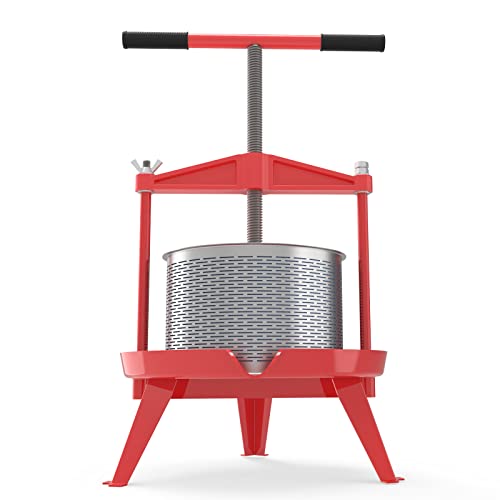
- Cast-iron frame with stainless steel basket
- Fully assembled with swing-open crossbeam
- 9-liter capacity for apples, grapes, and berries
Best For: Home cider and wine makers needing a durable small-batch press
Best Wooden Option

- Natural beechwood basket and stable triangular base
- Includes two food-grade filter bags
- Extended handle and progressive screw mechanism
Best For: Family-scale pressing and occasional hobby use
Best Ready-to-Use Value

- Cast-iron frame with stainless steel basket
- Fully assembled for quick setup
- Stable design for apples, grapes, and berries
Best For: Home users wanting a sturdy larger-capacity manual press
Best Large-Capacity Pick
VEVOR 3.69-Gallon Fruit Wine Press

- 14L capacity for larger batches
- Stainless-steel basket is removable
- Includes two food-grade filter bags
Best For: Families, farms, wineries, and juice shops
Best Traditional Design
SQUEEZE master 3.17-Gallon Wooden Press

- Traditional solid-wood basket
- Extended handle for easier pressing
- Handles about 12–16 pounds of fruit
Best For: Home users who favor a vintage-style manual press
Best Compact Stainless Option
VEVOR 1.45-Gallon Fruit Wine Press

- Compact 5L countertop-friendly design
- Stainless-steel construction throughout
- Disassembles for easier cleaning
Best For: Home users making smaller cider and juice batches
Best Traditional Wood Press – 4.75-Gallon Beechwood Cider Press
For shoppers comparing cider presses under 300, this 4.75-gallon manual model offers a traditional beechwood basket, sturdy stand, and straightforward hand-crank operation. It is sized for seasonal home pressing and can handle apples, grapes, and berries.
Best For: Home users who want a quiet, traditional press for cider, juice, or small-batch wine.
Pros:
- Solid red beech basket is designed for moisture and wear resistance.
- Manual pressing may help produce drier pulp with less foaming.
- Heavy-duty stand includes a pour spout and optional screw-hole mounting.
- Breakaway basket design helps speed pulp removal between pressing cycles.
Cons:
- Requires crushed fruit and physical hand operation.
- Hand-wash care and a relatively large 24.4-inch depth require cleanup and storage space.
- Wood construction may require more care than an all-metal press.
Its combination of capacity, stable construction, and quiet manual use makes it a practical choice for home harvests when you value traditional pressing over motorized convenience.
Best Stainless Steel Hydraulic Press – 5.8-Gallon Fruit Wine Press
Among cider presses under 300, this stainless steel model stands out for its food-grade 304 construction and hydraulic jack. Its large outer barrel and reinforced frame are designed to reduce manual effort when processing substantial fruit batches.
Best For: Users who prioritize stainless steel hygiene, higher pressing force, and larger-batch cider or wine making.
Pros:
- Food-grade 304 stainless steel is rust-proof and easy to keep hygienic.
- Hydraulic jack provides up to 6,613.87 pounds of stated pressure.
- 5.81-gallon outer barrel and 2.91-gallon filter barrel support larger batches.
- Triangular brackets and thickened materials are designed for stability.
Cons:
- Hydraulic operation adds mechanical complexity compared with a basic hand-screw press.
- The supplied notes do not specify overall dimensions or included accessories.
- Its larger capacity may be more than occasional small-batch users need.
This is the most force-focused option in the group, making it appealing when reducing hand effort and working with larger quantities matter more than a lightweight, minimalist setup.
Best High-Yield Wooden Press – 18-Liter T-Handle Cider Press
For shoppers seeking cider presses under 300, this 18-liter solid-wood press uses a T-shaped handle and phased screw design intended to make pressing easier. Its broad press plate is designed to apply pressure across a larger area, and a filter bag is included.
Best For: Families, small eateries, and fresh-juice users who want a traditional press with a more ergonomic handle.
Pros:
- 18-liter capacity can press approximately 22 to 33 pounds of fruit at a time, according to the supplied notes.
- T-shaped handle and spiral, phase-in pressing design are intended to reduce effort.
- Thicker, larger-area press plate is designed for thorough extraction.
- Includes one free filter bag and can process fruits plus materials such as pomace and honeycomb.
Cons:
- Wood construction requires hand washing and ongoing care.
- At 17.76 kilograms, it is relatively heavy to move.
- The supplied notes do not provide overall assembled dimensions.
This press balances generous batch size with a user-friendly T-handle, making it a strong fit for repeated seasonal pressing where a traditional wooden design is preferred.
Best Compact Home Press – 3.2-Gallon Manual Cider Maker
If you are comparing cider presses under 300 for kitchen or backyard use, this 3.2-gallon CAELUM model offers a compact manual format with a beechwood basket, steel base, and included filter bag. It is designed for cider, juice, and wine from pre-chopped fruit.
Best For: Home brewers, gardeners, and orchard enthusiasts who need a manageable press for regular small-batch use.
Pros:
- 3.2-gallon capacity suits smaller household batches.
- Beechwood basket, heavy-duty steel base, and corrosion-resistant hardware provide a sturdy traditional build.
- T-handle operation and included filter bag simplify pressing and cleanup.
- Adjustable pressing blocks and available 1.6-, 3.2-, and 4.75-gallon sizes offer capacity flexibility.
Cons:
- Hard fruits such as apples and pears must be pre-chopped for best performance.
- The screw shaft is shipped lightly coated with oil and must be cleaned thoroughly before use.
- Manual operation is slower and more hands-on than an electric juicer.
Its smaller capacity and traditional construction make this a sensible entry point for home pressing, especially when storage space and batch size are more important than maximum throughput.
Best Heavy-Duty Pick – 2.38-Gallon Stainless Steel Press
If you are comparing cider presses under 300, this 2.38-gallon model stands out for its cast-iron frame, stainless steel basket, and ready-to-use design. The swing-open crossbeam makes filling easier, while the two-handed T-handle supports manual pressing of prepared apples, grapes, and other produce.
Best For: Home cider and wine makers who want a durable, fully assembled press for regular small-batch use.
Pros:
- Heavy-duty cast-iron base, legs, spindle nut, and crossbeam.
- Stainless steel basket and handle with a 9-liter capacity.
- Swing-open beam, foot holes for stability, and simple hose-cleaning.
- Handles apples, grapes, berries, rhubarb, tomatoes, and other produce.
Cons:
- Fruit must be pre-shredded or otherwise prepared before pressing.
- Hand washing and drying are required after use.
- A press bag is available but not included in the supplied notes.
This is a practical choice when durability and ease of setup matter more than portability. Its 9-liter capacity gives home brewers useful batch space without moving into larger commercial equipment.
Best Wooden Option – 1.6-Gallon Beechwood Press
Among cider presses under 300, this 1.6-gallon VEVOR model offers a compact wooden design with a progressive screw mechanism. Its beechwood basket, pressing block, support blocks, and included filter bags are suited to family-scale juice and fruit-wine projects.
Best For: Families, hobbyists, and small gatherings that prefer a natural beechwood press with included filtration accessories.
Pros:
- Natural beechwood basket with a triangular base for stability.
- Eight supporting blocks and a thick pressing block help apply pressure.
- Includes two food-grade filter bags.
- Can press apples, grapes, berries, vegetables, fruit wine, cheese, and pulp.
Cons:
- The 1.6-gallon capacity is smaller than the 2.38-gallon alternatives here.
- Hard fruit must be crushed before pressing.
- Hand washing is required, and the uncoated wood needs careful upkeep.
Its smaller capacity and wooden construction make it a sensible fit for occasional home use. Plan on preparing hard fruit first, then use the filter bags and extended handle for a more controlled pressing process.
Best Ready-to-Use Value – 2.38-Gallon Heavy-Duty Press
For shoppers seeking cider presses under 300, this 2.38-gallon manual press combines a stainless steel basket with a cast-iron base and legs. It arrives fully assembled, and the swing-open crossbeam helps speed up filling when processing pre-shredded apples, grapes, berries, or other produce.
Best For: Home enthusiasts who want a stable, ready-to-use press with a larger 2.38-gallon capacity.
Pros:
- Heavy-duty cast-iron base, legs, and stainless steel basket.
- Swing-open crossbeam supports quicker filling and direct milling.
- Fully assembled with holes in the feet for added stability.
- Suitable for apples, grapes, berries, rhubarb, and tomatoes.
Cons:
- At 35.4 pounds, it is less convenient to move than a smaller press.
- Fruit needs to be pre-shredded or prepared before pressing.
- Requires hand washing, drying, and periodic food-grade grease on non-food-contact parts.
This model suits buyers who prioritize a larger batch size and sturdy construction over lightweight storage. Its assembled design reduces setup work, while the manual operation keeps the process straightforward for home cider making.
Best Large-Capacity Pick – VEVOR 3.69-Gallon Fruit Wine Press
For shoppers comparing cider presses under 300, this 14L VEVOR model is a practical choice when you want a sturdy manual press for larger batches. Its cast-iron crossbeam, stainless-steel basket, triangular base, and included filter bags support regular home, farm, or small-shop use.
Best For: Families, farms, wineries, and fresh-juice shops that need a higher-capacity manual press.
Pros:
- Large 3.69-gallon capacity suits parties and batch processing.
- Removable 304 stainless-steel basket simplifies cleaning.
- Stable triangular base and cast-iron crossbeam provide sturdy support.
- Includes two food-grade filter bags.
Cons:
- At 34 pounds, it is less convenient to move than smaller presses.
- Pre-crushing fruit is recommended for better results.
- Hand washing and maintenance of non-food-contact metal parts are required.
This is the strongest fit of the three for larger cider-making sessions. Choose it if capacity and a robust frame matter more than portability.
Best Traditional Design – SQUEEZE master 3.17-Gallon Wooden Press
Among cider presses under 300, the SQUEEZE master stands out for its traditional solid-wood basket and extended pole handle. The 12L capacity and enlarged pressing area make it suitable for producing juice, wine, and other pressed liquids at home or in a small food operation.
Best For: Users who prefer a vintage-style wooden press with a longer hand lever and moderate batch capacity.
Pros:
- Solid wood basket offers a traditional press design.
- Extended hand shank is intended to reduce pressing effort.
- 3.17-gallon capacity can handle approximately 12 to 16 pounds of fruit at once.
- Includes one free filter bag.
Cons:
- Wood construction may require more care than an all-stainless design.
- Only one filter bag is included.
- The supplied details do not specify dishwasher-safe cleaning.
Its longer handle and vintage appearance make this a distinctive option for home cider makers. It offers useful capacity without the larger footprint of a commercial-style press.
Best Compact Stainless Option – VEVOR 1.45-Gallon Fruit Wine Press
For smaller batches, this compact VEVOR is a sensible contender among cider presses under 300. Its 5L stainless-steel construction, removable barrels, and two included filter bags make it suited to countertop use and straightforward cleanup.
Best For: Home users who want a smaller press for cider, juice, wine, cheese, puree, or similar ingredients.
Pros:
- Compact 1.45-gallon capacity fits smaller pressing jobs.
- Stainless-steel pressing plate, barrels, base, and support frame are durable and corrosion resistant.
- Inner and outer barrels disassemble for cleaning.
- Includes two food-grade filter bags.
Cons:
- Its smaller capacity is less suitable for large harvests or parties.
- Fruit should be pre-cut for better pressing results.
- The product details list hand washing for care, despite also describing dishwasher convenience.
This model is the easiest match for limited countertop space and modest batches. Select it when simple maintenance and stainless-steel construction matter more than maximum output.
How We Picked the Best Cider Presses Under 300
We focused on manual fruit presses priced below $300 and compared the features that most affect everyday use: basket capacity, construction materials, pressing mechanism, stability, cleanup, and portability. The selection includes compact models for occasional kitchen batches as well as larger presses suited to garden harvests and home winemaking.
Because listed specifications can vary by seller, confirm the current capacity, included accessories, dimensions, and materials before ordering. A filter bag, pressing cloth, or collection tray can make a meaningful difference in convenience.
Quick Comparison
| Best For | What to Look For |
|---|---|
| Small kitchens and occasional use | About 1.45 to 2.38 gallons, compact frames, and easy storage |
| General home cider making | About 3.17 to 3.69 gallons and a stable manual frame |
| Larger harvests | About 4.75 to 5.8 gallons with a durable basket and strong stand |
| Cleaner juice collection | A compatible filter bag or pressing cloth |
Key Buying Factors for Cider Presses Under 300
Capacity and Batch Size
Capacity describes the amount of crushed fruit the basket can hold, not necessarily the volume of finished juice. Smaller presses are easier to store and lift, while larger models reduce the number of batches during harvest season. Choose based on your typical fruit volume rather than the largest possible load.
Basket and Frame Construction
Wooden baskets are traditional and can provide a classic pressing experience, but they need thorough cleaning and drying. Stainless steel baskets are generally easier to sanitize and may suit frequent use. In either case, prioritize a rigid frame and a wide, stable base.
Handle, Cross-Beam, and Pressing Effort
A long T-handle or pole-style handle can provide useful leverage. Swinging or removable cross-beams may make loading and unloading easier. Look for smooth movement, secure threaded components, and a design that does not force the frame to shift as pressure increases.
Cleanup and Juice Filtration
Fruit must usually be crushed before pressing, and pulp can pass through some baskets. A removable filter bag or separate pressing cloth helps produce cleaner juice and simplifies cleanup. Wash food-contact parts promptly and follow the manufacturer’s care instructions, especially for wood.
Who Should Buy Which Cider Presses Under 300?
Choose a compact 1.45- to 2.38-gallon model if you make small batches, have limited storage, or want a press for occasional kitchen use. Choose a 3.17- to 3.69-gallon press for a balanced option that handles regular home cider and wine projects without taking up as much space as a large frame. Choose a 4.75- or 5.8-gallon press if you process substantial harvests and value fewer loading cycles.
For frequent use, favor stainless steel and easy-to-clean accessories. For a traditional appearance and classic pressing setup, a solid wood basket may be more appealing. Whichever size you choose, leave room for the crushed fruit, collection container, and safe handle movement around the press.