When hand-rolling dough becomes a production bottleneck, a commercial sheeter can deliver more consistent thickness with less labor. The best choice depends on batch size, dough type, available workspace, and whether you prefer electric speed or manual control.
We compared 10 dough sheeters for large batches, including wide conveyor models, foldable tabletop designs, and adjustable machines for pizza dough, pastry, pasta, fondant, and laminated dough.
Best 10 Dough Sheeters for Large Batches Picks for 2026
Heavy-Duty Conveyor Sheeter
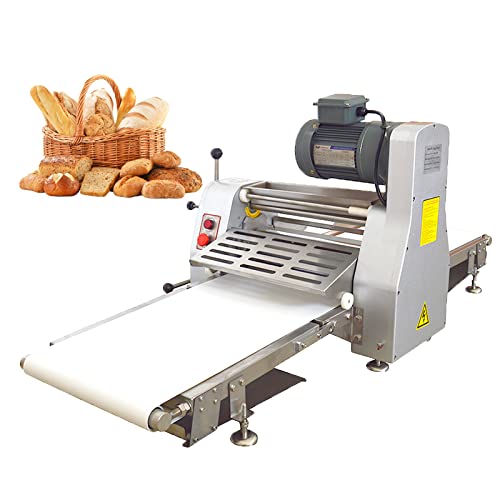
- Automatic conveyor operation for repeated production
- 0.04–1.26-inch adjustable thickness range
- Safety fence and emergency stop switch
Best For: Commercial bakeries needing a large, heavy-duty sheeter
Compact Electric Pick

- Wide 40-inch rolling surface
- Electric reciprocating operation
- Folds for easier storage
Best For: Small bakeries and home kitchens handling larger batches
Space-Saving Manual Option

- 30 kg/h stated production capacity
- 2–25mm adjustable thickness
- Folds flat for storage
Best For: Home bakers wanting manual control and compact storage
Flexible Electric Laminator

- Wide 22.7-inch roller for larger sheets
- Electric 80W operation
- Foldable and detachable for storage
Best For: Small bakeries and cafés needing powered, space-conscious rolling
Best Compact Manual Pick
Folding Dough Sheeter with Board
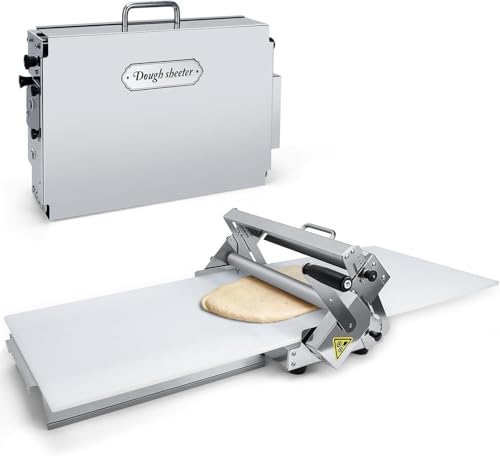
- 40.9-inch sheeter board
- 0–27 mm thickness adjustment
- Folds for compact storage
Best For: Home bakers needing a wide manual roller that stores easily
Best Fine-Adjustment Option
Foldable Stainless Steel Pastry Roller

- 0–25 mm range with 0.5 mm increments
- Reinforced stainless steel construction
- Foldable for space-saving storage
Best For: Manual pastry production requiring precise thickness control
Best Electric Choice
Commercial Dough Sheeter with Board

- Electric operation for less hand effort
- 2–30 mm thickness adjustment
- 39.3-inch-wide integrated rolling board
Best For: Shops and high-volume bakers seeking powered dough rolling
Best with Extra Features

- Folds for space-saving storage
- 55 settings from 0 to 27 mm
- Food-grade stainless-steel dough-contact surfaces
Best For: Home kitchens and small catering operations
Powered Commercial Workhorse

- Electric operation for batch processing
- Reversible 15.7-inch conveyor
- 0–35 mm adjustable thickness
Best For: Bakeries and professional kitchens with dedicated space
Wide Manual Tabletop Option
Foldable Commercial Dough Roller
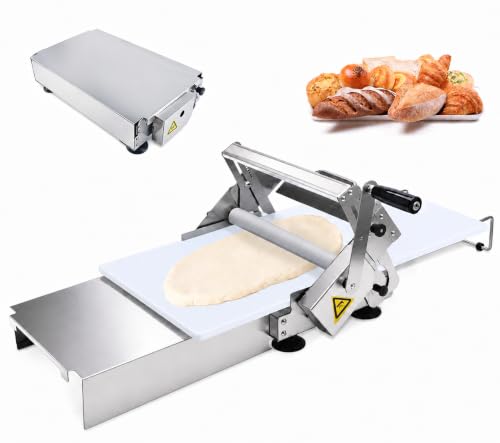
- 0–25 mm adjustment in 0.5 mm steps
- Foldable work surfaces save space
- Food-grade stainless-steel contact surfaces
Best For: Manual batch preparation in home or commercial baking spaces
Heavy-Duty Conveyor Sheeter – Commercial Dough Press
For demanding dough sheeters for large batches, the TECHTONGDA combines automatic operation with a long 70.9-inch conveyor belt. Its broad thickness range and stainless-steel construction make it suited to bakeries handling varied pastry and pizza preparations.
Best For: Commercial kitchens and bakeries that need a heavy-duty, conveyor-style machine for repeated pastry, pizza, and dough production.
Pros:
- Automatic conveyor operation with forward and reverse movement
- Adjustable thickness from 0.04 to 1.26 inches
- 304 stainless-steel dough-contact components and stainless outer shell
- Emergency stop switch and protective fence included
Cons:
- At 445 pounds, it is difficult to relocate
- Its large conveyor footprint requires substantial workspace
- Warranty coverage is listed as six months and excludes consumables
This is the most production-oriented option in the group. Choose it when throughput, a wide conveyor, and safety features matter more than portability or compact storage.
Compact Electric Pick – 40-Inch Dough Sheeter
This 40-inch electric sheeter is a practical choice for dough sheeters for large batches when you need broad working space without the weight of a full commercial conveyor machine. Its reciprocating motor, foldable frame, and 2–30mm adjustment range support frequent pastry and pizza preparation.
Best For: Home bakers, small bakeries, and pastry shops that want electric assistance and a wide rolling surface in a more manageable format.
Pros:
- 40-inch rolling width accommodates dough up to 450mm wide
- Electric left-right reciprocating operation reduces manual effort
- Precise 2–30mm thickness adjustment
- Foldable frame, food-grade PP board, and included croissant cutter
Cons:
- Designed for home and small commercial use rather than the heaviest production demands
- Its 40-inch board still requires considerable setup space
With a 42.1-pound weight and foldable support frame, this model balances batch capacity and storage convenience. The one-year warranty and technical assistance add reassurance for newer operators.
Space-Saving Manual Option – Folding Stainless Sheeter
If you want dough sheeters for large batches without adding an electric machine, this folding manual model offers a stated production capacity of 30 kg/h. Its hand crank, adjustable thickness, and fold-flat design make it a flexible choice for home baking and compact work areas.
Best For: Home bakers and space-conscious users who prefer manual control for croissants, pizza, pasta, puff pastry, and specialty doughs.
Pros:
- Rated production capacity of 30 kg/h
- Thickness adjusts from 2 to 25mm
- Folds flat for compact storage
- Stainless-steel body, PE base, and non-stick food-safe roller
Cons:
- Manual cranking requires more operator effort than electric models
- Its listed thickness range does not reach the ultra-thin 0.04-inch setting of the TECHTONGDA
This is the practical pick for users who value straightforward operation and storage efficiency. It handles a broad range of dough types, but manual operation may be less convenient during extended production runs.
Flexible Electric Laminator – 22.7-Inch Foldable Sheeter
For dough sheeters for large batches in a smaller shop or kitchen, this 22.7-inch electric laminator provides a wide roller, powered operation, and 2–30mm thickness control. Its foldable, detachable design helps balance batch efficiency with storage and cleanup needs.
Best For: Home kitchens, cafés, and small bakeries producing laminated dough, pizza crusts, cookies, and fondant.
Pros:
- 22.7-inch roller and large board handle broad dough sheets
- Electric operation eliminates manual hand-cranking
- Adjustable thickness from 2 to 30mm
- Foldable, detachable design with casters and 304 stainless-steel rollers
Cons:
- Its working width is narrower than the 40-inch WantJoin model
- At 50.6 pounds, it is portable but not lightweight
- Its 80W motor is intended for home and small commercial use
This model is a well-rounded middle ground: wider and faster than hand rolling, yet easier to store than a large conveyor sheeter. It is especially appealing when powered operation and cleanup access are priorities.
Best Compact Manual Pick – Folding Dough Sheeter with Board
For bakers comparing dough sheeters for large batches, this folding manual model offers a broad 40.9-inch sheeter board while remaining easy to store. Its stainless steel body, adjustable 0–27 mm thickness range, and manual operation suit a variety of pastry and dough projects.
Best For: Home kitchens and small baking setups that need a wide rolling surface without a permanent machine footprint.
Pros:
- Folds from a large working setup to a compact storage size.
- Adjustable thickness from 0 to 27 mm.
- Food-grade stainless steel body and smooth, non-stick PE board.
- Works with pastry, pizza, cookie, pasta, fondant, and other doughs.
Cons:
- Manual operation requires hands-on effort for large batches.
- The sheeter board may need several hours to flatten after shipping.
- Its wide open footprint requires sufficient counter space.
This is a practical choice when storage flexibility and broad dough coverage matter more than powered operation. The simple construction also makes cleanup and setup straightforward.
Best Fine-Adjustment Option – Foldable Stainless Steel Pastry Roller
Among dough sheeters for large batches, this foldable manual roller stands out for its fine thickness control. Dual adjustment supports increments as small as 0.5 mm across a 0–25 mm range, while the reinforced frame is designed for repeated pastry preparation.
Best For: Bakers, restaurants, food trucks, and pizza shops that want precise manual control and a foldaway design.
Pros:
- Thickness adjustment can be made in increments as fine as 0.5 mm.
- Heavy-duty frame and food-grade stainless steel contact surfaces.
- Folds down for easier storage in limited workspaces.
- Handles pizza, croissants, puff pastry, pasta, dumpling wrappers, and cookies.
Cons:
- Manual rolling may be tiring during especially large production runs.
- Requires a substantial 40.6-inch-by-22.8-inch working footprint when open.
- It does not provide powered rolling.
The precise adjustment system is its main advantage for recipes that depend on consistent thickness. Choose it if repeatability and storage convenience are more important than electric assistance.
Best Electric Choice – Commercial Dough Sheeter with Board
For dough sheeters for large batches where reduced hand effort matters, this electric model provides powered operation and a 2–30 mm adjustable thickness range. Its integrated food-grade PE rolling board and stainless steel body are aimed at pastry, bakery, and dessert-shop use.
Best For: Cake shops, dessert shops, and commercial-style baking setups that want electric assistance and a wide working surface.
Pros:
- Electric operation helps eliminate repetitive manual rolling.
- Adjustable thickness from 2 to 30 mm.
- Wide 39.3-by-17.7-inch rolling board and 48-inch open width.
- Integrated non-stick board has no dead corners for easier cleaning.
Cons:
- Its larger open dimensions require more workspace than the folding manual models.
- Powered equipment may be less convenient where electrical access is limited.
- The supplied notes identify the main material as acrylic despite describing a stainless steel body, so material details should be verified.
This is the strongest fit for users prioritizing powered assistance and commercial-style throughput. Its detachable design helps with storage, but the wider footprint should be planned for before purchase.
Best with Extra Features – Folding Dough Sheeter
For home bakers and small food businesses comparing dough sheeters for large batches, this manual model offers a useful balance of capacity, adjustability, and storage convenience. Its 15.5-inch rolling surface and 55 thickness settings make it adaptable to several dough styles, while the folding frame helps conserve kitchen space.
Best For: Home kitchens and small catering operations that need flexible manual dough rolling without electricity.
Pros:
- Folds for easier storage in space-limited kitchens.
- Offers 55 thickness options from 0 to 27 mm.
- Handles dough for pizza, pastries, cookies, crepes, and pasta.
- Uses food-grade stainless steel at dough-contact points.
Cons:
- Manual operation requires ongoing handle turning.
- The 15.5-inch rolling surface may be limiting for especially wide commercial batches.
This is a practical choice when compact storage and fine thickness control matter more than powered throughput. Its manual design also avoids dependence on an electrical outlet.
Powered Commercial Workhorse – VEVOR Electric Dough Sheeter
Among dough sheeters for large batches, this VEVOR machine stands out for its powered operation, 15.7-inch working width, and reversible conveyor. The electric motor and back-and-forth dough movement are designed to reduce manual handling when preparing puff pastry and other baked goods in a busy bakery or professional kitchen.
Best For: Bakeries, patisseries, and hotel kitchens that need powered dough pressing with reversible operation.
Pros:
- Electric motor supports faster, less hands-on dough processing.
- Reversible conveyor lets users press dough without lifting it to the opposite side.
- Adjusts thickness from 0 to 35 mm.
- Folding conveyor design helps with storage when not in use.
Cons:
- At 253.5 pounds, it is substantially heavier than the manual options listed here.
- Its 63.39-inch length requires considerable workspace.
- Powered operation requires access to electricity.
This is the strongest throughput-oriented option in the group, especially for puff pastry work. Its substantial footprint and weight make it better suited to a dedicated commercial workspace than a compact home kitchen.
Wide Manual Tabletop Option – Foldable Commercial Dough Roller
For buyers seeking dough sheeters for large batches without adding a motor, this foldable manual roller provides broad work surfaces and fine thickness adjustment. Its controls adjust the roller gap in 0.5 mm increments, while the folding tables make it easier to store after preparing pizza dough, pastry, pasta sheets, or other products.
Best For: Home bakers, cafés, bakeries, and pastry shops wanting a foldable manual sheeter with precise adjustment.
Pros:
- Fine 0.5 mm adjustment from 0 to 25 mm.
- Wide 40.5-by-22.8-inch format provides substantial working support.
- Folding work surfaces help reduce storage demands.
- Manual operation needs no electricity and includes food-grade stainless-steel contact surfaces.
Cons:
- Manual rolling is less automated than the powered VEVOR model.
- The supplied dimensions and model details are limited, so buyers should verify the full setup before purchase.
This model is appealing when a broad tabletop layout and precise manual control are priorities. It offers more supported workspace than the smaller folding manual unit while retaining a space-saving design.
How We Picked the Best Dough Sheeters for Large Batches
We focused on the factors that matter most in high-volume preparation: working width, thickness range, throughput, roller design, adjustment control, portability, construction, and cleanup. The selection includes electric and manual machines so buyers can match output demands and budget. We also considered foldable designs for kitchens that need to store equipment between production runs.
Quick Comparison
| Type | Best for | Main advantage | Trade-off |
|---|---|---|---|
| Electric conveyor sheeter | Busy bakeries and pizzerias | Fast, repeatable production | Higher cost and larger footprint |
| Electric tabletop sheeter | Medium-volume kitchens | Good speed in a smaller format | May require more manual handling |
| Manual folding sheeter | Small businesses and occasional batches | Lower cost and no motor | More operator effort |
| Wide manual sheeter | Large pastry sheets | Broad working surface | Requires adequate counter space |
Key Buying Factors for Dough Sheeters for Large Batches
Capacity and Working Width
Choose a width that accommodates your typical dough pieces without repeated passes. Wider rollers can improve productivity for pastry and fondant, while narrower models may fit crowded prep areas better. Check stated production capacity, but treat it as a guideline because dough type, thickness, and operator technique affect real-world output.
Electric or Manual Operation
Electric machines are usually the better choice for continuous production, especially when multiple batches must be processed quickly. Manual models can be practical for lower-volume operations, backup equipment, or kitchens where simplicity and lower maintenance are priorities.
Thickness Adjustment and Roller Range
A broad adjustment range is useful when one machine must handle pizza dough, pasta, puff pastry, and fondant. Confirm that the controls provide consistent settings and that the thinnest and thickest ranges match your recipes.
Footprint, Storage, and Cleaning
Folding legs or tables can make a substantial difference in a compact kitchen. Before buying, measure the operating and folded dimensions, including space for loading dough and removing finished sheets. Stainless steel surfaces are generally easier to wipe down, but inspect rollers, guards, trays, and conveyor areas for accessible cleaning points.
Safety and Durability
Look for stable feet, guarded rollers, accessible controls, and a motor rated for your expected workload. A heavier frame may reduce movement during operation, while overload protection and replaceable components can improve long-term value.
Who Should Buy Which Dough Sheeters for Large Batches?
Choose a wide electric conveyor model if your bakery, pizzeria, or catering operation needs the fastest workflow and has room for permanent installation. Choose a compact electric model for regular production when counter space is limited. Choose a manual folding sheeter if you want adjustable thickness and commercial capacity without committing to a powered machine. For pastry teams handling large sheets but modest daily volume, a wide manual model offers useful coverage at a lower operating cost. Finally, prioritize stainless construction and simple cleanup if the machine will be used daily across several dough types.