The best meat slicers make it easier to prepare uniform deli meats, roasts, cheese, bread, and vegetables at home or in a busy kitchen. The models in this roundup range from compact 200W machines to larger commercial slicers designed for heavier workloads.
Use the comparison and buying advice below to match blade size, slicing range, motor power, cleaning features, and safety controls to the way you plan to use your slicer.
Best 10 Meat Slicers Picks for 2026
Premium Home & Deli Pick
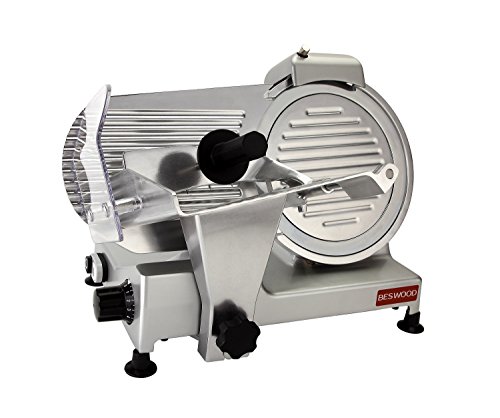
- 10-inch chromium-plated steel blade
- 240W semi-automatic operation
- ETL-listed illuminated safety switch
Best For: Frequent home slicing and light deli-style food prep
Compact Versatility Pick
200W Meat Slicer with Two Blades

- Two removable 7.5-inch blades
- 0–15 mm adjustable thickness
- Child lock and non-slip feet
Best For: Everyday home slicing in smaller kitchens
Heavy-Duty Workhorse
10-Inch 320W Commercial Meat Slicer
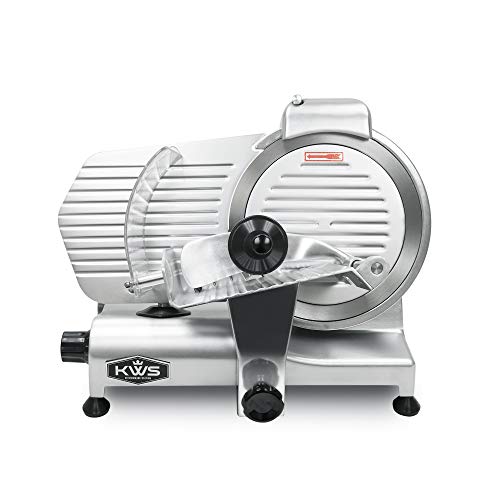
- 320W high-torque motor
- Thickness control up to 14 mm
- Built-in sharpener and NSF-certified blade
Best For: Bulk prep, hunters, serious home chefs, and light commercial use
Quiet Commercial-Style Pick

- 240W low-noise motor
- 0–13 mm thickness adjustment
- Built-in sharpener and detachable parts
Best For: Home kitchens and small delis wanting quieter full-size slicing
Best Value Meat Slicer

- 200W motor with serrated and non-serrated blades
- 0–15mm thickness adjustment
- Removable, dishwasher-safe components
Best For: Versatile everyday home slicing
Best Compact Meat Slicer
VEVOR 8.6-Inch Dual-Blade Slicer

- 200W motor runs at 70–100 RPM
- 8.6-inch serrated and non-serrated blades
- 0–15mm thickness adjustment
Best For: Larger home-kitchen slicing jobs
Best Heavy-Duty Meat Slicer
VEVOR 10-Inch Commercial Slicer
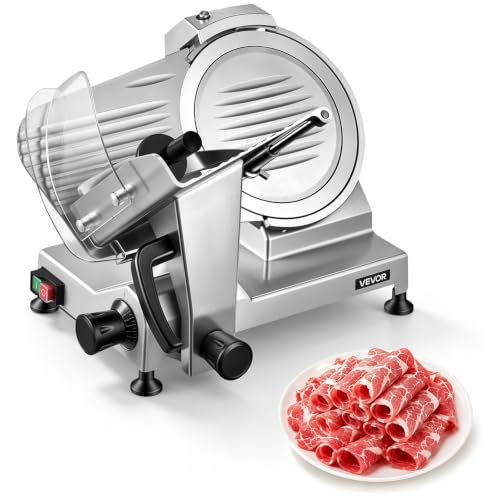
- 10-inch carbon steel blade with sharpening stone
- 240W loaded power and 350–400 RPM
- Adjustable thickness from 0–12mm
Best For: Frequent or higher-volume slicing
Best Compact Pick
CUSIMAX 200W Electric Meat Slicer

- 7.5-inch serrated and non-serrated blades
- Adjustable slicing up to approximately 15 mm
- Removable parts and anti-slip suction feet
Best For: Versatile home food preparation
Best Commercial-Style Pick

- Large 12-inch carbon steel blade
- 0–15 mm thickness adjustment
- Built-in sharpening stone and safety features
Best For: High-volume or dedicated prep spaces
Best Blade Flexibility

- Two removable 8.7-inch stainless steel blades
- Ultra-thin to approximately 20 mm adjustment
- Removable carriage, pusher, and blade
Best For: Home cooks seeking broad thickness control
Premium Home & Deli Pick – 10-Inch BESWOOD Meat Slicer
For shoppers comparing meat slicers for frequent home meal prep or light deli use, the BESWOOD250 combines a 10-inch chromium-plated steel blade with a 240W motor. Its semi-automatic design is suited to slicing meat, cheese, vegetables, ham, and fruit with consistent control.
Best For: Home cooks and small food-prep setups that want a durable 10-inch slicer with a corrosion-resistant blade.
Pros:
- Premium chromium-plated, high-carbon steel blade helps resist corrosion and reduces the need for frequent sharpening.
- 10-inch blade accommodates a range of meat, cheese, and produce slicing tasks.
- Illuminated 24V ON/OFF switch and ETL listing provide useful safety-oriented features.
Cons:
- At 33 pounds and roughly 20 by 17 by 14.75 inches, it requires substantial countertop and storage space.
- Hand-wash care may make cleanup more involved than with dishwasher-safe models.
The BESWOOD250 is a solid choice when blade durability and larger slicing capacity matter more than compact storage. Its heavy build is better suited to a dedicated countertop location.
Compact Versatility Pick – 200W Meat Slicer with Two Blades
This compact meat slicer is a practical option for kitchens that want adjustable thickness without committing to a larger commercial machine. Its 200W DC motor, 0–15 mm thickness range, and two removable 7.5-inch blades support slicing meat, cheese, vegetables, and bread.
Best For: Home users who prioritize compact dimensions, flexible slicing thickness, and easy blade changes.
Pros:
- Includes serrated and non-serrated stainless steel blades for different foods and cutting preferences.
- Adjustable thickness from 0 to 15 mm allows thin deli cuts and thicker slices.
- Removable blades and food tray simplify cleaning, while non-slip feet and a child lock add safety features.
Cons:
- The 7.5-inch blades provide less capacity than the 10-inch blades on larger slicers.
- Hand-wash care requires manual cleaning of the removable components.
With its smaller 14.6-inch footprint and versatile blade setup, this model fits everyday home use well. It is especially appealing for shoppers who want one appliance for bread, cheese, vegetables, and meat.
Heavy-Duty Workhorse – 10-Inch 320W Commercial Meat Slicer
For demanding meat slicers buyers, the 10NS is built around a 320W high-torque motor and a 10-inch stainless steel blade. It is designed for repeated slicing of meat, cheese, and semi-frozen foods, with thickness control up to 14 mm and a built-in sharpener.
Best For: Serious home chefs, hunters, and light commercial users handling bulk prep or semi-frozen foods.
Pros:
- 320W belt-driven motor is designed for continuous slicing without slowing down.
- Adjustable thickness supports paper-thin deli cuts through 14 mm slices.
- Removable carriage, hand guard, blade, and blade cover support easier cleaning and service.
- Built-in dual whetstones sharpener helps maintain the stainless steel blade.
Cons:
- Its commercial-oriented construction may be more machine than occasional home users need.
- The optional bread-slicing attachment is sold separately.
The 10NS stands out when power, repeat-use durability, and semi-frozen food capability are priorities. Its ETL listing, NSF-certified blade, and U.S.-based parts and support further suit demanding food-preparation environments.
Quiet Commercial-Style Pick – 10-Inch 240W Meat Slicer
This 10-inch meat slicer balances commercial-style capacity with a low-noise 240W motor and semi-automatic operation. Its chromium-plated steel blade, 0–13 mm adjustment range, and built-in sharpener make it suitable for meats, cheeses, bread, and other kitchen prep.
Best For: Home kitchens, small delis, and meal-prep users seeking a quieter full-size slicer with convenient maintenance features.
Pros:
- 10-inch chromium-plated blade and 240W motor handle meat, cheese, bread, and frozen foods.
- Built-in sharpener maintains the blade without requiring removal.
- Detachable carriage, blade, and shield make cleanup easier; listed parts are dishwasher safe.
- Transparent shield, food pusher, separate controls, and non-slip feet support safer operation.
Cons:
- At 30.8 pounds and 18.5 by 16.5 by 15.3 inches, it is not especially portable.
- The maximum thickness setting is 13 mm, slightly less than some comparable models.
The 10MS-4 is a well-rounded option for shoppers who want full-size slicing capacity without a notably loud motor. Its integrated sharpener and detachable components are particularly useful for regular home or small-business use.
Best Value Meat Slicer – OSTBA 200W Dual-Blade Slicer
For home cooks comparing meat slicers, the OSTBA combines a 200W motor with two 7.5-inch stainless steel blades and adjustable 0–15mm thickness control. Its compact design and removable food-contact parts make it a practical choice for slicing meat, cheese, bread, fruits, and vegetables.
Best For: Home kitchens that want versatile slicing, easy thickness adjustment, and straightforward cleanup.
Pros:
- Includes serrated and non-serrated blades for different foods.
- Adjusts from ultra-thin slices to approximately 3/4 inch.
- Removable components and dishwasher-safe care simplify cleaning.
- Safety lock, food pusher, and suction feet support secure operation.
Cons:
- The 7.5-inch blade is smaller than those on the larger VEVOR models.
- Its semi-automatic design still requires manual food handling.
The OSTBA is a well-rounded meat slicer for everyday home use, especially when flexibility and cleanup matter more than maximum blade size.
Best Compact Meat Slicer – VEVOR 8.6-Inch Dual-Blade Slicer
This VEVOR is a capable option for shoppers seeking meat slicers with a larger blade while keeping a home-kitchen focus. Its 200W motor, 8.6-inch dual-blade setup, and 0–15mm thickness range handle deli foods, frozen meat, steak, ham, bread, and vegetables.
Best For: Home users who need a larger cutting surface and adjustable slicing for a broad range of foods.
Pros:
- 8.6-inch serrated and non-serrated SUS420 stainless steel blades offer versatility.
- Thickness knob adjusts slices from 0 to 0.6 inches.
- Removable blade, food pusher, and slide-bar extender support thorough cleaning.
- Dual security lock and suction feet promote stable operation.
Cons:
- Hand-wash-only care requires more maintenance than dishwasher-safe alternatives.
- At 14 pounds, it is heavier and less compact than the OSTBA.
With its larger blade and adaptable settings, this VEVOR offers a useful middle ground for home cooks who regularly slice larger portions but do not need a commercial-size machine.
Best Heavy-Duty Meat Slicer – VEVOR 10-Inch Commercial Slicer
For shoppers comparing meat slicers for frequent or higher-volume use, this VEVOR offers a 10-inch carbon steel blade, 240W loaded power, and a built-in sharpening stone. Its 0–12mm thickness adjustment and semi-automatic operation suit frozen, raw, and cooked meats as well as ham.
Best For: Commercial-style home kitchens and users who prioritize blade size, cutting speed, and heavy-duty construction.
Pros:
- 10-inch carbon steel blade provides a wide cutting surface.
- Built-in sharpening stone helps maintain blade sharpness.
- 240W load power and 350–400 RPM support fast slicing.
- Removable food-contact parts and a wipe-clean stainless steel tray aid maintenance.
Cons:
- At 34 pounds, it is substantially heavier and less portable than the home-focused models.
- Hand-wash-only care requires manual cleaning.
- Its 0–12mm range is narrower than the 0–15mm range of the other listed slicers.
This VEVOR is the strongest fit when processing speed and a large blade matter most, though its commercial size makes it better suited to a dedicated workspace.
Best Compact Pick – CUSIMAX 200W Electric Meat Slicer
For home cooks seeking versatile meat slicers, this CUSIMAX model offers adjustable thickness from ultra-thin to approximately 15 mm. Its 7.5-inch blades can handle deli meats, cheese, bread, fruits, and vegetables, making it useful for everyday meal prep and entertaining.
Best For: Home kitchens that need a compact slicer for varied foods, sandwiches, charcuterie boards, and dehydrating preparation.
Pros:
- Includes serrated and non-serrated stainless steel blades.
- Adjustable thickness control reaches approximately 15 mm.
- Removable blade and hidden track design simplify cleanup.
- Anti-slip suction feet help stabilize the machine during use.
Cons:
- The 7.5-inch blade is smaller than those on commercial-style slicers.
- Its semi-automatic operation requires manually guiding the food carriage.
With a 200W motor, dual blades, and a relatively compact 9.3-pound design, this is a practical choice for routine home slicing rather than high-volume commercial work.
Best Commercial-Style Pick – VEVOR 12-Inch Meat Slicer
Among meat slicers designed for larger workloads, the VEVOR 12-inch model stands out for its substantial carbon steel blade and aluminum-alloy construction. It offers adjustable cuts from 0 to 15 mm and includes a built-in sharpening stone for blade maintenance.
Best For: Users who want a large, heavy-duty slicer for home kitchens, food preparation areas, or restaurant-style use.
Pros:
- Large 12-inch carbon steel blade is designed for meat and hard vegetables.
- Thickness adjustment ranges from 0 to 15 mm.
- Built-in sharpening stone supports convenient blade maintenance.
- Safety guard, food pusher, waterproof switch, and rubber feet promote secure operation.
Cons:
- At 46.3 pounds, it is substantially heavier and less portable than home models.
- Hand-wash care requires wiping and cleaning manually.
- Its larger footprint may be excessive for occasional slicing.
This VEVOR is the capacity-focused option in the group. The 12-inch blade and sturdy build are useful for demanding prep, but its weight and size make it better suited to a dedicated workspace.
Best Blade Flexibility – CUSIMAX 8.7-Inch Meat Slicer
This CUSIMAX is one of the more flexible meat slicers for home use, pairing two removable 8.7-inch blades with thickness settings from ultra-thin to about 20 mm. The serrated and non-serrated options help accommodate meats, cheese, bread, fruits, and vegetables.
Best For: Home users who want a wider thickness range and removable components for switching between different foods.
Pros:
- Two removable blades provide serrated and non-serrated cutting options.
- Adjusts from ultra-thin slices to approximately 20 mm.
- Removable blade, food pusher, and carriage make cleaning easier.
- 200W motor and non-slip feet support orderly, stable slicing.
Cons:
- The product details list automatic operation but do not indicate a commercial-duty design.
- Its 10.8-pound weight is less compact than smaller home slicers.
The broad adjustment range is this model’s main advantage. It offers more flexibility than a typical compact slicer while retaining home-oriented features such as removable parts and a blade safety guard.
How We Picked These Meat Slicers
We selected these models based on the features that matter most during everyday slicing: motor power, blade diameter, thickness adjustment, carriage design, materials, included safety features, and ease of cleaning. The lineup includes compact slicers with removable blades for occasional home use, as well as larger commercial-style machines built for thicker cuts and longer sessions.
Because specifications vary by model, confirm the manufacturer’s instructions for suitable foods, frozen-meat limitations, cleaning procedures, and duty cycles before buying.
Quick Comparison
| Best For | Typical Features to Look For |
|---|---|
| Occasional home use | 200W motor, 7.5-inch blade, removable parts, compact footprint |
| Versatile family kitchens | Two blades, adjustable thickness control, food pusher, easy-clean carriage |
| Frequent slicing | 240W to 320W motor, 10-inch blade, built-in sharpener, stronger construction |
| Large batches | 12-inch blade, commercial frame, longer carriage, higher-capacity design |
Key Buying Factors for Meat Slicers
Motor Power and Workload
Motor wattage is a useful starting point, but it does not tell the whole story. A 200W slicer can handle light home tasks, while a 240W or 320W model is generally better suited to repeated slicing and larger portions. Avoid pushing a compact machine beyond its recommended duty cycle.
Blade Size and Material
Blades around 7.5 inches are suitable for many household foods. Ten-inch blades provide more clearance for roasts, large loaves, and deli cuts, while a 12-inch commercial blade is intended for higher-volume work. Stainless steel and chromium-plated blades can offer durability, but sharpness, cleaning, and proper handling remain essential.
Thickness Control
Look for a clearly marked adjustment dial and a range that fits your recipes. A broad range, such as 1–20 mm, offers flexibility for paper-thin deli slices and thicker portions. Check that the thickness plate locks securely before operating.
Cleaning and Safety
Removable blades, food carriages, and trays simplify cleanup, especially when slicing cheese or fatty meats. Prioritize a sturdy food pusher, non-slip feet, blade guards, and an accessible power switch. Always unplug the machine before cleaning or removing parts.
Who Should Buy Which Meat Slicers?
Choose a compact 7.5-inch model if you mainly slice cooked meats, cheese, bread, or vegetables occasionally and want easier storage. Choose a 10-inch slicer for more frequent household use, larger roasts, or small-business tasks. Choose a 320W or 12-inch commercial-style model when batch size, cutting capacity, and repeated use matter more than compact storage.
For most buyers, the best choice is the model that matches the workload rather than the one with the largest blade. A manageable slicer that is easy to clean and safe to operate will usually be more useful than an oversized machine that spends most of its time unused.