Consistent salt levels are essential for safe, repeatable food storage. The right salinity meter can help you check brines, pickles, fermented foods, soups, and curing solutions more confidently than relying on taste or guesswork.
This roundup compares 10 salinity meters for food storage, from compact digital instruments to optical refractometers, with attention to range, accuracy, temperature compensation, cleaning, and everyday usability.
Best 10 Salinity Meters for Food Storage Picks for 2026
Best Overall
Full-Range Digital Food Salinity Meter

- 0–10% range with fine low-salt resolution
- 3-second readings plus temperature display
- 304 stainless probe and IP66 housing
Best For: Home cooks checking soups, brines, and hot food liquids
Best Compact Pick
Doritekku EN901 Digital Salinity Meter

- Compact and lightweight plastic design
- 0.3–1.5% range in 0.1% increments
- Automatic shutoff and consistency indicator
Best For: Lower-salt recipes and simple portable checks
Best for Brine Work
LOHAND LH-SA10 Digital Salinity Meter

- 0–10% and 0–100 ppt measurement range
- Platinum-plated, corrosion-resistant electrode
- Vibration alert and locked readings
Best For: Frequent brine, pickle, sauce, and seafood testing
Best Precision Refractometer
Professional Food & Brine Salt Tester

- 0–28% food-salinity range
- ATC for 50°F–86°F samples
- Aluminum body with hard case
Best For: Curing, pickling, fermenting, and brine testing
Best Digital Salt Meter
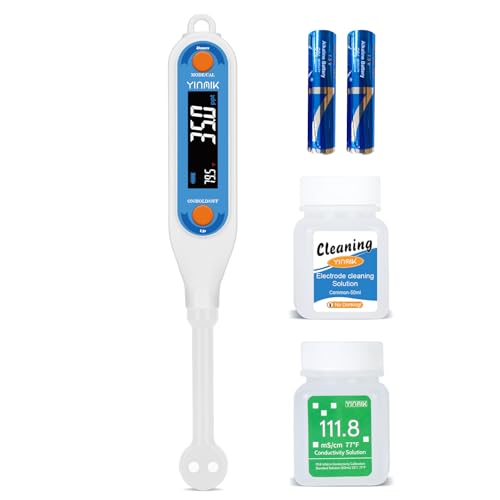
- Three salinity measurement modes
- Backlit display with ATC
- Includes calibration and cleaning solutions
Best For: Digital food, fermentation, and saltwater checks
Best Compact Salt Meter

- 0.00–10.0% salinity range
- Tests samples as small as 0.12 ml
- IP67 waterproof, replaceable sensor
Best For: Small-sample soup, food, and fish salinity checks
Best Multifunction Pick
GIDIGI Digital Food Salinity Meter
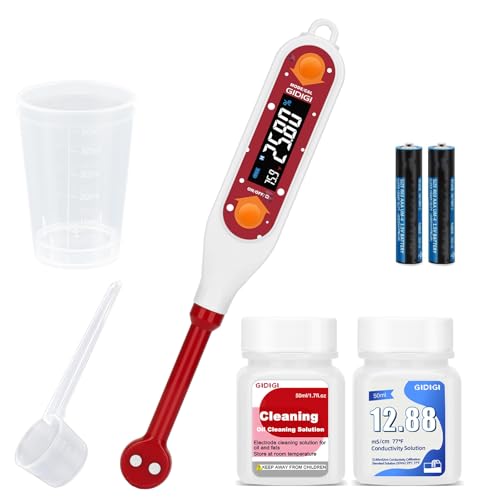
- Measures salinity from 0.01% to 26.00%.
- Also tests EC, TDS, temperature, and specific gravity.
- Includes calibration and cleaning accessories.
Best For: Kitchens and aquariums needing one versatile tester
Best Refractometer
0-28% ATC Salinity Refractometer

- Covers a 0-28% salinity range.
- Includes automatic temperature compensation.
- Designed for brines, pickles, seafood, and soups.
Best For: Brine-focused food preservation and curing
Best Simple Pick
Cabilock Digital Food Salt Tester

- Tests brine, pickles, soups, and fermented foods.
- Uses a clear LED display for readings.
- Lightweight handheld design is easy to carry.
Best For: Simple kitchen and food-processing salt checks
Best Overall – Full-Range Digital Food Salinity Meter
For shoppers comparing salinity meters for food storage and everyday cooking, this model offers a broad 0–10% salt range, quick readings, and a food-grade stainless-steel probe. Its temperature display and straightforward one-button workflow make it practical for checking soups, brines, noodles, and other kitchen liquids.
Best For: Home cooks who want fast, easy salt and temperature readings across a wide range of food preparations.
Pros:
- Measures 0–10% salt with 0.01% resolution below 5% and 0.02% resolution from 5–10%.
- Reads in about 3 seconds and displays salt concentration, sodium, and temperature.
- 304 stainless-steel probe is designed for hot liquids up to 99 °C.
- IP66 body, large display, and fold-out hook suit busy kitchens.
Cons:
- Requires two AAA batteries, although they are included.
- The display body should be kept dry; only the probe should be rinsed.
This is the most versatile option in the group for general kitchen use, especially when you want both salt and temperature information without manual calculations or calibration.
Best Compact Pick – Doritekku EN901 Digital Salinity Meter
The Doritekku EN901 is a compact choice among salinity meters for food storage when your recipes stay within its narrower 0.3–1.5% measurement range. It uses a simple push-button design and automatically powers off, making it convenient for routine seasoning checks.
Best For: Users who need a small, uncomplicated meter for lower-salt foods and consistent seasoning checks.
Pros:
- Compact, lightweight plastic design for portable use.
- Measures salt concentration in 0.1% increments.
- Shows seasoning consistency across six stages.
- Automatic power-off helps prevent wasted battery power.
Cons:
- Its 0.3–1.5% range is limited compared with meters designed for brines and pickles.
- The supplied notes do not specify a temperature-reading function or response time.
Choose this model for simplicity and portability rather than broad coverage. It is best matched with recipes that fall within its stated low-salinity range.
Best Battery-Free Option – V·RESOURCING 0–28% Refractometer
This handheld refractometer is a useful alternative for salinity meters for food storage, particularly when checking concentrated brines, pickles, kimchi, sauerkraut, or soy sauce. It measures 0–28% sodium chloride using just two or three drops of sample and requires no batteries.
Best For: Pickling and food-preservation tasks involving medium- to high-salinity liquids.
Pros:
- Wide 0–28% NaCl range covers concentrated saline foods.
- Automatic temperature compensation works from 10–30 °C.
- Battery-free optical design needs only a few drops of sample.
- Includes a hard carrying case and cleaning cloth.
Cons:
- Resolution is 0.2%, less fine than some digital kitchen meters.
- Requires looking through an eyepiece and reading the blue-white boundary line.
- Automatic temperature compensation is specified only for 10–30 °C.
Its broad range and battery-free operation make it well suited to preservation work, but the optical reading style may be less convenient than a push-button digital tester for rapid kitchen checks.
Best for Brine Work – LOHAND LH-SA10 Digital Salinity Meter
The LOHAND LH-SA10 is designed for shoppers seeking salinity meters for food storage, brine preparation, and food processing. Its 0–10% range, platinum-plated electrode, vibration alert, and value lock are aimed at quick checks in soups, sauces, pickles, seafood, and other saline liquids.
Best For: Cooks and food makers who frequently test brines, pickling liquids, and higher-salt recipes.
Pros:
- Measures 0–10% salt and 0–100 ppt.
- Platinum-plated electrode resists corrosion and impurity buildup.
- Vibration and value-lock features make readings easier to notice in noisy kitchens.
- Compact body includes batteries, cleaning cloth, and a protective cover opener.
Cons:
- Supplied notes do not state a numerical accuracy or resolution specification.
- Battery-powered operation requires two AAA batteries.
- The notes do not specify a temperature-measurement function.
This model emphasizes durable electrode construction and convenient feedback rather than detailed published precision figures. It is a practical fit for repeat brine and pickling checks.
Best Precision Refractometer – Professional Food & Brine Salt Tester
For shoppers comparing salinity meters for food storage, this refractometer is a focused choice for checking curing mixtures, pickling brines, fermented foods, and seafood. Its 0–28% food-salinity scale, ATC, and optical design prioritize straightforward readings without requiring samples to reach room temperature.
Best For: Cooks and food-preparation users who want a rugged, portable refractometer for brines, curing, pickling, and fermentation.
Pros:
- Food-specific 0–28% salinity range with stated ±0.2% accuracy.
- Automatic temperature compensation works across 50°F–86°F (10°C–30°C).
- Aluminum body, adjustable-focus eyepiece, and blue/white contrast scale.
- Includes pipettes, calibration screwdriver, cleaning cloth, and padded hard case.
Cons:
- Requires placing a sample on the prism and reading the optical scale.
- Its 0–28% range is less suited to applications outside that salinity span.
This is a strong fit when durability and a food-oriented measurement range matter more than a fully digital display. The included calibration and storage accessories also make it practical for regular kitchen or small-scale production use.
Best Digital Salt Meter – YINMIK Food Salinity Tester
Among salinity meters for food storage, the YINMIK stands out for users who prefer digital readings and multiple measurement modes. It is designed for food salinity checks, also works with saltwater, and adds temperature measurement for a more versatile countertop testing tool.
Best For: Home cooks and users who want a portable digital meter for food, fermented samples, and saltwater with temperature readings.
Pros:
- Offers PPT, percentage, and specific-gravity modes.
- Color backlit display supports reading in dim conditions.
- ATC helps account for temperature variation, and the meter also functions as a thermometer.
- Includes batteries, calibration solution, cleaning solution, and a sample spoon.
Cons:
- The electrode requires cleaning and calibration-solution maintenance.
- Its listed use is indoor, so it may be less convenient for outdoor testing.
The YINMIK is a practical option if you want quick digital results instead of interpreting a refractometer scale. Its maintenance supplies and compact design support ongoing use, while the extra temperature function reduces the need for a separate sensor.
Best Compact Salt Meter – HORIBA LAQUAtwin Salt-11
For buyers seeking salinity meters for food storage in a compact format, the HORIBA LAQUAtwin Salt-11 offers a 0.00–10.0% range and can test very small samples. Its waterproof construction, replaceable sensor, and automatic temperature compensation make it well suited to repeated food and soup checks.
Best For: Food professionals and home users who need a compact meter for soups, fish, salt pools, and small-volume samples.
Pros:
- Measures salinity from 0.00% to 10.0%.
- Uses samples as small as 0.12 ml or can be immersed in a larger sample.
- Supports up to two calibration points with automatic solution recognition.
- IP67 waterproof design, replaceable sensor, and included calibration supplies.
Cons:
- The 10.0% maximum range may not cover higher-salinity applications.
- Uses CR2 batteries, which may be less common than standard AAA cells.
The Salt-11 is especially appealing when sample size and portability are priorities. It costs more than a basic tester in many buying decisions, but the waterproof build, replaceable sensor, and included supplies support dependable long-term use.
Best Multifunction Pick – GIDIGI Digital Food Salinity Meter
For shoppers comparing salinity meters for food storage, the GIDIGI digital tester is a versatile option for checking brines, soups, sauces, and fermented foods. It measures salinity from 0.01% to 26.00% and includes automatic temperature compensation for convenient kitchen testing.
Best For: Home cooks, chefs, and users who also need EC, TDS, temperature, or seawater-specific-gravity readings.
Pros:
- Measures salinity, EC, TDS, temperature, and seawater specific gravity.
- Useful for kimchi, sauerkraut, pickles, brines, soups, sauces, and other liquid foods.
- Backlit display, lock-on readings, calibration supplies, cleaning solution, and measuring cup are included.
- Compact 85-gram design reads in less than 30 seconds.
Cons:
- Testing hot soups requires skimming off oil and measuring below 176°F.
- It is intended for liquid samples and requires the probe to be inserted about 2 cm.
This is the strongest choice when one handheld instrument needs to cover both food preparation and broader water-quality tasks. Its wide measurement range and included accessories make it practical for repeat brine and fermentation checks.
Best Refractometer – 0-28% ATC Salinity Refractometer
This analog refractometer is a focused choice among salinity meters for food storage, especially when you need to check salt concentration in brine used for seafood curing, pickles, soups, or other preserved foods. Its 0-28% range covers many common food-preservation applications.
Best For: Food preservation, seafood curing, pickling, and brine testing where a simple optical tester is preferred.
Pros:
- Measures salt concentration across a 0-28% range.
- Designed for brine, seawater, pickles, soups, seafood, and food-processing solutions.
- Auto Temperature Compensation helps account for temperature variations.
- Features simple calibration, adjustable focus, and a large readable scale.
Cons:
- It is designed for solutions with dissolved salt and minimal other dissolved solids.
- It does not provide the additional EC, TDS, or temperature readings offered by multifunction digital meters.
Choose this model when your priority is straightforward sodium-chloride concentration testing rather than multiple water-quality measurements. The broad range and ATC function suit routine brine and preservation work.
Best Simple Pick – Cabilock Digital Food Salt Tester
The Cabilock electronic tester is a compact option for shoppers seeking salinity meters for food storage and everyday kitchen work. It is designed to measure salt concentration in brine, pickles, soups, fermented foods, and other high-salt culinary preparations using a clear LED display.
Best For: Home cooks, chefs, and food processors who want a lightweight, easy-to-carry digital salt tester.
Pros:
- Designed for brine, pickles, soups, fermented foods, and broths.
- LED display provides a straightforward digital reading.
- Compact handheld size measures approximately 8.07 by 1.37 by 0.70 inches.
- Lightweight design weighs about 3 ounces, depending on the listed product specification.
Cons:
- The supplied information does not specify the measurement range or temperature-compensation feature.
- The notes do not list included calibration or cleaning accessories.
This model makes sense for buyers who value portability and simple operation over a detailed feature set. It is best suited to routine salt checks in kitchens and food-processing settings.
How We Picked the Best Salinity Meters for Food Storage
We evaluated these meters by the measurements that matter most in home kitchens, small-scale food production, and commercial preparation: usable salt-concentration range, readability, measurement method, temperature handling, probe or prism design, cleaning requirements, portability, and intended applications. Digital testers generally offer quick readings and simple operation, while refractometers can be convenient for brine checks without batteries. Conductivity-based instruments may provide broader versatility, but they often require calibration and more careful maintenance.
Because product specifications and included accessories can vary, check the manufacturer’s instructions for calibration solutions, temperature limits, sample depth, and compatible food types before relying on any meter for a controlled recipe or process.
Quick Comparison
| Type | Best For | Main Advantage | Watch For |
|---|---|---|---|
| Digital salinity meter | Frequent kitchen testing | Fast, direct readings | Calibration and probe care |
| Salinity refractometer | Brines, pickles, and curing liquids | No battery required | Needs clean samples and correct lighting |
| Compact professional meter | Repeatable food-production checks | More specialized measurement | Higher cost and maintenance |
| Multi-function tester | Users testing salt and temperature | Combines useful measurements | More features can mean more setup |
Key Buying Factors for Salinity Meters for Food Storage
Measurement Range and Resolution
Choose a range that fits your recipes. A 0–10% meter is well suited to many kitchen brines and fermented foods, while a 0–28% refractometer is more flexible for concentrated curing solutions, seawater-style brines, and commercial applications. Resolution describes the smallest displayed increment, not necessarily real-world accuracy.
Digital Versus Refractometer Operation
Digital meters are easier to read and often provide results within seconds, but electrodes need rinsing, storage, and periodic calibration. Refractometers are compact and simple for liquid samples, though they require a clean prism, adequate light, and careful sample placement. Automatic temperature compensation can make refractometer readings more convenient, but it does not eliminate the need to follow the stated temperature range.
Food-Safe Construction and Cleaning
Look for stainless-steel probes, sealed housings, and materials intended for contact with food samples. Rinse the probe or prism promptly after every test, especially after sugary, acidic, or particulate-rich mixtures. Avoid immersing electronics beyond the stated protection rating.
Calibration and Repeatability
A meter is only useful when it gives consistent readings. Confirm whether calibration fluid or a calibration tool is included, and select a model with instructions that match your testing routine. For important batches, take repeat measurements and use the same sampling and temperature procedure each time.
Who Should Buy Which Salinity Meters for Food Storage?
Choose a compact digital tester if you want quick, straightforward checks while cooking or preparing small batches. A refractometer is a strong choice for frequent brine, pickle, curing, or fermentation work where portability and battery-free operation matter. Select a higher-end conductivity meter such as the HORIBA option when you need a more established instrument for repeated measurements across different food or liquid samples. Multi-function digital models suit buyers who value temperature readings alongside salt concentration, while basic portable meters are best for occasional checks and lower-cost experimentation.