Mini Monocular Telescope 2000×24 review is for buyers who want a small, simple optic that can travel easily and handle casual outdoor use.
It is not a specialist scope, but it does cover a lot of everyday situations.
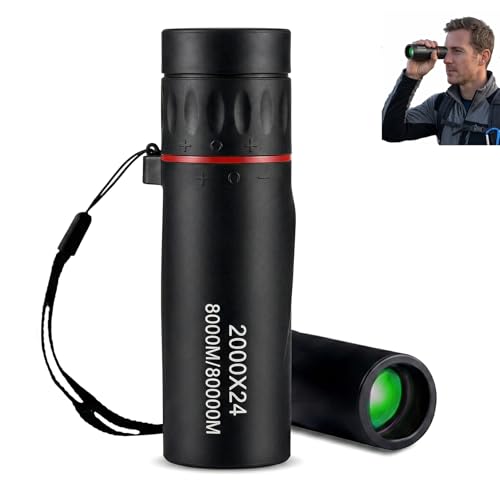
Mini Monocular Telescope Review Summary
This is a sensible pick for anyone who wants portable magnification without carrying a full-sized optic.
The listing positions it as a beginner-friendly monocular for hiking, bird watching, wildlife viewing, travel, concerts, and general outdoor use, which makes the audience fairly broad.
Its appeal is straightforward: compact size, claimed waterproof construction, one-handed focusing, and an included smartphone adapter.
If you want an easy-to-pack monocular for casual viewing and occasional photo capture, this product makes sense.
If you are expecting a premium spotting scope or precision astronomy instrument, you should look elsewhere.
Review Scorecard
| Category | Score | Buyer-focused rationale |
|---|---|---|
| Portability | 9/10 | The listing emphasizes a 2.39 oz, pocket-sized design that is easy to carry anywhere. |
| Ease of Use | 8/10 | One-handed focusing and beginner-friendly positioning suggest low friction for casual users. |
| Versatility | 8/10 | It is marketed for hiking, concerts, wildlife, travel, and general outdoor viewing. |
| Weather Readiness | 7/10 | Waterproof housing is useful, though the listing does not support heavy-duty field claims. |
| Phone Capture Potential | 7/10 | The included smartphone adapter adds real utility for casual photos and videos. |
| Optical Ambition | 5/10 | The product is aimed at accessibility and convenience, not advanced performance. |
Key Features and Specifications of Mini Monocular Telescope
The strongest facts in the listing are about convenience and broad use.
It is described as a mini monocular telescope with a 2000×24 HD magnification claim and a separate mention of a 2000×25 HD high-powered monocular lens.
Because those figures come from the listing, buyers should treat them as marketing language rather than a precise optical benchmark.
The rest of the feature set is easier to evaluate:
- Weight: 2.39 oz, which supports true pocket carry.
- Use cases: concerts, hiking, bird watching, wildlife viewing, travel, camping, and general outdoor use.
- Weather protection: waterproof housing for rain, fog, or humid conditions.
- Phone support: smartphone monocular adapter included for photos and video.
- Focus control: smooth one-handed focus wheel.
- Audience: beginners, casual users, and gift buyers.
- Color/variant: black.
Taken together, those details point to a product built around convenience first.
The appeal is not technical depth; it is the ability to bring a small optic along without planning around it.
Pros and Cons of Mini Monocular Telescope
Pros
- Very light and easy to carry
- Pocket-friendly size suits travel and spontaneous use
- Waterproof housing adds practical flexibility
- Smartphone adapter increases value for casual content capture
- One-handed focusing is good for quick use
- Beginner-friendly positioning lowers the barrier to entry
Cons
- The magnification claims are presented in a marketing-heavy way
- It is not positioned as a precision or professional optic
- Small monoculars usually trade away comfort and image stability versus larger gear
- The feature set is broad, but not specialized for any one demanding use
The main tradeoff is obvious: you buy portability and simplicity, not advanced performance.
That is acceptable for many shoppers, but it should be a deliberate choice.
Who Should Buy Mini Monocular Telescope?
Buy this if you want a light, low-commitment optic for travel, casual wildlife viewing, hiking, concerts, or quick outdoor checks.
It also fits buyers who like the idea of a smartphone adapter and want a small gift that feels useful without being complicated.
It is also a reasonable choice for beginners who do not want to spend time learning a larger optical setup.
The one-handed focus wheel and compact format support that use case well.
Skip it if you need sustained viewing comfort, more serious field observation, or a product for exacting image quality.
If your priority is premium optics, this category is usually better served by larger monoculars, binoculars, or dedicated spotting scopes.
Optical Performance and Everyday Usability of Mini Monocular Telescope
Pocket Carry Matters More Than Big Specs
The standout practical benefit here is not the printed magnification claim.
It is the fact that the monocular is light enough to disappear into a pocket or bag, which is what makes it realistic for everyday use.
Many buyers leave larger optics at home; this one is easier to keep with you.
One-Handed Focus Fits Casual Viewing
The smooth focus wheel is a good match for quick glances at distant subjects.
That matters most when you are switching between scenes often, such as at a hike overlook, a sports field, or a concert venue.
The product seems designed to reduce setup friction.
Waterproofing Expands Where You Can Use It
Waterproof housing is a meaningful feature in a compact optic because portability only helps if the device can survive ordinary outdoor conditions.
Rain, fog, and humidity are all plausible use environments here, so the weather resistance is a real buyer benefit even without deeper durability claims.
Smartphone Adapter Adds Casual Sharing Value
The included phone adapter is useful for anyone who wants to capture what they see instead of only viewing it directly.
That said, this is best understood as a convenience feature for casual photos and videos, not as a substitute for a dedicated imaging setup.
Alternatives to Mini Monocular Telescope
If you want a more established monocular line, consider a Vortex Optics Solo monocular.
If you want a more premium compact viewing option, look at a Celestron monocular or a Bushnell monocular.
If your use case is broader than a single-eye optic, Nikon binoculars or Celestron Nature DX binoculars may be better.
For users who primarily want outdoor portability, those options can offer a more comfortable view at the cost of extra bulk.
The right alternative depends on what you value most:
- Choose a monocular if compact carry is the top priority.
- Choose binoculars if comfort and longer viewing sessions matter more.
- Choose a spotting scope if you want a more serious fixed-viewing tool for wildlife or distant detail.
Is Mini Monocular Telescope Worth It?
Yes, if you want an inexpensive-feeling use case in a very portable form factor and you understand that the product is built around convenience rather than advanced optics.
It is worth considering for beginners, travelers, and casual outdoor users who want something easy to carry and easy to use.
No, if you expect a serious optical instrument with the comfort and image quality of larger gear.
In short, the Mini Monocular Telescope is worth it for portability-first buyers, but not for shoppers chasing premium performance.