Making fresh cider at home is easier when your press matches your batch size, fruit preparation routine, and available storage space. The right model can help you extract more juice with less mess and manual effort.
These 10 cider presses include compact manual baskets, crusher-and-press combinations, and a high-capacity hydraulic option. Use the guide below to narrow your choice by capacity, construction, pressure, and ease of use.
Best 10 Cider Presses Picks for 2026
Traditional Home Press
4.75-Gallon Beechwood Cider Press

- Solid red beechwood basket
- Heavy-duty stand with pour spout
- Manual pressing for juice or wine
Best For: Traditional home fruit and wine pressing
Fruit Prep Specialist

- 7-liter fruit hopper
- Processes about 35–45 kg per hour
- 304 stainless steel construction
Best For: Crushing apples and pears before pressing
High-Volume Heirloom
American Harvester Double-Tub Press

- Combines grinding and squeezing
- Hard maple and cast iron construction
- Two-person, high-volume operation
Best For: Large harvests and long-term family use
Stainless Steel Workhorse
3.69-Gallon Stainless Steel Fruit Press
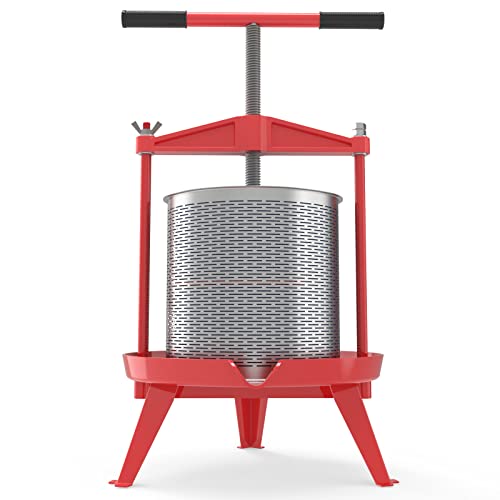
- 14-liter stainless steel basket
- Effort-saving T-handle screw
- Detachable basket for cleanup
Best For: Home juice and wine batches
Large-Capacity Manual Press
4.75-Gallon Wood Basket Cider Press

- 4.75-gallon capacity for larger batches
- Includes stainless-steel fruit crusher
- Manual, portable, and rust resistant
Best For: Home users pressing hard fruits and vegetables in larger batches
Stainless-Steel Family Press
3.17-Gallon Filter-Bag Cider Press

- 12-liter capacity for family-size batches
- Two food-grade filter bags included
- Disassembles for easier cleaning
Best For: Families and gatherings needing a versatile countertop press
Traditional Blue Press
3.17-Gallon Wood Basket Cider Press

- Presses about 12–16 pounds of fruit
- Includes one filter bag
- Traditional blue wood-basket design
Best For: Home users and small businesses wanting a moderate-capacity manual press
High-Capacity Hydraulic Pick
10.6-Gallon Mosakar Hydraulic Press

- 40-liter capacity for large batches
- 5-ton hydraulic pressing power
- 304 stainless steel juice-contact parts
Best For: Home orchards, harvests, and high-volume pressing
Compact Wooden Choice
VEVOR 1.6-Gallon Manual Cider Press

- 6-liter capacity for small batches
- Natural beechwood basket
- Includes two food-grade filter bags
Best For: Families and occasional home pressing
Mid-Size Stainless Pick

- 14-liter capacity for medium batches
- Removable 304 stainless steel basket
- Swing-open cast iron crossbeam
Best For: Homes, farms, and small juice operations
Traditional Home Press – 4.75-Gallon Beechwood Cider Press
This manual cider press combines a solid red beechwood basket with a heavy-duty stand for pressing apples, grapes, and berries. Its 4.75-gallon capacity suits seasonal batches, while the hand-operated design works quietly without a motor.
Best For: Home users who want a traditional wooden press for fresh juice or homemade wine.
Pros:
- Beechwood basket is designed for durable, moisture-resistant use.
- Built-in pour spout helps direct juice into a collection container.
- Breakaway basket design makes pulp removal between pressings easier.
- Manual operation can produce juice with reduced foaming and drier pulp.
Cons:
- Hand wash only, so cleanup requires manual care.
- Manual pressing requires physical effort and pre-crushed fruit.
- The 4.75-gallon capacity may be limiting for larger harvests.
This is a practical choice among cider presses for buyers who value classic materials, straightforward operation, and manageable home-batch capacity.
Fruit Prep Specialist – 7-Liter Manual Apple Crusher
Although it is a crusher rather than a standalone press, this manual fruit grinder is a useful first step for cider presses. Its 7-liter hopper produces uniform pieces of apples and pears that are easier to press into juice or cider.
Best For: Home cider makers who need an efficient fruit-crushing companion before pressing.
Pros:
- Large hopper holds up to 7 liters, or about 1.8 gallons, of fruit.
- Designed to process approximately 35–45 kg of fruit per hour.
- Food-grade 304 stainless steel construction supports repeated use.
- Table-mount components help keep the crusher secure during operation.
Cons:
- It crushes fruit but does not extract juice by itself.
- Best suited to apples, pears, and other prepared fruit rather than a complete pressing setup.
- Hand wash care is required.
Pair this crusher with a compatible basket press when you want more consistent pulp and a smoother workflow during cider season.
High-Volume Heirloom – American Harvester Double-Tub Press
The American Harvester is built as a complete cider press and grinder with a double-tub design. Its hard maple and cast iron construction is aimed at long-term use, while the two-person operation is described as capable of producing up to 50 gallons in an afternoon.
Best For: Families, orchard owners, and groups handling large harvests together.
Pros:
- Combines grinding and squeezing in one cider-making setup.
- Double-tub design supports a high-volume workflow.
- Hard maple and cast iron construction is designed for durability.
- Two-person operation can produce up to 50 gallons in an afternoon.
Cons:
- Two-person operation is needed to use its stated production capacity.
- Its larger, heirloom-style construction may be more than casual users need.
- The supplied notes do not specify the individual tub capacity.
Among cider presses, this is the volume-focused option for buyers who want an integrated grinder and press rather than a small seasonal appliance.
Stainless Steel Workhorse – 3.69-Gallon Stainless Steel Fruit Press
This 3.69-gallon manual cider press uses a food-grade stainless steel basket, powder-coated frame, and heavy-duty T-handle. The large-diameter Acme screw is designed to create strong pressure with less turning effort for home juice and wine batches.
Best For: Home brewers and orchard users who want a corrosion-resistant press with an easy-clean basket.
Pros:
- 14-liter basket handles a useful home-batch quantity of fruit.
- Heavy-duty T-handle and Acme screw help reduce pressing effort.
- Stainless steel basket is described as rust- and corrosion-free.
- Detachable basket simplifies cleanup after pressing.
Cons:
- Manual pressing still requires physical turning and effort.
- Its 3.69-gallon capacity is smaller than high-volume press designs.
- Hand wash care is required.
This is a well-balanced option among cider presses for buyers prioritizing stainless steel construction, manageable capacity, and simpler cleanup.
Large-Capacity Manual Press – 4.75-Gallon Wood Basket Cider Press
For shoppers comparing cider presses, this manual model combines a 4.75-gallon solid wood basket with a stainless-steel crusher. Its extended hand shank, phase-in pressing design, and larger pressing area are intended to make fruit processing easier while helping extract more juice.
Best For: Home users who want a large-capacity press for apples, pears, peaches, carrots, and other hard fruits or vegetables without relying on electricity.
Pros:
- Large 4.75-gallon capacity for bigger batches.
- Stainless-steel, food-grade construction is rust resistant.
- Manual operation allows flexible placement without a power supply.
- Crusher and press handle a range of hard fruits and vegetables.
Cons:
- Hand wash only, so cleanup requires manual care.
- Its larger capacity may be more than needed for small batches.
The combination of a wood basket, stainless-steel components, and integrated crushing makes this a versatile choice for frequent home pressing. It is most appealing when capacity and portability matter more than powered operation.
Stainless-Steel Family Press – 3.17-Gallon Filter-Bag Cider Press
Among cider presses, this 3.17-gallon stainless-steel model stands out for its compact capacity, included filter bags, and easy-clean design. The thickened pressing plate and triangular non-slip handle are built for straightforward manual juice extraction.
Best For: Families and hosts who need a stable countertop press for cider, wine, grape juice, fruit puree, honey, cheese, or olive oil.
Pros:
- 12-liter capacity suits family gatherings and parties.
- Includes two food-grade filter bags.
- Stainless-steel barrels and plate resist wear and corrosion.
- Disassembles for cleaning and is listed as dishwasher-friendly.
Cons:
- Manual pressing requires hand operation.
- Best results require pre-cutting fruit and using a filter bag.
- The 16.8-pound frame may be less convenient to move frequently.
This press offers a practical balance of capacity, stability, and cleanup convenience. Its stainless-steel construction and broad range of listed uses make it a useful option for households that press more than just cider.
Traditional Blue Press – 3.17-Gallon Wood Basket Cider Press
This cider press pairs a vintage-style solid wood basket with a pole handle and a 3.17-gallon capacity. Its extended, spiral phase-in pressing design is intended to reduce effort, while the broad pressing plate supports thorough extraction from fruit and other materials.
Best For: Home juice makers, small eateries, fresh-squeezed drink shops, and family gatherings that want a traditional-looking manual press.
Pros:
- Can press approximately 12 to 16 pounds of fruit at one time.
- Includes one free filter bag.
- Designed for apples, grapes, and other fruit, plus oil pomace and honeycomb.
- Long pole handle and phase-in pressing design aim to reduce labor.
Cons:
- Wood construction may require more care than an all-stainless-steel press.
- Painted finish and manual operation may not suit users seeking a powered or minimalist appliance.
- The product notes identify grape as the recommended use, so other applications may require additional preparation.
With its blue finish and wood basket, this model emphasizes traditional appearance alongside practical batch pressing. It is a good fit for buyers who value visual character, manual control, and a moderate fruit capacity.
High-Capacity Hydraulic Pick – 10.6-Gallon Mosakar Hydraulic Press
For larger harvests, this Mosakar model is one of the cider presses built for substantial batches. Its 40-liter basket and 5-ton hydraulic jack provide strong pressing power, while stainless steel juice-contact parts make cleanup and durability practical considerations.
Best For: Home orchard owners, harvest season, parties, and users pressing fruit, herbs, nut milks, or honey.
Pros:
- Large 10.6-gallon/40-liter capacity for bigger batches.
- Hydraulic jack delivers up to 5 tons of pressure.
- AISI 304 stainless steel pressing plate, basket, and juice tray resist acidic juice and are easy to clean.
- Adjustable tray height and a 90-degree swiveling beam help with container placement and loading.
Cons:
- At 85 pounds, it is substantially heavier than smaller manual presses.
- The large frame requires more storage space, measuring 20 x 17.3 x 31.6 inches.
This is the strongest capacity-focused choice in the group. Choose it when throughput and hydraulic pressure matter more than portability or a compact footprint.
Compact Wooden Choice – VEVOR 1.6-Gallon Manual Cider Press
This compact VEVOR is a practical entry among cider presses for family-scale juice making. Its natural beechwood basket, manual spiral mechanism, and included filter bags keep the setup straightforward, though hard fruit needs to be crushed before pressing.
Best For: Families, small gatherings, home users, and occasional apple or grape pressing.
Pros:
- Compact 1.6-gallon/6-liter capacity suits smaller batches.
- Natural beechwood basket and triangular base provide a stable pressing setup.
- Extended handle and spiral mechanism support manual operation.
- Includes two food-grade filter bags.
Cons:
- Hard fruits must be crushed before pressing.
- Hand-wash care is required.
- The 6-liter capacity is limited for larger harvests or frequent production.
With its 15.9-pound weight and smaller capacity, this press is easier to manage than the larger alternatives. It makes the most sense when you want a simple manual option for modest quantities.
Mid-Size Stainless Pick – VEVOR 3.69-Gallon Fruit Press
This VEVOR model balances batch size and manual control for shoppers comparing cider presses. It combines a 14-liter capacity with a removable 304 stainless steel basket, a swing-open cast iron crossbeam, and two included filter bags for a more convenient pressing workflow.
Best For: Families, farms, wineries, restaurants, and fresh-juice shops needing a medium-capacity manual press.
Pros:
- 3.69-gallon/14-liter capacity handles more fruit than compact home presses.
- Removable 304 stainless steel basket simplifies cleaning.
- Cast iron crossbeam swings open for easier loading.
- Triangular base and T-shaped anti-slip handle support stable manual operation.
Cons:
- Fruit should be pre-crushed for the best results.
- At 38.39 inches tall and 34 pounds, it is less compact than the smaller VEVOR model.
- Non-food-contact metal parts require food-grade lubricant to help prevent corrosion.
This is a useful middle ground: larger and more serviceable than a small wooden press without the weight and hydraulic complexity of the Mosakar. Consider it when removable stainless components and moderate capacity are priorities.
How We Picked the Best Cider Presses
We compared these Cider Presses by the features that matter most during real home use: basket capacity, pressing mechanism, frame stability, juice-contact materials, included accessories, and cleanup requirements. We also considered whether each design suits occasional kitchen batches, seasonal orchard harvests, home winemaking, or higher-volume processing.
Because product specifications and included components can vary, confirm the current capacity, basket material, crusher configuration, and replacement-part availability before ordering.
Quick Comparison
| Best For | Recommended Type | Why It Fits |
|---|---|---|
| Small batches and limited storage | 1.6- to 3.17-gallon manual press | Compact footprint and easier handling |
| Typical home cider making | 3.69- to 4.75-gallon basket press | Useful capacity without excessive bulk |
| Fruit preparation and pressing together | Crusher-and-press setup | Reduces the need for separate equipment |
| Large seasonal harvests | 10.6-gallon hydraulic press | Greater capacity and higher mechanical pressure |
Key Buying Factors for Cider Presses
Capacity and Batch Size
Choose a basket size based on how much fruit you process at one time, not only the total harvest. Smaller presses are easier to load, clean, and store, while larger models reduce the number of pressing cycles. Remember that fruit must usually be crushed or pulped before pressing, and the stated gallon capacity may not equal the finished juice yield.
Pressing Mechanism and Effort
Manual screw and T-handle presses are straightforward and affordable, but they require repeated turning and stable footing. Hydraulic presses can apply more consistent pressure with less physical effort, making them better for heavy workloads. A crusher or grinder is valuable if you do not already own equipment to break apples, grapes, or berries into pressable pulp.
Materials, Stability, and Cleanup
Look for food-contact parts made from stainless steel, a durable hardwood basket, or another clearly specified food-safe material. A strong stand, wide base, and rigid cross-beam help prevent rocking under pressure. Filter bags can simplify straining and cleanup, while removable parts and accessible juice channels make post-batch washing faster.
Storage and Operating Space
Measure both the press and the clearance needed to turn its handle or operate its hydraulic mechanism. Larger frames may be difficult to move once assembled. Check assembly requirements, drain height, and whether the unit needs a separate container beneath the outlet.
Who Should Buy Which Cider Presses?
Choose a Compact Manual Press If…
You make small batches, have limited storage, or want a simple setup for occasional cider and wine projects. The 1.6- and 3.17-gallon models are sensible starting points for beginners.
Choose a Mid-Size Basket Press If…
You process apples or grapes regularly and want a practical balance of output, footprint, and manual effort. Models in the 3.69- to 4.75-gallon range suit many household harvests.
Choose a Crusher-And-Press System If…
You need to prepare whole fruit as well as extract juice. Combined equipment can save workspace and simplify the workflow, although it may require more assembly and cleaning.
Choose a Hydraulic Press If…
You handle large harvests or want to reduce repeated hand cranking. A high-capacity hydraulic model is the better fit when throughput and pressing force matter more than portability.