Turning a seasonal harvest into smooth tomato sauce, applesauce, jam, or fruit purée is much easier with the right strainer machine. The best models separate skins and seeds efficiently while reducing the time and effort required for large batches.
This roundup compares ten manual, mixer-powered, and electric food strainers for home preserving and higher-volume processing. Use the guide below to match capacity, construction, cleanup, and power to your harvest routine.
Best 10 Food Strainer Machines for Seasonal Harvests Picks for 2026
Best Electric Clamp Strainer

- Electric motor and hand-crank operation
- Separates skins and seeds from produce
- Clamp fits countertops 3/4 to 2-1/8 inches thick
Best For: Versatile home sauce, puree, jam, and juice making
Best Hand-Crank Sauce Maker
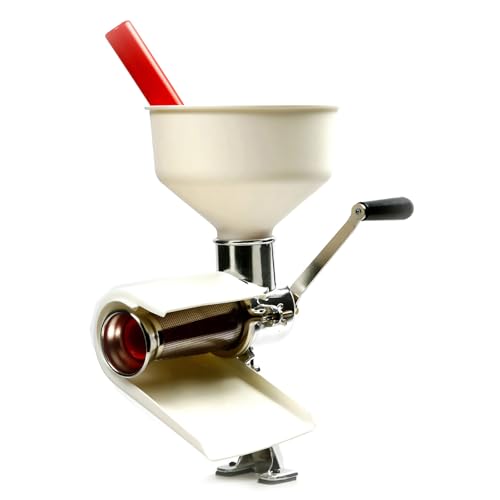
- 3-quart capacity for home batches
- Fine mesh screen separates juice and pulp
- Optional berry, pumpkin, and salsa screens
Best For: Manual fruit, vegetable, and puree straining
Best High-Volume Tomato Strainer

- Processes up to 330 pounds of tomatoes per hour
- Separates puree, seeds, and skins automatically
- 1/4 HP motor with stainless steel hopper
Best For: Large tomato harvests and rapid puree production
Best Mixer Attachment Set
InnoMoon Fruit & Vegetable Strainer

- Designed for KitchenAid stand mixers
- Removes skins, seeds, and stems from cooked produce
- Includes meat grinder and sausage-stuffer accessories
Best For: KitchenAid owners seeking versatile harvest processing
Versatile Manual Mill

- Three discs for varied textures
- Sturdy, dishwasher-safe stainless steel
- Manual design with stable dual hooks
Best For: Small-batch sauces, jams, potatoes, and seasonal produce
High-Volume Electric Pick
Deluxe Electric Tomato Strainer

- 250-watt motor with two speeds
- One-gallon hopper for batch processing
- Three screens for fine to chunky results
Best For: Large-batch sauces, purees, jellies, and salsa
Manual Harvest Workhorse
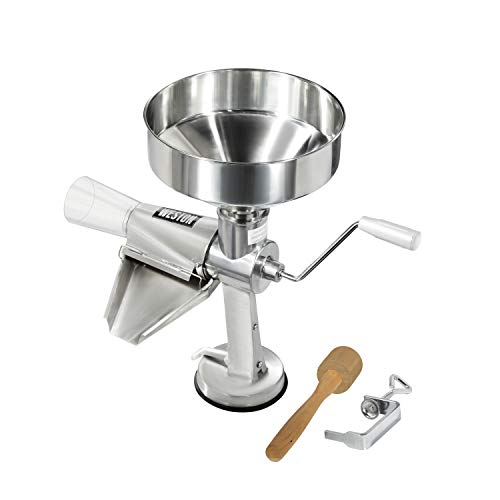
- One-gallon stainless steel hopper
- Dual mount for kitchen or garden use
- Includes 1.5mm screen and stomper
Best For: Manual batch processing of tomatoes, apples, sauces, and preserves
High-Output Harvest Helper

- Advertised 200–350 lbs/h output
- 304 stainless-steel food-contact parts
- Processes tomatoes and several soft fruits
Best For: Large seasonal harvests and high-volume sauces or jams
Quiet Versatile Preserver

- 370W pure-copper motor
- 9-inch feeding funnel
- Adjustable trough for sauce discharge
Best For: Moderate-volume tomato sauces, fruit sauces, and jams
Streamlined Commercial Preserver
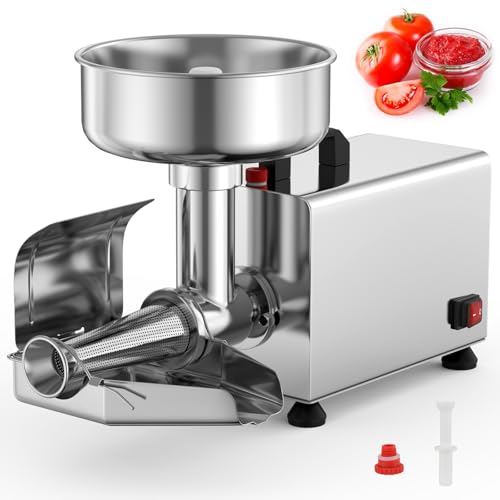
- Advertised 200–350 lbs/h output
- Built-in grinder with full-sized feed tube
- 304 stainless-steel construction
Best For: High-volume canning and seasonal fruit preserves
Best Electric Clamp Strainer – Johnny Apple Sauce Maker
For gardeners processing a seasonal harvest, the Johnny Apple Sauce Maker is one of the more flexible food strainer machines for seasonal harvests. Its included electric motor handles fruits and vegetables while the 1.3 mm screen separates skins and seeds for sauces, juices, jams, purees, and other preparations.
Best For: Home cooks who want electric or hand-crank operation and a sturdy countertop clamp for apples, tomatoes, and assorted produce.
Pros:
- Includes an electric motor plus hand-crank capability.
- Separates skins and seeds for sauces, juices, jams, and purees.
- Sturdy cast aluminum body, stainless steel screen, and 5-year warranty.
- Clamps to countertops from 3/4 to 2-1/8 inches thick.
Cons:
- The clamp requires a compatible countertop and setup space.
- The included screen has 1.3 mm openings; additional screen options are not listed.
This is a practical all-purpose choice when a harvest processor wants powered operation without giving up manual control. Its broad recipe range and included components make it ready to use out of the box.
Best Hand-Crank Sauce Maker – Norpro 1951 Sauce Master
The Norpro 1951 Sauce Master is a straightforward option among food strainer machines for seasonal harvests. It forces fruits and vegetables through a chrome-plated steel screen, separating juice and pulp in one operation, with a 3-quart capacity for routine home batches.
Best For: Home preservers who prefer a manual strainer with a standard fine mesh screen and the option to purchase specialty screens separately.
Pros:
- 3-quart, or 95-ounce, capacity.
- Automatically separates juice and pulp during straining.
- Includes a standard fine mesh screen, spiral, recipe, and instruction booklet.
- Optional berry, pumpkin, and salsa screens are available separately.
Cons:
- It is a hand-operated model rather than an electric machine.
- Hand washing is required according to the product details.
- Specialty screens add separate purchases.
Choose this model if you value simple manual control and a useful base configuration. Its expandable screen system can make it more adaptable for different seasonal produce, provided you are comfortable with hand operation.
Best High-Volume Tomato Strainer – OMRA Spremy Electric 850
For especially large tomato harvests, the OMRA Spremy Electric Tomato Strainer 850 stands out among food strainer machines for seasonal harvests. Its 1/4 HP motor automatically separates tomato puree from seeds and skins, with stated production up to 330 pounds per hour.
Best For: High-volume tomato processing where corded electric operation and rapid puree production are priorities.
Pros:
- Rated for processing up to 330 pounds, or 150 kg, of tomatoes per hour.
- Automatically separates puree from seeds and skins.
- Uses a stainless steel hopper and die-cast metal housing.
- Made in Italy with a 1/4 HP motor and cooling fan.
Cons:
- The product details specify 220-volt corded power.
- Its stated primary uses are tomato and apple.
- It is a specialized electric appliance rather than a manual, multi-screen system.
This machine makes the most sense for serious tomato processing rather than occasional small batches. Verify that your power setup supports 220 volts before buying, then take advantage of its high stated throughput.
Best Mixer Attachment Set – InnoMoon Fruit & Vegetable Strainer
The InnoMoon Fruit & Vegetable Strainer Attachment is a space-saving option among food strainer machines for seasonal harvests if you already own a KitchenAid stand mixer. It filters cooked fruit and vegetable flesh while removing stems, seeds, and skins, and the set also includes a meat grinder attachment.
Best For: KitchenAid owners who want straining, grinding, sausage stuffing, and related food-preparation functions in one accessory set.
Pros:
- Uses a KitchenAid stand mixer for powered processing.
- Strains cooked fruits and vegetables while filtering skins, seeds, and stems.
- Includes a meat grinder, two grinding plates, two blades, and sausage stuffer tubes.
- Removable parts are dishwasher safe or hand-washable, and a cleaning brush is included.
Cons:
- Requires a compatible KitchenAid stand mixer.
- Hard or firm produce should be cooked before straining.
- The strainer is part of a combination set, which may be more equipment than needed for users seeking only a juicer.
This set is appealing when versatility and storage efficiency matter more than having a standalone strainer. It can turn an existing KitchenAid into a broader harvest-processing setup, especially for cooked sauces and purees.
Versatile Manual Mill – Stainless Steel Food Mill
For smaller batches and hands-on prep, this stainless steel food mill is a practical choice among food strainer machines for seasonal harvests. Its three interchangeable milling discs help process tomatoes, fruits, vegetables, potatoes, and jams while filtering out seeds and skins.
Best For: Home cooks processing sauces, mashed potatoes, jams, and small seasonal harvests without electricity.
Pros:
- Includes three milling discs with different pore sizes for varied textures.
- Stainless steel construction is sturdy, dishwasher-safe, and usable as a colander or vegetable steamer.
- Dual hooks, a silicone-covered handle and crank, and an upgraded blade support steadier grinding.
- Included multifunctional spoon can press food and scrape the bowl during milling.
Cons:
- Manual operation requires more hands-on effort than an electric strainer.
- Its bowl attachment design may be less suitable for very large harvest batches.
This mill stands out for flexibility and easy cleanup. It is a sensible pick when you want multiple textures and a compact, manually operated tool for routine preserving and cooking.
High-Volume Electric Pick – Deluxe Electric Tomato Strainer
When seasonal harvests arrive in quantity, this electric Weston strainer is built to reduce processing time. The 250-watt motor, two speeds, and one-gallon hopper make it a strong option among food strainer machines for seasonal harvests, especially for sauces, purees, jellies, and salsa.
Best For: Large-batch preserving with tomatoes, berries, pumpkins, squash, and other soft fruits or vegetables.
Pros:
- One-gallon hopper supports larger batches without frequent refilling.
- 250-watt motor offers forward and reverse speeds; reverse helps prevent jamming.
- Three stainless steel screens provide 1.5mm, 3mm, and 6mm processing options.
- Separates skins and seeds without coring and includes a stomper for feeding produce.
Cons:
- Requires access to a 120-volt AC power source.
- Its 14-by-12-by-17-inch footprint may require dedicated counter or storage space.
For frequent preserving sessions, the powered design and multiple screens offer useful speed and texture control. The included one-year warranty is an additional consideration for harvest-season equipment.
Manual Harvest Workhorse – Metal Tomato Strainer
This manual Weston tomato strainer suits cooks who want large-batch capacity without relying on electricity. Its one-gallon hopper, stainless steel construction, and dual-mount system make it a dependable candidate among food strainer machines for seasonal harvests.
Best For: Garden or kitchen processing of tomatoes, apples, and soft produce for sauces, jams, preserves, and purees.
Pros:
- One-gallon stainless steel hopper handles larger batches.
- Dual mounting uses a suction-cup base and C-clamp for flexible placement.
- Manual handle separates skins and seeds without peeling or coring.
- Includes a splash guard, stainless steel chute, stomper, and 1.5mm screen.
Cons:
- Manual cranking is slower and more labor-intensive than an electric model.
- Only the 1.5mm screen is included; additional screens require a separate accessory kit.
This model balances substantial hopper capacity with placement flexibility, including use on a garden table. It is especially appealing if you prefer mechanical simplicity and do not need the wider screen selection included with the electric version.
High-Output Harvest Helper – 450W Electric Tomato Strainer
For large seasonal harvests, this food strainer machine for seasonal harvests combines a 450W all-copper motor with an 8.5-inch feed chute to process an advertised 200–350 pounds of sauce per hour. Its stainless-steel construction and versatile fruit processing make it suited to busy preserving sessions.
Best For: Home preservers, small producers, and busy kitchens processing tomatoes and soft fruits into sauces, jams, and preserves.
Pros:
- Advertised 200–350 lbs/h processing capacity.
- Food-grade 304 stainless-steel construction.
- Handles tomatoes, strawberries, blueberries, and pineapples.
- Tool-free disassembly and dishwasher-safe detachable parts.
Cons:
- At 22 pounds, it is substantial to move and store.
- The 1.2 mm mesh opening may not suit every desired texture.
- Its 110–120V specification limits use to compatible outlets.
This is a strong choice when throughput matters most. The safety pusher, adjustable trough, enclosed motor guard, and anti-slip feet add practical convenience for extended harvest-processing sessions.
Quiet Versatile Preserver – VBENLEM 370W Tomato Strainer
This VBENLEM food strainer machine for seasonal harvests uses a 370W pure-copper motor and a 9-inch funnel for steady feeding during tomato and fruit processing. The adjustable trough and stainless-steel food-contact components support sauce and jam making with a focus on straightforward cleanup.
Best For: Preservers who want a versatile electric mill for ketchup, tomato sauce, strawberry sauce, blueberry sauce, and other jams.
Pros:
- Pure-copper 370W motor with stainless-steel outer protection.
- Large 9-inch funnel supports sufficient fruit feeding.
- Adjustable trough and brace help direct discharge and reduce splashing.
- Designed for low-noise operation and easy disassembly.
Cons:
- The listed capacity is lower than the 450W alternatives in this roundup.
- Its aluminum material listing is less specific than the food-contact stainless-steel description.
- It requires a 110V power supply.
Choose this model for a practical balance of feeding room, adjustable discharge, and broad sauce-making use. It is especially appealing if quieter operation and accessible cleaning are priorities.
Streamlined Commercial Preserver – COSTWAY 450W Tomato Strainer
The COSTWAY 450W food strainer machine for seasonal harvests is built for efficient preserving, with an 8.5-inch feed chute and an advertised output of 200–350 pounds of sauce per hour. Its 304 stainless-steel body, safety features, and built-in grinder suit repeated tomato and fruit processing.
Best For: High-volume canning and preserving where fast processing, broad fruit compatibility, and convenient disassembly are important.
Pros:
- Advertised 200–350 lbs/h processing performance.
- 450W full-copper motor and built-in grinder.
- Food-grade 304 stainless-steel construction.
- Tool-free disassembly with dishwasher-safe detachable parts.
Cons:
- The 22-pound weight may make frequent relocation inconvenient.
- Product care instructions specify hand washing, despite dishwasher-safe detachable parts being noted.
- It is designed for 110–120V power.
With its high stated throughput and full-sized feed tube, this COSTWAY model is well matched to substantial harvests. The safety pusher, enclosed motor guard, anti-slip feet, and adjustable trough make the workflow more controlled and convenient.
How We Picked the Best Food Strainer Machines for Seasonal Harvests
We focused on the features that matter most during preserving season: motor power or hand-crank efficiency, hopper capacity, processing speed, separation performance, construction, and ease of cleanup. The selection includes compact manual mills, stand-mixer attachments, countertop electric units, and commercial-style machines so different households can compare realistic options.
We also considered versatility. A useful strainer should handle more than one crop where possible, including tomatoes, apples, berries, grapes, and cooked vegetables. Replaceable screens, stable mounting, corrosion-resistant materials, and accessible parts can make a major difference when processing several batches in one day.
Quick Comparison
| Best For | Look For | Typical Advantage |
|---|---|---|
| Occasional small batches | Manual food mill or compact attachment | Lower cost and simple storage |
| Regular home preserving | Electric countertop strainer | Less hand effort and faster processing |
| Large harvests | High-wattage motor and large hopper | Higher throughput between batches |
| Mixed fruits and vegetables | Multiple screens or compatible accessories | More control over texture and yield |
Key Buying Factors for Food Strainer Machines for Seasonal Harvests
Capacity and Throughput
Estimate how much produce you process at once rather than choosing by motor wattage alone. A small hopper may require frequent refilling, while a high-capacity commercial-style model can save time during peak harvests. Published throughput ratings are useful for comparison, but actual performance depends on produce ripeness, preparation, and screen selection.
Power, Mounting, and Stability
Electric models reduce repetitive cranking, but they need a suitable outlet and a stable work surface. Clamp-based designs should fit your counter or table securely. Stand-mixer attachments are convenient if you already own a compatible mixer, though they may be less practical for very large batches.
Screen Design and Texture
Check whether the machine includes screens suited to seeds, skins, and different textures. Fine screens are helpful for smooth sauces and jellies, while coarser options can produce thicker purées. Confirm that replacement parts are available before committing to a model.
Cleanup and Durability
Harvest processing is messy, so removable components and straightforward rinsing are valuable. Stainless steel parts generally offer good corrosion resistance, while plastic components can reduce weight and cost. Avoid assuming every part is dishwasher-safe; follow the manufacturer’s care instructions.
Who Should Buy Which Food Strainer Machines for Seasonal Harvests?
Choose a manual food mill if you process small quantities, want the simplest setup, or prefer equipment that stores easily. A KitchenAid-style attachment makes sense for households that already own a compatible stand mixer and want powered assistance without another countertop motor.
For frequent home canning, an electric countertop strainer is usually the best balance of speed and convenience. If you process hundreds of pounds of tomatoes or fruit, consider a commercial-grade stainless steel machine with a larger hopper and higher stated capacity. Before buying, verify voltage, included screens, mounting requirements, replacement-part availability, and the machine’s recommended preparation method for your produce.