The best citrus juicer for a restaurant should match your service volume, menu, available counter space, and staff workflow. A dependable press can handle made-to-order cocktails and garnishes, while an electric model may be worth the investment for breakfast service or fresh-juice programs.
We’ve gathered 10 commercial-friendly citrus juicers, including manual crank presses, compact electric units, and higher-capacity machines. Use the guide below to compare speed, cleanup, durability, and operating demands before choosing.
Best 10 Citrus Juicer for Restaurant Picks for 2026
Heavy-Duty Manual Pick
Nemco 55850 Easy Citrus Juicer

- Rack-and-pinion leverage supports consistent extraction
- Durable steel and aluminum construction
- Removable strainer cone and NSF listing
Best For: Busy restaurants and cafés needing a rugged manual press
High-Volume Value
Winco JC-19 Manual Juice Squeezer
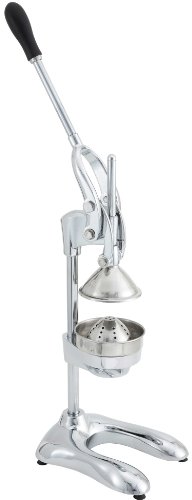
- Commercial-grade stainless steel construction
- Compact and portable for flexible placement
- Designed for citrus and high-volume use
Best For: Cafés and juice bars needing a simple manual squeezer
Powered Press Option
Breville 800CPXL Citrus Press Pro
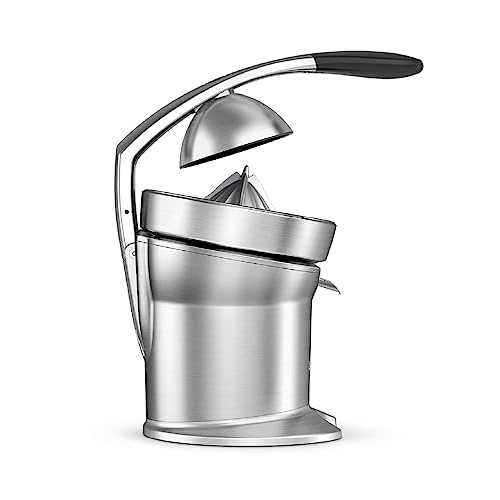
- Power-assisted lever reduces pressing effort
- Acid-resistant die-cast cone and body
- Dishwasher-safe removable parts
Best For: Beverage stations wanting assisted pressing and easy cleanup
Maximum-Force Classic

- Extractor arm delivers up to 2,000 pounds of force
- Acid-resistant commercial construction
- Sure-grip feet and NSF certification
Best For: Restaurants prioritizing force, stability, and sanitation
Compact Commercial Pick

- Juices up to 120 oranges per hour
- Compact footprint for small counters
- Universal reamer for varied citrus
Best For: Small bars, cafés, and restaurants
Heavy-Duty Manual Press

- Cast-iron frame for repeated pressing
- Long lever handles tough fruit
- Dishwasher-safe removable components
Best For: Lower-volume juice and cocktail service
Versatile Electric Workhorse
YUANHAO Commercial Citrus Juicer
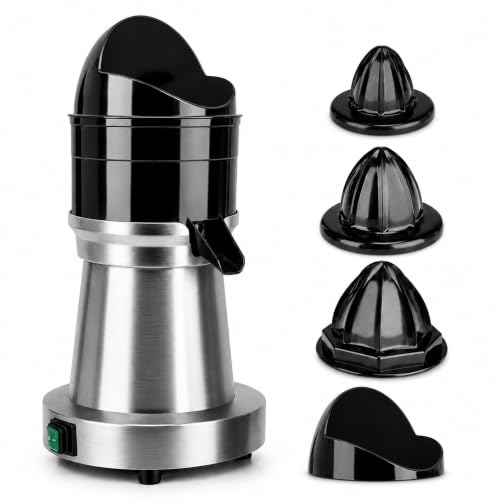
- Includes three interchangeable reamers
- Stainless-steel body with metal gears
- Splash guard and dishwasher-safe parts
Best For: Busy citrus-focused restaurants and juice bars
Quiet Heavy-Duty Pick
Hamilton Beach FreshMark Citrus Juicer
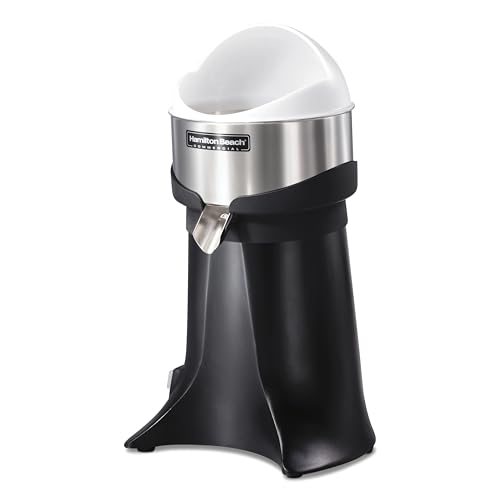
- Quiet brushless induction motor
- Three reinforced reamer sizes
- Tall spout for glasses and pitchers
Best For: Restaurants and bars serving varied citrus juices
High-Volume Pressing
VEVOR 100W Commercial Orange Juicer

- Processes up to 132–176 pounds per hour
- Four-shaft pressing system
- Fruit basket and separate peel outlet
Best For: Commercial operations with high citrus volume
Automated Orange Service
VEVOR 120W Stainless Steel Juicer

- Rated for up to 20 oranges per minute
- Automatic peeling, juicing, and filtering
- 304 stainless-steel construction
Best For: High-speed orange service with ample operating space
Heavy-Duty Manual Pick – Nemco 55850 Easy Citrus Juicer
For a busy restaurant seeking a dependable citrus juicer for restaurant service, the Nemco 55850 combines manual leverage with a durable stainless steel and aluminum build. Its removable strainer cone and NSF listing also support practical food-service maintenance.
Best For: Restaurants, cafés, juice bars, and kitchens that need consistent manual extraction across heavy-duty service.
Pros:
- Rack-and-pinion system with self-lubricating bronze bearings supports smooth, uniform pressure.
- Stainless steel fasteners and high-strength steel posts are built for demanding use.
- Removable strainer cone simplifies cleaning and maintenance.
- Ergonomic handle is designed to reduce strain during repeated pressing.
Cons:
- Manual operation requires staff effort for every serving.
- Hand-wash care may take more time than dishwasher-safe alternatives.
- Its tall 19.25-inch profile may require planning for counter clearance.
The Nemco is a strong fit when durability, steady leverage, and sanitation-focused construction matter more than electric convenience. It is especially practical for a commercial bar or service station with frequent citrus orders.
High-Volume Value – Winco JC-19 Manual Juice Squeezer
The Winco JC-19 is a straightforward citrus juicer for restaurant use, pairing commercial-grade stainless steel construction with a compact footprint. It is designed for lemons, limes, oranges, and grapefruit while keeping operation simple.
Best For: Cafés, juice bars, and commercial kitchens looking for a portable manual squeezer with high-volume capability.
Pros:
- Commercial-grade construction is intended for long-lasting kitchen use.
- Compact design can fit into a range of kitchen layouts.
- Designed to minimize effort while maximizing juice yield.
- Handles common citrus varieties, including grapefruit, lemons, and oranges.
Cons:
- Manual operation does not provide powered pressing.
- Hand-wash-only care requires manual cleanup.
- The 0.5-liter capacity may require more frequent emptying during rush periods.
Choose the Winco when you want a simple, stainless steel manual press that can support regular service without taking up excessive workspace. Its portable design adds flexibility for changing prep or bar setups.
Powered Press Option – Breville 800CPXL Citrus Press Pro
The Breville 800CPXL offers an electric alternative for a citrus juicer for restaurant applications, using a power-assisted lever and active-arm press. Its acid-resistant die-cast cone and body are designed to handle citrus juice, while dishwasher-safe parts streamline cleanup.
Best For: Beverage stations and kitchens that value assisted pressing, adjustable pulp control, and easier cleanup.
Pros:
- Power-assisted lever helps make pressing citrus less strenuous.
- Quadra-Fin cone is designed to extract juice from different citrus sizes.
- Dual-switch safety system helps prevent the cone from spinning before sufficient pressure is applied.
- Removable components, including the cone and collector, are dishwasher safe.
Cons:
- It is a corded electric appliance rather than a purely manual press.
- Its one-year limited warranty is shorter than a lifetime warranty.
- At 800 ml, the stated capacity may be modest for very high-volume service.
The Breville stands out for operators who want assisted extraction and simplified cleanup in a smaller beverage setup. Its safety features and acid-resistant stainless steel components add useful convenience for repeated citrus pressing.
Maximum-Force Classic – Hamilton Beach Commercial 932
The Hamilton Beach Commercial 932 is a classic manual citrus juicer for restaurant service, using an extractor arm capable of exerting up to 2,000 pounds of force. Its acid-resistant finish, removable parts, sure-grip feet, and NSF certification address the demands of commercial preparation.
Best For: Restaurants and bars that need high-force manual extraction with stable positioning and food-service-focused construction.
Pros:
- Extractor arm provides up to 2,000 pounds of force for efficient juice output.
- Metal components and enamel finish resist wear from citrus acids.
- Sure Grip feet help prevent tipping during use.
- Removable strainer cone and funnel support easier cleaning and sanitizing.
Cons:
- Manual pressing still requires operator effort.
- Hand-wash-only care is less convenient than dishwasher-safe designs.
- The 8-fluid-ounce capacity may require frequent emptying during heavy service.
The 932 is a compelling choice for a commercial station where pressing force and stability are priorities. Its NSF certification and removable components further support routine restaurant sanitation.
Compact Commercial Pick – Waring BJ120C Citrus Juicer
For businesses seeking a compact citrus juicer for restaurant service, the Waring BJ120C offers electric operation in a space-saving format. Its universal reamer handles different citrus fruits and is rated for up to 120 oranges per hour.
Best For: Small bars, cafés, and restaurants that need steady citrus output without sacrificing counter space.
Pros:
- Compact 7.25-inch square footprint for tight work areas
- Rated to juice up to 120 oranges per hour
- Universal reamer works with various citrus fruits
- Die-cast base and vibration-dampening feet support quiet, stable operation
Cons:
- One-quart capacity may require frequent emptying during busy service
- Single-speed, 150-watt design offers limited control options
- Manual reaming requires operator involvement
The Waring is a practical choice when footprint and dependable moderate-volume performance matter most. Its compact construction and commercial-oriented features make it well suited to smaller service stations.
Heavy-Duty Manual Press – CO-Z Commercial Citrus Juicer
The CO-Z is a manual citrus juicer for restaurant, café, and bar settings where electricity is not required. Its cast-iron frame, long lever, and stainless-steel fruit-contact parts are designed for hands-on pressing of citrus and pomegranates.
Best For: Businesses wanting a sturdy manual press for fresh juice, cocktails, and lower-volume service.
Pros:
- Reinforced cast-iron construction is built for repeated use
- Long lever and rubber grip help press harder fruits with less effort
- 304 food-grade stainless steel is used on fruit-contact components
- Removable parts and dishwasher-safe components simplify cleanup
Cons:
- Manual operation is slower and more labor-intensive than electric models
- At 15.3 inches tall and about 6 kg, it needs substantial counter and storage space
- It does not provide the continuous electric throughput of a commercial motorized juicer
This press suits operators who prioritize durability, control, and quiet electricity-free operation over speed. The included strainer and broad fruit compatibility also make it useful for beverage programs with varied citrus needs.
Versatile Electric Workhorse – YUANHAO Commercial Citrus Juicer
The YUANHAO is a versatile citrus juicer for restaurant operations that need electric extraction across multiple fruit sizes. It combines a stainless-steel body, three interchangeable reamers, splash containment, and dishwasher-safe removable parts for busy beverage stations.
Best For: Restaurants, cafés, and juice bars processing oranges, lemons, limes, and grapefruits throughout the day.
Pros:
- Three reamers accommodate different citrus sizes
- Stainless-steel body and reinforced metal gears support commercial use
- Splash guard and pulp filter help contain mess during operation
- One-button operation and dishwasher-safe removable parts streamline use and cleanup
Cons:
- At 16.93 inches tall, it may not fit beneath every cabinet
- Its 160-watt motor provides less stated power than some larger commercial machines
- Multiple removable components require cleaning after service
The YUANHAO is a strong fit for operations that value fruit-size flexibility and cleaner electric juicing. Its tall profile and commercial construction should be weighed against available counter space.
Quiet Heavy-Duty Pick – Hamilton Beach FreshMark Citrus Juicer
For restaurants that need a dependable citrus juicer for restaurant service, the Hamilton Beach FreshMark combines a quiet brushless induction motor with three interchangeable reamers. Its 8.5-inch open spout accommodates glasses, pitchers, and storage containers, while the heavy-duty housing is designed for frequent use.
Best For: Restaurants and bars needing quiet, versatile juicing for lemons, limes, oranges, and grapefruit.
Pros:
- Three reinforced reamers cover small, medium, and large citrus fruits.
- Brushless induction motor is designed for quiet, long-term operation.
- Extra-tall spout fills glasses, pitchers, and larger containers.
- Removable bowl components and dishwasher-safe reamers and bowl simplify cleaning.
Cons:
- At 28.1 pounds, it is not especially lightweight for moving between stations.
- The 160-watt unit is intended for citrus pressing rather than broad food-processing tasks.
The FreshMark is a strong choice when noise control, flexible citrus sizing, and straightforward sanitation matter more than automated high-volume fruit feeding.
High-Volume Pressing – VEVOR 100W Commercial Orange Juicer
This VEVOR machine suits operations looking for a citrus juicer for restaurant production rather than occasional countertop pressing. Its semi-automatic four-shaft pressing system is rated to process 132–176 pounds of citrus per hour, with a fruit basket for continuous refilling and separate juice and peel collection.
Best For: Restaurants, beverage shops, fruit stores, and other commercial settings with substantial orange or citrus volume.
Pros:
- Rated capacity of 132–176 pounds, or 60–80 kg, of citrus per hour.
- Pure physical pressing is designed for juice yield above 80%.
- Large fruit basket reduces the need for frequent refilling during operation.
- Built-in filtration separates juice from pulp, while a peel outlet supports collection.
Cons:
- Fruit must be washed, peeled, pitted, and cut to suitable sizes before juicing.
- Hand-wash care may require more cleanup time than dishwasher-safe equipment.
- At 51.4 pounds, it requires a stable, dedicated placement.
This model emphasizes throughput and yield, making it practical for a prep area that can handle the required fruit preparation and hand-washing routine.
Automated Orange Service – VEVOR 120W Stainless Steel Juicer
For a busy citrus juicer for restaurant station, this VEVOR unit combines automatic peeling, juicing, and filtering in one semi-automatic machine. Its textured juicing wheel is rated for up to 20 oranges per minute, and the 304 stainless-steel construction with detachable parts supports routine commercial cleaning.
Best For: Restaurants, bars, grocery stores, and fruit shops that primarily serve oranges and need fast, integrated processing.
Pros:
- Processes up to 20 oranges per minute.
- Large feed chute accepts citrus and pomegranates measuring 55–80 mm.
- Food-grade 304 stainless steel and a pull-out filter box support thorough cleaning.
- Transparent-cover pressure sensor stops the machine when the cover opens.
Cons:
- Its 81.4-pound weight and 25.59-inch width call for substantial counter or floor space.
- Parts require hand washing.
- The listed feed range may not accommodate citrus outside the specified 55–80 mm diameter.
This is the better fit for service points prioritizing speed and integrated peeling, provided the operation has room for the larger footprint and a hand-cleaning workflow.
How We Picked the Best Citrus Juicer for Restaurant
We focused on the needs of commercial kitchens, bars, cafés, catering operations, and hotel breakfast stations. Our selection includes manual and electric models at different capacity levels so you can compare equipment for occasional use with machines designed for steady production.
Key considerations included construction materials, stability, ease of cleaning, juice yield, operating speed, footprint, and the types of citrus each machine can process. We also considered whether a model’s design suits bartenders, line cooks, or staff producing larger batches.
Quick Comparison
| Type | Best for | Main advantage | Trade-off |
|---|---|---|---|
| Manual press | Bars and low-to-moderate volume | Quiet, simple, and low maintenance | Requires staff effort |
| Compact electric | Cafés and moderate service | Faster production with less physical work | Needs power and more cleaning |
| High-capacity electric | Breakfast service and juice programs | Consistent speed for larger orders | Higher cost and larger footprint |
Key Buying Factors for a Citrus Juicer for Restaurant Use
Volume and Speed
Estimate your busiest hour rather than your average day. Manual presses are practical for cocktails, individual orders, and garnish preparation. If staff must juice continuously, choose an electric model with a stated hourly or per-minute capacity that exceeds your expected demand.
Fruit Compatibility and Yield
Check whether the juicer handles lemons, limes, oranges, grapefruits, or larger citrus varieties. Cone size and pressing action affect how efficiently the machine extracts juice and how much pulp or seed reaches the container. A removable strainer or cone can simplify switching between tasks and cleaning.
Construction and Stability
Commercial equipment should resist corrosion and remain stable during repeated use. Look for stainless steel or acid-resistant surfaces, sturdy cast-metal components, secure fasteners, and non-slip feet. A heavy manual press can be an advantage when the unit stays in one prep location.
Cleaning and Workflow
Prioritize removable food-contact parts, accessible strainers, and surfaces that can be wiped down quickly. Consider where the juicer will sit, how juice will drain into cups or pitchers, and whether staff can clean it without moving other equipment.
Noise, Power, and Space
Manual presses are quiet and require no outlet. Electric models save labor but add motor noise, cord management, and electrical demands. Measure counter depth and overhead clearance before buying, especially for tall commercial presses.
Who Should Buy Which Citrus Juicer for Restaurant?
Choose a Manual Press If…
You run a cocktail bar, small café, food truck, or restaurant that needs fresh citrus in modest quantities. Manual models are usually easier to maintain and can deliver excellent control without adding motor noise.
Choose a Compact Electric Model If…
You serve regular fresh juice but have limited counter space or a moderate budget. These machines reduce repetitive hand pressure while fitting more easily into a busy prep area.
Choose a High-Capacity Electric Machine If…
You operate a hotel breakfast buffet, juice counter, busy café, or catering kitchen with sustained demand. Prioritize throughput, continuous workflow, cleaning access, and warranty support over the smallest purchase price.