Choosing among oil presses for small businesses means balancing throughput, temperature control, seed compatibility, cleanup, and purchase cost. The right machine can help a bakery, farm shop, restaurant, or specialty producer make fresh oils more consistently.
We selected 10 automatic electric models ranging from compact countertop machines to higher-capacity commercial units. Use the comparison and buying advice below to narrow your options by workload, ingredients, and operating priorities.
Best 10 Oil Presses for Small Businesses Picks for 2026
Balanced Commercial Pick
Adjustable Stainless Steel Oil Press

- 50–250°C adjustable temperature range
- 3–6 kg-per-hour stated output
- Stainless steel shell with included filter
Best For: Small shops needing flexible hot and cold-style pressing
High-Throughput Workhorse
1800W Automatic Seed Oil Press
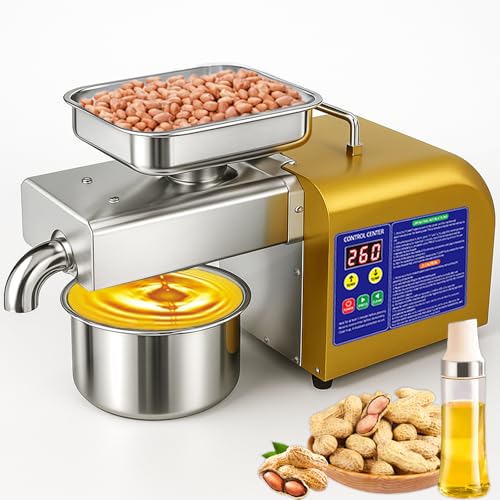
- 11–20 pounds-per-hour stated output
- 40–300°C temperature range
- Designed for continuous 24-hour pressing
Best For: Busier small businesses prioritizing production capacity
Dual-Stream Production Pick

- Two independent motors and oil outlets
- Supports simultaneous or separate pressing
- Listed operating noise below 70 dB
Best For: Operators needing flexible dual-material processing
Versatile Mid-Range Option

- Hot and cold pressing modes
- Up to 9–13.5 pounds per hour stated
- 40–240°C temperature range
Best For: Small businesses wanting flexible seed pressing
High-Capacity Workhorse

- 1500W electric motor with automatic operation
- Hot and cold pressing up to 752°F
- 2-liter cup and broad seed compatibility
Best For: Small businesses needing versatile, button-operated oil pressing
Precision Production Pick
CGOLDENWALL Intelligent Oil Press

- 1000W motor with intelligent temperature control
- 32°F–572°F adjustment range for hot or cold pressing
- Up to 10 pounds per hour for peanuts
Best For: Small businesses prioritizing temperature control and repeatable batches
Compact Efficiency Choice

- Digital temperature display with 8-minute preheat timer
- Hot and cold pressing for common oil crops
- Overheating protection and automatic power-off
Best For: Small-batch businesses wanting timed, temperature-monitored operation
Best Balanced Capacity

- Processes up to 8.27 lb/h
- 122°F–572°F temperature control
- Presses 30+ ingredient types
Best For: Small operations needing versatile hot pressing
Best for Intelligent Control
Automatic Cold & Hot Oil Press

- Supports cold and hot pressing
- Up to 8.8 lb/h capacity
- LCD control and residue separation
Best For: Small businesses wanting automated process control
Best Higher-Capacity Pick

- Hot-presses up to 11 lb/h
- Supports hot and cold pressing
- Handles 30+ ingredient types
Best For: Small commercial operations needing higher throughput
Balanced Commercial Pick – Adjustable Stainless Steel Oil Press
For small businesses seeking oil presses for small businesses, this 610W stainless steel model offers adjustable hot and cold-style temperature control and a stated throughput of 3–6 kg per hour. Its broad seed compatibility and relatively compact feature set make it a practical option for lower-volume production.
Best For: Small shops and makers pressing peanuts, sesame, sunflower seeds, walnuts, soybeans, and similar materials.
Pros:
- Non-fingerprint stainless steel shell is designed for easier cleaning and corrosion resistance.
- Temperature can be adjusted from 50–250°C with an automatic heating display.
- Includes an oil cup, filter, gloves, and instruction manual.
Cons:
- Stated output of 3–6 kg per hour is lower than the higher-capacity models in this roundup.
- Hand-wash care may add cleanup time.
Choose this press when adjustable temperature control and a stainless steel exterior matter more than maximum throughput. The listed 610W configuration is best suited to moderate production rather than demanding continuous commercial volume.
High-Throughput Workhorse – 1800W Automatic Seed Oil Press
Among oil presses for small businesses, this 1800W automatic model stands out for its stated ability to press continuously for up to 24 hours and produce 11–20 pounds per hour. It combines a broad temperature range with an intelligent control panel for businesses prioritizing production speed.
Best For: Small commercial operations that need higher throughput for peanuts, walnuts, sunflower seeds, sesame, almonds, soybeans, flax, and similar seeds.
Pros:
- 1800W motor and stated 11–20-pound-per-hour output support higher-volume work.
- Temperature settings range from 40–300°C, with real-time display and countdown controls.
- All-steel gears and a high-hardness stainless steel press rod are designed for durability.
- Kit includes a filter, oil cup, cleaning brush, gloves, hopper, and other pressing components.
Cons:
- Freshly pressed oil should settle for 24 hours before separation and use.
- It cannot press cocoa beans, spices, flowers, herbs, or coffee beans, and it cannot extract olives.
- At 25.1 pounds, it is less convenient to relocate frequently.
This is the strongest capacity-focused choice in the group based on the supplied specifications. Its material restrictions and settling requirement should be factored into production planning, but the high wattage and continuous-duty claim suit busier small businesses.
Dual-Stream Production Pick – 1500W Double-Outlet Oil Press
For businesses comparing oil presses for small businesses, this 1500W model is differentiated by two independent motors and double oil outlets. That layout is intended to let operators press different materials simultaneously or run each side independently, which may improve workflow flexibility.
Best For: Small commercial or domestic operations that want dual processing capability in a 110V stainless steel machine.
Pros:
- Two independent 1500W motors and outlets support simultaneous or separate operation.
- Double four-stage carbon steel gears are designed for continuous operation and reduced wear.
- Energy-saving technology reportedly uses 0.5–0.6 kWh per hour.
- Operating noise is listed below 70 dB, and the machine has a portable design.
Cons:
- The supplied notes do not specify an hourly oil-output range or temperature range.
- Preheating takes about eight minutes before pressing.
- Its dual-motor setup may be more capability than a low-volume operator needs.
This press is most compelling when processing flexibility is more important than a published capacity figure. Confirm that the dual-outlet workflow fits your space and electrical setup before choosing it for a small production line.
Versatile Mid-Range Option – 820W Hot and Cold Oil Press
This 820W machine gives small businesses a choice between hot and cold pressing while offering a stated output of up to 9–13.5 pounds per hour. Its intelligent panel, stainless steel construction, and included filtering accessories make it a practical middle-ground option among oil presses for small businesses.
Best For: Small commercial users who want hot/cold flexibility for peanuts, walnuts, sunflower seeds, sesame, soybeans, flaxseed, and perilla seeds.
Pros:
- Hot and cold modes let operators choose higher output or more natural flavor retention.
- Temperature range of 40–240°C includes real-time monitoring and adjustment.
- Stated production reaches up to 9–13.5 pounds per hour with continuous pressing claimed for 24 hours.
- Includes an oil residue pipe, press rod, oil cup, cleaning brush, gloves, filter, and hopper.
Cons:
- It cannot process olives, cocoa beans, spices, flowers, herbs, or coffee beans.
- Hand-wash care may require additional cleanup effort.
- The 820W rating offers less power than the 1500W and 1800W alternatives.
This model balances operating flexibility, stated capacity, and a manageable 820W power rating. It is a sensible fit for small businesses that need varied seed compatibility without stepping up to the highest-power machines.
High-Capacity Workhorse – 1500W Automatic Oil Press
For small businesses seeking versatile oil presses, this 1500W automatic model offers hot and cold pressing in a compact stainless-steel design. Its 2-liter oil cup and broad seed compatibility make it a practical option for varied small-batch production.
Best For: Small businesses processing multiple types of nuts and seeds with straightforward, button-operated controls.
Pros:
- 1500W motor and automatic feed-and-press operation simplify repeated batches.
- Supports both hot and cold pressing, with a maximum temperature of 752°F.
- Works with sunflower, coconut, flax, peanut, pumpkin, walnut, sesame, castor, and other listed seeds.
- Food-grade 304 stainless steel construction and a portable 20-pound design.
Cons:
- The manufacturer does not specify an hourly pressing rate.
- Hand washing is recommended, which may add cleanup time in a busy operation.
- The 110V corded design may require a suitable outlet and limits placement flexibility.
This is a strong fit when power and ingredient flexibility matter more than detailed temperature automation. Its simple controls should appeal to operators who want an easy-to-run machine for varied oil crops.
Precision Production Pick – CGOLDENWALL Intelligent Oil Press
Among oil presses for small businesses, the CGOLDENWALL stands out for its adjustable temperature control and stated pressing rate of up to 10 pounds per hour for peanuts. It is designed for both cold and hot pressing and includes several accessories for getting started.
Best For: Small businesses that want more control over pressing temperatures and expect to process oil-rich seeds in regular batches.
Pros:
- Intelligent controller adjusts and monitors temperatures from 32°F to 572°F.
- Hot and cold modes support different priorities, including yield, aroma, and nutrient retention.
- Rated pressing speed reaches 10 pounds per hour for peanuts.
- Includes two pots, a filter, brush, gloves, tools, and a two-year warranty.
Cons:
- Raw materials must be sufficiently dry, and the machine requires preheating.
- At 29 pounds, it is less convenient to move than lighter countertop equipment.
- Its stated 10-pound-per-hour rate is specifically for peanuts, so output may vary by material.
The temperature controller and included accessories make this a well-equipped choice for a small commercial workflow. It is especially appealing when repeatability and recipe-specific heat settings are important.
Compact Efficiency Choice – 610W Digital Oil Press
This 610W commercial oil press is a practical option for small businesses that want digital temperature monitoring without stepping up to a higher-powered machine. It combines hot and cold pressing with an 8-minute preheat countdown and built-in heat-management features.
Best For: Small businesses processing moderate batches of common oil crops while valuing automatic timing and overheating protection.
Pros:
- Digital panel displays set and real-time temperatures.
- Eight-minute preheat countdown reduces the need for manual timing.
- Supports hot and cold pressing for peanuts, sesame, coconut, soybeans, sunflower seeds, and walnuts.
- Includes overheating protection, auto power-off, a built-in fan, and cooling holes.
Cons:
- Its 610W rating is lower than the other listed machines, which may suit smaller rather than high-volume workloads.
- The product notes specify a 150W motor, so the headline wattage and motor rating should be reviewed carefully.
- Hand washing is required, adding maintenance effort after pressing.
This model balances useful automation with a more modest power rating. Its countdown timer, digital display, and safety features make it a sensible choice for businesses focused on controlled small-batch production.
Best Balanced Capacity – VEVOR 8.27 LBS/H Oil Press
For small businesses seeking practical oil presses for small businesses, the VEVOR 8.27 LBS/H model offers automatic electric extraction, adjustable hot-press temperatures, and broad ingredient compatibility. Its relatively compact 23.8-pound design also suits home, restaurant, or market use.
Best For: Small operations that need versatile hot pressing for multiple nuts and seeds without moving up to a higher-capacity machine.
Pros:
- Processes up to 8.27 pounds of flaxseed per hour.
- Adjustable hot-press temperature from 122°F to 572°F.
- Handles more than 30 types of nuts, seeds, and oil-rich ingredients.
- Includes an oil cup, filter screen, gloves, and cleaning brush.
Cons:
- Notes specify hot pressing rather than cold pressing.
- Hand cleaning is required for maintenance.
This is a flexible entry point for a small commercial setup, especially when ingredient variety and straightforward operation matter more than maximum throughput.
Best for Intelligent Control – Automatic Cold & Hot Oil Press
This automatic oil press is one of the more feature-focused oil presses for small businesses, combining cold- and hot-press modes with an LCD touch screen and residue separation. Its 610-watt motor is designed for continuous operation and a stated capacity of up to 8.8 pounds per hour.
Best For: Small businesses that want selectable pressing modes, temperature control, and a more automated oil-and-residue workflow.
Pros:
- Offers both cold pressing and hot pressing.
- Processes up to 8.8 pounds per hour with an 80 rpm press screw.
- Provides intelligent temperature control from 104°F to 410°F.
- Separates solid residue and includes a filter for additional clarification.
Cons:
- Hand washing is required.
- Its temperature range is narrower than some hot-only models.
- The supplied notes do not specify ingredient compatibility beyond general raw materials.
With its mode selection and separation system, this model is a strong fit when process control and cleaner oil output are priorities for a compact production setup.
Best Higher-Capacity Pick – VEVOR 11 LBS/H Oil Press
For small businesses needing more throughput, this VEVOR model increases stated capacity to 11 pounds per hour and supports both hot and cold pressing. It also offers adjustable temperatures, compatibility with more than 30 ingredients, and included filtering accessories.
Best For: Small commercial operations that process larger ingredient batches and need both hot- and cold-press flexibility.
Pros:
- Hot-presses up to 11 pounds of flaxseed per hour.
- Supports hot and cold pressing with 122°F–572°F temperature adjustment.
- Works with more than 30 nuts, seeds, and oil-rich ingredients.
- Includes a stainless steel filter screen, oil cup, gloves, and cleaning brush.
Cons:
- Weighs 28.7 pounds, making it less convenient to move.
- Hand washing is required.
- The listed voltage is 220 volts, which may require suitable electrical service.
This is the throughput-oriented choice in the group. Confirm the available electrical setup before buying, then consider it when batch volume is the main concern.
How We Picked the Best Oil Presses for Small Businesses
We focused on machines suited to regular small-business use rather than occasional hobby pressing. Our evaluation criteria included advertised processing capacity, motor power, hot- and cold-press capability, temperature adjustment, automation, oil and residue separation, construction materials, and ease of operation. Models with clearly stated controls and broad seed compatibility received particular attention.
Because specifications can vary by seed type, moisture content, and operating temperature, treat published capacity as a comparison point rather than a guaranteed production rate. Verify voltage, included accessories, warranty coverage, and cleaning requirements before ordering.
Quick Comparison
| Best For | What to Prioritize | Models to Consider |
|---|---|---|
| Light commercial or countertop use | Compact design, simple controls, manageable cleanup | 610W and 820W machines |
| Frequent small-batch production | Automatic feeding, temperature control, durable stainless steel | 1,000W to 1,500W models |
| Higher-volume operation | Published throughput, stronger motor, continuous workflow | 1,800W and higher-capacity VEVOR models |
| Precise recipe development | Cold pressing, adjustable heat, intelligent temperature controls | CGOLDENWALL and LCD-control models |
Key Buying Factors for Oil Presses for Small Businesses
Capacity and Motor Power
Estimate how much seed you will process per day, then leave room for peak demand. Higher wattage can support demanding work, but it may also increase energy use, heat, noise, and equipment cost. Capacity figures are most useful when comparing machines under similar seed and temperature conditions.
Hot Versus Cold Pressing
Cold pressing can help preserve a preferred flavor profile, while heated pressing may improve oil yield from certain seeds. Adjustable temperature ranges are valuable if you plan to process peanuts, sesame, coconut, flax, avocado, or mixed seed varieties.
Controls, Workflow, and Cleanup
Automatic feeding, touchscreen or intelligent controls, separate oil and cake outlets, and residue-separation features can reduce labor. Look for removable components and accessible pressing chambers, since leftover meal can harden and affect the next batch.
Construction and Operating Requirements
Stainless-steel components are generally easier to sanitize and better suited to frequent use. Confirm that the machine matches your electrical supply, has adequate ventilation, and can fit safely on a stable work surface. For commercial sales, also check local food-safety and labeling requirements.
Who Should Buy Which Oil Presses for Small Businesses?
Choose a compact 610W or 820W model if you operate a farm stand, test recipes, or produce modest quantities. Step up to a 1,000W or 1,500W automatic press when you need more consistent daily output and broader ingredient flexibility. An 1,800W machine or an advertised 8.27- to 11-pound-per-hour model is better suited to businesses expecting heavier demand, provided the published rate matches your ingredients and workflow.
For businesses focused on premium cold-pressed products, prioritize temperature control and gentle operation over raw wattage. If labor savings matter most, select an automatic model with clear controls, separated outlets, and straightforward cleaning. Whichever machine you choose, begin with small test batches to establish the right moisture level, temperature, feed rate, and filtration process for each seed.