A stand mixer can make baking easier, faster, and more consistent, but the best first model depends on your recipes, counter space, and budget.
We compared 10 beginner-friendly mixers across useful capacities, speed controls, bowl designs, attachments, and everyday handling to help you choose with confidence.
Best 10 Stand Mixer for Beginners Picks for 2026
Classic All-Rounder
KitchenAid Classic 4.5-Quart Stand Mixer

- Durable metal construction and 59 mixing touchpoints
- 10 speeds with tilt-head access
- Includes bowl, beater, dough hook, and wire whip
Best For: New bakers seeking a sturdy, expandable everyday mixer
Easy-Move Starter
Hamilton Beach 4-Quart Stand Mixer

- Planetary mixing for hands-free bowl coverage
- Seven speeds with a slow first setting
- Built-in handle and dishwasher-safe accessories
Best For: Beginners who prioritize simple operation and portability
Family-Size Value
VIVOHOME 6-Quart Tilt-Head Mixer

- 660-watt motor with 10 speeds and pulse
- 6-quart capacity for larger batches
- Includes four attachments plus splash guard
Best For: Small families and beginners baking bread or large batches
Compact First Mixer
Kitchen in the box 3.2-Quart Mixer

- Lightweight, compact design for small kitchens
- Six speeds and tilt-head access
- Includes bowl, whisk, beater, and dough hook
Best For: Solo bakers and couples with limited storage space
Best for Easy Setup

- Durable metal construction
- 5-quart bowl for small or large batches
- Tilt head and 10 speeds
Best For: Beginners seeking a versatile, long-lasting countertop mixer
Feature-Packed Value
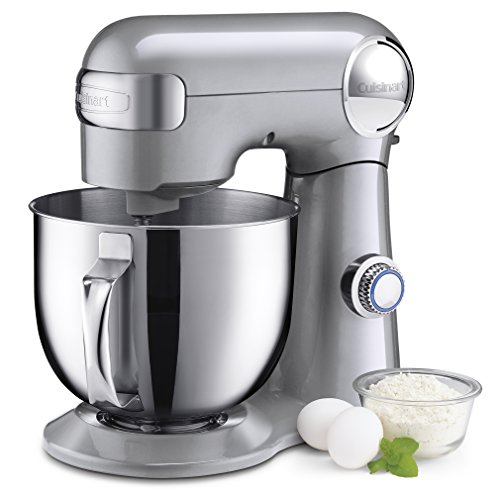
- 500-watt motor and 12 speeds
- 5.5-quart stainless steel bowl
- Optional attachment outlet
Best For: Beginners wanting capacity and room to expand
Small-Space Starter

- Lightweight, under 5 pounds
- Sized for 1-2 people
- 10 speeds with dishwasher-safe accessories
Best For: Beginners in small kitchens or compact households
Best Balanced Pick
Martha Stewart 5.3-Quart Stand Mixer

- 5.3-quart bowl for larger batches
- 12 speeds for precise mixing control
- Tilt head and dishwasher-safe accessories
Best For: Beginners who want flexible control and room for larger baking projects
Best Large-Capacity Value

- Large 6.5-quart bowl with handles
- 660-watt motor with six speeds and pulse
- Includes whisk, dough hook, beater, and splash guard
Best For: Beginners who regularly make larger batches
Best Compact Starter
Dash Everyday 3-Quart Stand Mixer

- Lightweight design fits under most cabinets
- Six speeds for everyday mixing tasks
- Includes bowl, beaters, dough hooks, and recipes
Best For: Beginners in small kitchens or first apartments
Classic All-Rounder – KitchenAid Classic 4.5-Quart Stand Mixer
For beginners who want a dependable stand mixer for baking and future kitchen projects, the KitchenAid Classic Series offers a durable metal build, a straightforward tilt-head design, and 10 speeds. Its 4.5-quart bowl is a practical size for everyday batches, while the attachment-compatible hub leaves room to expand later.
Best For: New bakers who want a sturdy, versatile mixer for cookies, cakes, dough, and more.
Pros:
- Durable metal construction with 59 touchpoints designed for thorough mixing.
- Ten speeds cover tasks from gentle stirring to whipping cream.
- Tilt-head access makes it easier to add ingredients and change attachments.
- Includes a stainless steel bowl, flat beater, dough hook, and wire whip.
Cons:
- At 24.2 pounds, it is less convenient to move than lighter beginner models.
- Additional attachments are sold separately.
The KitchenAid Classic is a strong long-term choice if you value solid construction and an expandable ecosystem over portability. Its familiar controls and included core attachments also make it approachable for first-time stand-mixer owners.
Easy-Move Starter – Hamilton Beach 4-Quart Stand Mixer
The Hamilton Beach 4-Quart Stand Mixer is a practical stand mixer for beginners who want useful features without a complicated setup. Its planetary mixing action helps cover the bowl, and the built-in handle makes it easier to lift, move, and store between baking sessions.
Best For: Beginners who need an affordable-feeling, easy-to-carry mixer for batters, cookies, and bread dough.
Pros:
- Planetary mixing action is designed for even, hands-free bowl coverage.
- Seven speeds include a slow first speed to reduce splatter.
- Includes a stainless steel bowl with handles, splash guard, whisk, flat beater, and dough hook.
- Built-in top handle makes lifting and storage easier.
Cons:
- The 4-quart capacity is smaller than some larger stand mixers.
- Its listed dimensions may require more storage space than its 8-pound weight suggests.
With a mixing guide, slow-start speed, and complete basic accessory set, this model keeps the learning curve manageable. It is especially useful for beginners who expect to move the mixer frequently or store it after use.
Family-Size Value – VIVOHOME 6-Quart Tilt-Head Mixer
For beginners who want extra capacity and power, the VIVOHOME 6-Quart Stand Mixer combines a 660-watt motor with 10 speeds and planetary mixing. The tilt-head design, splash guard, and included attachments make it suitable for learning everything from batters to bread dough.
Best For: Small families and new bakers who want a larger bowl for bread, cakes, and batch cooking.
Pros:
- Six-quart bowl holds up to three bread loaves or 2.2 pounds of flour according to the supplied notes.
- Ten speeds plus pulse support a range of mixing tasks.
- Includes whisk, dough hook, beater, and egg separator.
- Suction cups, a splash guard, and flex-edge beater support cleaner, steadier mixing.
Cons:
- The 18.8-inch height may make cabinet storage difficult.
- The larger bowl may be more capacity than a solo baker typically needs.
This VIVOHOME model is a capable entry point for households that expect to bake larger batches. Its stability features and accessory selection add convenience, while the larger footprint is worth considering before choosing a storage location.
Compact First Mixer – Kitchen in the box 3.2-Quart Mixer
The Kitchen in the box 3.2-quart mixer is a sensible stand mixer for beginners with limited counter or storage space. Weighing less than 7 pounds, it uses a tilt-head design, six speeds, and a splash lid to keep everyday mixing approachable in apartments and small kitchens.
Best For: Solo bakers, couples, and apartment kitchens that need a lightweight mixer for modest batches.
Pros:
- Compact 12.9-by-7-by-10.2-inch design is easy to store.
- Six speeds handle dough, thick batter, meringue, and whipped cream.
- Includes a stainless steel bowl, whisk, flat beater, and dough hook.
- Anti-slip suction cups help keep the mixer steady during operation.
Cons:
- The 3.2-quart capacity is less suitable for large batches.
- Its 300-watt motor is paired with a smaller bowl, so heavy or high-volume baking may be less convenient.
This compact mixer is a good starting point when storage space matters more than maximum capacity. The simple controls and included attachments cover common beginner recipes, while the smaller bowl suits daily use for one or two people.
Best for Easy Setup – KitchenAid Artisan 5-Qt
If you want a dependable stand mixer for beginners, the KitchenAid Artisan offers a straightforward tilt-head design, familiar knob controls, and 10 speeds for everyday mixing. Its 5-quart bowl accommodates both small and larger batches, while the included attachments cover common baking tasks.
Best For: Beginners who want a durable, versatile mixer for cookies, cakes, whipped cream, and bread dough.
Pros:
- Durable metal construction with 59 touchpoints around the bowl for thorough mixing.
- 5-quart stainless steel bowl with a comfortable handle; it can mix up to 9 dozen cookies in one batch under the stated test conditions.
- Tilt-head access, 10 speeds, pouring shield, and included flat beater, dough hook, and wire whip.
- Dishwasher-safe bowl and accessories, plus a one-year hassle-free replacement warranty.
Cons:
- At 22.8 pounds, it is substantially heavier than compact beginner mixers.
- The 250-watt motor and 5-quart capacity may be more than needed for very small households.
This is a strong starting point if you prefer a well-built, full-size mixer with room to grow into more ambitious baking projects. Its weight favors a semi-permanent countertop setup rather than frequent storage.
Feature-Packed Value – Cuisinart 5.5-Qt Stand Mixer
The Cuisinart SM-50 is a practical stand mixer for beginners who want plenty of control without a complicated interface. Its 12 speeds, 500-watt motor, tilt-back head, and 5.5-quart bowl make it suited to a broad range of mixing and baking tasks.
Best For: New bakers who want a larger bowl, many speed options, and the possibility of adding specialty attachments later.
Pros:
- 500-watt motor, die-cast metal construction, and 12 speeds provide flexible mixing performance.
- 5.5-quart polished stainless steel bowl offers useful capacity for larger recipes.
- Includes chef’s whisk, dough hook, flat paddle, and splash guard with pour spout.
- One power outlet supports optional pasta, ice cream, meat-grinding, and spiralizing attachments.
Cons:
- The supplied notes do not indicate that optional attachments are included.
- Its 14.17-inch depth may require more counter space than a compact mixer.
- The tilt-back head may provide less direct bowl access than a tilt-head design.
Choose this model if capacity and speed flexibility matter more than a particularly small footprint. The included splash guard and recipe book also make it approachable for first-time users.
Small-Space Starter – Kitchen in the Box 3.5-Qt
For apartment kitchens and smaller households, this compact stand mixer for beginners keeps everyday baking simple. The 3.5-quart bowl, 10 speeds, lightweight body, and included accessories cover common recipes while taking up limited counter space.
Best For: One- or two-person households, occasional bakers, and beginners with limited storage or countertop space.
Pros:
- Weighs under 5 pounds, making it easy to move and store.
- 3.5-quart bowl is sized for up to one loaf of bread, two pizzas, or 12 cupcakes.
- 300-watt motor, planetary mixing action, 10 speeds, and suction cups for countertop stability.
- Includes splash guard, dough hook, flat beater, wire whisk, and dishwasher-safe accessories.
Cons:
- The smaller bowl is less suitable for large batches or frequent entertaining.
- The supplied notes describe plastic and stainless steel construction rather than an all-metal body.
- Its stated capacity is best matched to one- or two-person baking needs.
This mixer is an approachable choice when portability and storage matter most. It handles routine bread, cookie, pizza, and cake preparation, but larger households may outgrow its compact capacity.
Best Balanced Pick – Martha Stewart 5.3-Quart Stand Mixer
For beginners seeking a stand mixer for beginners, this Martha Stewart model offers a useful balance of capacity, control, and approachable features. Its tilt-head design, 12 speeds, and three included attachments make it suitable for cakes, cookies, whipped mixtures, and doughs, while its slim profile can work well in smaller kitchens.
Best For: Beginners who want flexible speed control and enough capacity for larger baking batches.
Pros:
- 5.3-quart stainless steel bowl can handle large batches, including up to 9 dozen cookies.
- 12 speed settings provide detailed control for folding, mixing, and working through dough.
- Includes a whisk, dough hook, and silicone-edge flat beater.
- Tilt head, removable splash shield, and dishwasher-safe accessories simplify everyday use and cleanup.
Cons:
- The 660-watt motor and 5.3-quart bowl may be more capacity than occasional bakers need.
- Its listed dimensions may still require dedicated countertop or storage space.
This is a strong all-around choice for beginners who expect to bake regularly and want room to grow. The 12-speed control and practical accessory set make it more versatile than a basic mixer, while the tilt head keeps routine tasks straightforward.
Best Large-Capacity Value – Aucma 6.5-Quart Stand Mixer
This Aucma model is a practical stand mixer for beginners who want a generous bowl and a straightforward control layout. The 6.5-quart stainless steel bowl, six speeds, pulse function, and three core attachments cover common recipes from cakes and cookies to bread and pastry.
Best For: Beginners who prioritize a large mixing bowl and an included splash guard for batch baking.
Pros:
- Large 6.5-quart stainless steel bowl includes dual handles for easier handling.
- 660-watt motor offers six speeds plus a pulse function.
- Includes a whisk, dough hook, beater, and splash guard with an ingredient access hatch.
- Tilt-head design makes the bowl and attachments easier to install and remove.
Cons:
- It has six speeds rather than the finer speed range offered by some mixers.
- The 11.7-pound weight and large bowl may be less convenient for frequent storage.
- Its listed noise level is up to 76 dB.
The Aucma makes sense for new bakers who want capacity without a complicated interface. It is especially useful when recipes involve larger quantities, though its bigger footprint and higher listed noise level may matter in compact or quiet kitchens.
Best Compact Starter – Dash Everyday 3-Quart Stand Mixer
The Dash Everyday is a particularly approachable stand mixer for beginners with limited space. Its compact design weighs less than 5 pounds and stands 10.4 inches tall, while six speeds and a 3-quart stainless steel bowl cover everyday tasks such as frosting, dressings, meringue, doughs, and baked goods.
Best For: First-apartment residents, occasional bakers, and anyone with limited countertop or cabinet space.
Pros:
- Compact, lightweight design fits under most kitchen cabinets.
- Six speeds and a 250-watt motor handle common mixing, whipping, and kneading tasks.
- Includes a 3-quart stainless steel bowl, dough hooks, beaters, recipe book, and recipe database access.
- Fully tilting motor head helps with bowl removal and attachment changes.
Cons:
- The 3-quart capacity is smaller than the bowls on the other mixers in this roundup.
- Its 250-watt motor is less powerful on paper than the 660-watt alternatives.
- The compact plastic construction may be less suited to frequent large-batch baking.
Choose the Dash when storage and simplicity matter more than maximum capacity. It is a sensible entry point for everyday recipes and small kitchens, but bakers planning frequent bread-making or large batches may outgrow the 3-quart bowl.
How We Picked the Best Stand Mixer for Beginners
We focused on features that matter most to first-time buyers: straightforward controls, useful bowl capacity, stable mixing performance, practical attachments, manageable size, and ease of cleanup. The selection includes compact mixers for occasional baking, mid-size models for families, and larger-capacity options for bread dough or batch recipes.
We also considered whether each mixer offers a tilt-head design, a convenient carry handle, multiple speed settings, a splash guard, or compatibility with helpful accessories. Product specifications can vary by retailer, so confirm the included attachments, dimensions, warranty, and current price before purchasing.
Quick Comparison
| Best For | What to Look For |
|---|---|
| Small kitchens | 3- to 4-quart bowl, compact footprint, and lighter weight |
| General baking | 4.5- to 5.5-quart bowl with whisk, paddle, and dough hook |
| Large batches | 5.5- to 6.5-quart capacity and a stable base |
| Frequent bread making | Strong motor, dough hook, and a bowl that can handle heavier mixtures |
Key Buying Factors for a Stand Mixer for Beginners
Capacity and Counter Space
A 3- or 3.5-quart mixer is convenient for small batches and limited counters. A 4.5- or 5-quart model is the most versatile choice for cookies, cakes, frosting, and family-size recipes. Larger bowls help with batch baking but typically require more storage space.
Speed Controls and Attachments
Six speeds are usually sufficient for everyday recipes, while 10 or 12 speeds provide finer control for whipping, creaming, and kneading. At minimum, look for a flat beater, wire whisk, and dough hook. A splash guard can reduce mess when adding flour or liquids.
Stability, Handling, and Cleanup
Choose a model with a secure base and a bowl that locks firmly into place. Tilt-head designs make it easier to add ingredients and remove the bowl. Carry handles are useful for lighter mixers, while removable attachments and dishwasher-safe components simplify cleanup.
Power and Recipe Type
Do not judge performance by wattage alone. For occasional cakes and cookies, most basic models are adequate. If you regularly mix dense bread dough, compare motor design, manufacturer guidance, recommended batch sizes, and user feedback about heavy mixtures.
Who Should Buy Which Stand Mixer for Beginners?
Choose a compact 3- to 4-quart model if you bake occasionally, have limited storage, or primarily make small batches. A mid-size 4.5- to 5.5-quart mixer is the safest all-purpose choice for most beginners and growing households. Consider a 6- to 6.5-quart model if you frequently double recipes, bake for groups, or make substantial amounts of dough.
For the simplest first purchase, prioritize dependable controls and included attachments over decorative features. If you expect to bake often, spending more on a sturdy, versatile mixer may offer better long-term value. Before checkout, measure your counter and cabinet clearance, check the bowl capacity, and verify that the model includes the tools you actually need.