Choosing the best stand mixer for bread beginners can make homemade loaves less intimidating. The right machine should knead reliably, feel easy to control, and match the batch sizes you actually plan to make.
These 10 picks cover compact mixers, versatile tilt-head designs, and higher-capacity models for heavier dough. Use the guide below to compare capacity, power, controls, and beginner-friendly features before buying.
Best 10 Stand Mixer for Bread Beginners Picks for 2026
Best Large-Capacity Value

- 660-watt motor with six speeds
- Large 6.5-quart bowl with handles
- Includes dough hook and splash guard
Best For: Beginners making larger bread and baking batches
Best Compact Starter
Hamilton Beach 4-Quart Stand Mixer

- Compact 4-quart stainless steel bowl
- Seven speeds for varied mixing tasks
- Includes dough hook, whisk, and beater
Best For: Beginners making smaller everyday batches
Best for Heavy Dough
Kitchen in the box 8.5-Quart Mixer

- 900-watt motor for heavy dough
- Extra-large 8.5-quart bowl
- Ten speeds, pulse, and dishwasher-safe parts
Best For: Families and beginners making larger bread batches
Best Long-Term Starter
KitchenAid Classic 4.5-Quart Mixer

- Durable metal construction
- Ten speeds and 4.5-quart bowl
- Compatible with optional attachments
Best For: Beginners planning to grow their baking setup
Small-Space Starter

- Lightweight, space-saving design
- Six speeds with dough hook included
- Best for small-batch baking
Best For: New bakers and compact kitchens
Family Batch Pick

- 660-watt motor with ten speeds
- Large bowl for bread batches
- Includes dough hook and splash guard
Best For: Families and growing home bakers
High-Volume Bread Choice
Bosch Universal Plus 6.5-Quart Mixer
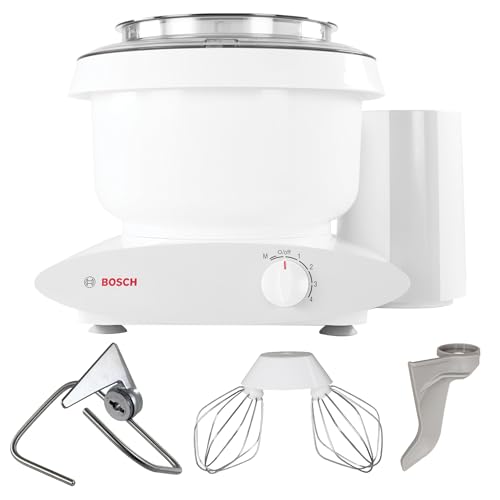
- Handles very large dough batches
- Belt-driven design emphasizes torque
- Includes dough hook extender
Best For: Frequent bakers and large households
Best Overall
Martha Stewart 5.3-Quart Stand Mixer
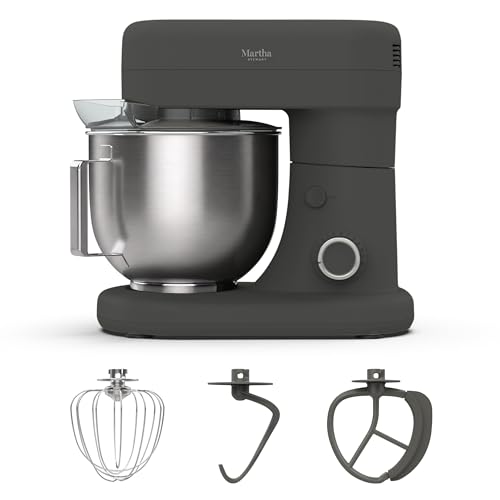
- 5.3-quart stainless steel bowl
- 12 speeds with dough hook included
- Dishwasher-safe accessories
Best For: Beginners wanting a versatile mixer for bread and everyday baking
Best With Digital Controls
CUSIMAX 5-Quart Digital Stand Mixer

- Digital speed and 15-minute timer
- 650-watt motor with metal gears
- Includes dough hook and splash guard
Best For: Beginners who prefer timed, display-based mixing controls
Best for Small Kitchens
Electactic 5.3-Quart Stand Mixer

- Space-conscious 8-pound design
- 12 speeds plus pulse function
- 5.3-quart bowl with dough hook
Best For: Beginners in apartments or smaller households
Best Large-Capacity Value – Aucma 6.5-Quart Stand Mixer
For beginners searching for a stand mixer for bread, the Aucma offers a roomy 6.5-quart bowl, a 660-watt motor, and a dedicated dough hook. Its tilt-head design and splash guard make adding ingredients and changing attachments straightforward.
Best For: Beginners who want a large bowl and strong everyday mixing capacity for bread, cakes, cookies, and pastries.
Pros:
- 660-watt motor with six speeds and pulse function
- 6.5-quart stainless steel bowl with convenient dual handles
- Includes dough hook, whisk, beater, and splash guard
- Dishwasher-safe mixing accessories
Cons:
- Reported noise level is up to 76 dB
- Larger footprint than a compact four-quart mixer
The Aucma is a practical starting point for bread beginners who expect to make larger batches. Its capacity and included tools are useful, though shoppers with limited counter space may prefer a smaller model.
Best Compact Starter – Hamilton Beach 4-Quart Stand Mixer
The Hamilton Beach is a straightforward stand mixer for bread beginners who want a smaller setup. Its 4-quart stainless steel bowl, seven speeds, and included dough hook cover basic bread, cookie, cake, and whipping tasks.
Best For: Beginners who prioritize a compact, versatile mixer for everyday recipes and smaller batches.
Pros:
- Planetary mixing action provides coverage around the bowl
- Seven speeds for folding, mixing, and whipping
- Includes dough hook, whisk, and flat beater
- Stainless steel bowl and removable splatter shield
Cons:
- Smaller 4-quart capacity than the other large-bowl options
- 300-watt motor offers less stated power than the larger mixers
With a modest footprint and useful attachment set, this Hamilton Beach model is approachable for first-time bakers. Its smaller bowl is best suited to routine home batches rather than high-volume bread making.
Best for Heavy Dough – Kitchen in the box 8.5-Quart Mixer
For beginners who plan to make substantial bread dough, this Kitchen in the box model combines a 900-watt motor with an 8.5-quart stainless steel bowl. Its tilt head, pulse function, and ten-speed control provide room to learn different mixing and kneading techniques.
Best For: Families and new bakers who want extra capacity and a mixer designed around heavy dough and larger batches.
Pros:
- 900-watt copper motor is specified for heavy dough
- Large 8.5-quart bowl suits family use and gatherings
- Ten speeds plus pulse function for kneading, mixing, and whipping
- Dishwasher-safe bowl, guard, and accessories
Cons:
- Large dimensions may require considerable counter space
- Large capacity may be unnecessary for occasional small batches
This is the most capacity-focused option in the group and a strong fit if bread is a regular project. Its size and power may be more mixer than a beginner needs for small recipes.
Best Long-Term Starter – KitchenAid Classic 4.5-Quart Mixer
The KitchenAid Classic is a durable-feeling stand mixer for bread beginners who want a proven, expandable setup. It has a 4.5-quart stainless steel bowl, ten speeds, a tilt head, and the core dough hook, beater, and wire whip attachments.
Best For: Beginners who value metal construction, precise speed control, and the option to add KitchenAid attachments later.
Pros:
- Durable metal construction with 59 bowl touchpoints
- Ten speeds for gentle mixing through whipping
- Includes coated dough hook, flat beater, and six-wire whip
- Compatible with more than ten optional attachments
Cons:
- Heavier than the other listed mixers at 24.2 pounds
- Optional attachments are sold separately
- 275-watt motor is the lowest stated wattage in this selection
The Classic makes sense for beginners who expect to keep baking and may want to expand beyond bread. Its smaller bowl and substantial weight favor countertop stability over easy portability.
Small-Space Starter – Compact 3.2-Quart Stand Mixer
If you are looking for a stand mixer for bread beginners and have limited counter or storage space, this lightweight Kitchen in the box model is an approachable option. Its 3.2-quart bowl, six speeds, tilt head, and dough hook cover basic bread-making and everyday mixing without taking up much room.
Best For: New bakers, couples, and small kitchens that need a compact mixer for occasional bread dough and general baking.
Pros:
- Lightweight, compact design weighs less than 7 pounds.
- Six speeds support bread dough, batters, meringues, and whipped cream.
- Includes a dough hook, flat beater, whisk, stainless steel bowl, and splash lid.
- Four anti-slip suction feet help keep the mixer steady.
Cons:
- The 3.2-quart capacity is better suited to small batches than large bread recipes.
- Its 300-watt motor offers less stated power than the larger mixers in this roundup.
This is a sensible entry point for beginners who value portability and simple controls. Choose it when small-batch baking and easy storage matter more than maximum dough capacity.
Family Batch Pick – 6-Quart Tilt-Head Mixer
For beginners who want room to grow, this VIVOHOME model is a capable stand mixer for bread beginners, with a 6-quart bowl and 660-watt motor. Ten speeds, a dough hook, and planetary mixing make it suitable for learning bread dough while also handling everyday batters and creams.
Best For: Families or bakers making larger batches who want beginner-friendly controls and a versatile attachment set.
Pros:
- 6-quart bowl is rated to hold up to three bread loaves or 2.2 pounds of flour.
- 660-watt motor and ten speeds provide useful range for dough and other recipes.
- Includes a whisk, aluminum dough hook, beater, and egg separator.
- Suction cups, a tilt head, splash guard, and low-noise operation improve convenience.
Cons:
- Its 15.2-by-8.8-by-18.8-inch footprint requires more storage space than a mini mixer.
- The included aluminum dough hook may require more care than a stainless-steel attachment.
This mixer offers a useful middle ground for beginners: enough capacity for family-sized baking without the more specialized design of a heavy-duty bread machine. Its larger footprint is the main trade-off.
High-Volume Bread Choice – Bosch Universal Plus 6.5-Quart Mixer
The Bosch Universal Plus is a strong choice for a stand mixer for bread beginners who expect to bake frequently or move quickly into large whole-grain batches. Its 6.5-quart bowl, belt-driven transmission, bottom-drive design, and included dough hook are built around substantial dough quantities.
Best For: Serious bread learners, large households, and bakers who want capacity for multiple loaves or other high-volume recipes.
Pros:
- 6.5-quart bowl is rated for up to 14 loaves or 15 pounds of whole-grain bread dough.
- Belt-driven transmission is designed to provide torque for demanding recipes.
- Includes wire whips, dough hook, bowl, lid, splash ring, and NutriMill dough hook extender.
- Optional attachments can expand its use for slicing, shredding, grinding, juicing, and pasta making.
Cons:
- Only four speeds are listed, giving less speed adjustment than the VIVOHOME model.
- The supplied specifications list 230 volts, so buyers should verify electrical compatibility before purchasing.
- The plastic bowl may feel less traditional than a stainless-steel bowl.
This is the most bread-focused option here for large quantities, but it may be more machine than an occasional beginner needs. Confirm the voltage and make sure your baking volume justifies its larger capacity.
Best Overall – Martha Stewart 5.3-Quart Stand Mixer
For anyone shopping for a stand mixer for bread beginners, this Martha Stewart model offers a straightforward setup with a generous 5.3-quart bowl, 12 speeds, and a dedicated dough hook. Its tilt-head design and removable splash shield make it easier to add ingredients and monitor dough while you learn.
Best For: Beginners who want a roomy bowl, simple knob controls, and a sturdy mixer for bread and general baking.
Pros:
- 5.3-quart stainless steel bowl can handle bread dough and larger baking batches.
- Includes a dough hook, whisk, and silicone-edge flat beater.
- 12 speed settings provide control for gentle mixing through thicker doughs.
- Dishwasher-safe accessories and a removable splash shield simplify cleanup.
Cons:
- The listed dimensions may take up noticeable counter space despite its slim design.
- At 660 watts, it is best suited to typical home-baking quantities rather than commercial use.
With its useful attachments, broad speed range, and accessible tilt-head layout, this is a well-rounded choice for new bakers who expect to make bread along with cakes, cookies, and whipped mixtures.
Best With Digital Controls – CUSIMAX 5-Quart Digital Stand Mixer
This CUSIMAX is a practical stand mixer for bread beginners who appreciate timed mixing and a visible digital display. Its 650-watt motor, 5-quart bowl, and dough hook cover common bread-making needs, while the tilt head and suction cups help keep setup manageable.
Best For: New bakers who want digital speed and timer controls with a compact, accessory-ready design.
Pros:
- Digital display allows adjustment of eight speeds and mixing time up to 15 minutes.
- 650-watt metal-geared motor is designed for heavy-duty mixing.
- Includes a dough hook, beater, wire whisk, bowl, and splash guard with access port.
- Anti-slip silicone suction cups help keep the mixer steady during use.
Cons:
- The digital controls require following the manual’s specific startup sequence.
- The 5-quart bowl is slightly smaller than some models in this roundup.
The timer and display can make repeat recipes easier to follow, although beginners may need a short adjustment period to the electronic controls. Its 18-month after-sales service is an additional support feature.
Best for Small Kitchens – Electactic 5.3-Quart Stand Mixer
For a stand mixer for bread beginners in an apartment or compact kitchen, the Electactic combines a 5.3-quart bowl with a relatively light, space-conscious design. Twelve speeds, a pulse function, and a dough hook provide flexibility for bread dough, while suction feet help improve stability.
Best For: New bakers with limited storage space who want enough bowl capacity for bread, cookies, and small household batches.
Pros:
- 5.3-quart stainless steel bowl offers useful capacity for bread and other recipes.
- 12 speeds plus pulse provide control from slow stirring to faster mixing.
- Lightweight 8-pound design is easier to store and move than heavier mixers.
- Includes a dough hook, whisk, flat beater, splash-proof lid, and entry hatch.
Cons:
- The 300-watt motor is lower-powered than the other listed models.
- The supplied notes describe the mixer as suitable for smaller households and everyday quantities, not especially large batches.
This model is appealing when storage and maneuverability matter most. Its larger bowl and useful attachments make it versatile, but bakers planning frequent heavy dough mixing may prefer a higher-wattage option.
How We Picked the Best Stand Mixer for Bread Beginners
We focused on the features that matter most when learning to make bread: dough-hook performance, bowl capacity, speed control, stability, and day-to-day usability. We also included a range of sizes and prices so beginners can choose a mixer that fits their kitchen, baking habits, and expected batch volume.
Wattage is useful for comparison, but it does not tell the whole story. Gear design, motor efficiency, bowl shape, and the manufacturer’s recommended dough capacity can affect how well a mixer handles bread dough.
Quick Comparison
| What to Compare | Best For | What to Watch |
|---|---|---|
| 3.2–4.5-quart bowl | Small kitchens and occasional baking | Limited room for large loaves or multiple batches |
| 5.3–6.5-quart bowl | Regular home bread baking | Larger footprint and heavier storage |
| 8-quart-plus bowl | Large batches and frequent baking | May be more machine than a beginner needs |
| Tilt-head design | Easy access for adding ingredients | Can feel less suited to very heavy dough at maximum capacity |
| High-capacity or lift-style design | Dense dough and larger batches | Usually takes more counter space |
Key Buying Factors for a Stand Mixer for Bread Beginners
Dough Capacity
Look beyond the advertised bowl size. Bread dough is heavier than cake batter, so check the maker’s guidance for yeast dough and avoid filling the bowl to its maximum volume. A 4-quart mixer may suit one small loaf, while a 5- to 6.5-quart model gives beginners more flexibility.
Motor and Kneading Performance
A mixer should knead without excessive shaking, overheating, or stalling. Use the lowest recommended speed for dough, and choose a model with a sturdy base and solid bowl attachment. More wattage can help, but dependable construction matters just as much.
Speed Control and Attachments
Multiple speeds make it easier to mix ingredients gently before kneading. A dough hook is essential; a flat beater and wire whisk add versatility for cookies, cakes, eggs, and frosting. A splash guard can also reduce mess during early mixing.
Size, Noise, and Cleanup
Measure your counter and storage space before ordering. Larger mixers generally offer more capacity but can be difficult to move. Removable bowls and dishwasher-safe accessories simplify cleanup, while lower-noise operation is valuable in open kitchens.
Who Should Buy Which Stand Mixer for Bread Beginners?
Choose a compact mixer if you bake small batches, have limited counter space, or want a lightweight machine for occasional bread and everyday mixing. Choose a 4- to 5.3-quart model if you want a balanced all-purpose mixer for a typical household. Choose a 6- to 8.5-quart machine if you regularly make multiple loaves, enriched doughs, or larger family-size batches.
For most first-time bread bakers, the best choice is not the biggest or most powerful mixer. It is the model with enough dough capacity, straightforward controls, a dependable dough hook, and a size you will comfortably use and store.