Choosing the right infrared thermometer can make it easier to check refrigerator shelves, freezer surfaces, containers, grills, and hot cookware without unnecessary contact. The best models combine a useful temperature range with dependable targeting, readable displays, and controls that suit everyday kitchen work.
This roundup compares 10 infrared thermometers for food storage, including versatile units with built-in meat probes and options designed for cooking, pizza ovens, BBQ, and general temperature checks.
Best 10 Infrared Thermometers for Food Storage Picks for 2026
Best Everyday Surface Scanner

- -58°F to 842°F measurement range
- Fast, backlit 0.5-second readings
- 12:1 distance-to-spot ratio
Best For: Routine surface checks around the kitchen and home
Best Simple IR-and-Probe Combo
Blackstone Infrared Thermometer

- Infrared surface gauge plus folding probe
- Surface range from 0°F to 932°F
- LCD display with low-battery indicator
Best For: Cooks needing both surface and internal food readings
Best Wide-Range Surface Gun

- -58°F to 1,130°F temperature range
- Adjustable 0.1–1.0 emissivity
- Shows maximum measured temperature
Best For: High- and low-temperature surface checks
Best Dual-Reading Kitchen Tool

- Infrared scanner plus meat probe
- 2–3-second probe readings
- Motion-sensing wake and sleep
Best For: Home chefs checking surfaces and internal food temperatures
Reliable Everyday Pick
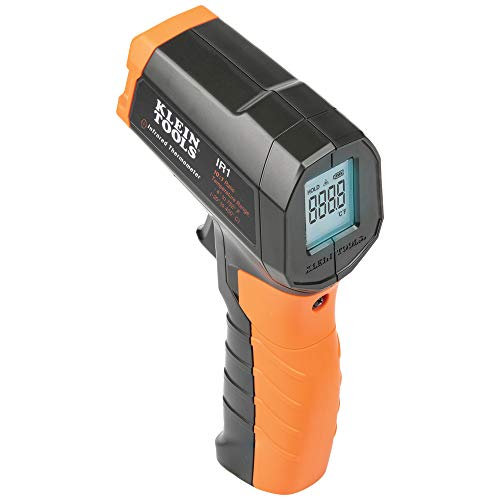
- 10:1 distance-to-spot ratio
- -4°F to 752°F measurement range
- Laser, backlit display, and auto-hold
Best For: Simple household and kitchen temperature checks
Most Adjustable Option

- Adjustable emissivity from 0.1 to 1.0
- -58°F to 1,022°F range
- 12:1 ratio with MAX/MIN/AVG readings
Best For: Mixed-surface cooking and household measurements
Food-Safety Specialist

- Dual laser defines a 0.87-inch target
- 16:1 distance-to-spot ratio
- HACCP-focused accuracy in the danger zone
Best For: Food-service and kitchen safety inspections
Wide-Range Pick

- -58°F to 1112°F range with 0.5-second readings
- One-button calibration helps maintain consistency
- Backlit display with auto-shutoff and low-battery alert
Best For: Versatile kitchen, food-surface, and household temperature checks
Simple Budget Option
GM50 Non-Contact Infrared Thermometer

- -58°F to 932°F range for cooking and surface checks
- 0.1° resolution with Celsius/Fahrenheit selection
- Backlight, data hold, and 8-second auto shutoff
Best For: Basic non-contact readings on food and matte surfaces
Most Versatile Food Tool

- Infrared surface sensor plus stainless-steel meat probe
- 0°F to 1022°F range with fast readings
- MAX/MIN/AVG functions and foldable probe
Best For: Cooking, grilling, and checking both surface and internal food temperatures
Best Everyday Surface Scanner – Etekcity Lasergrip 774
If you need infrared thermometers for food storage and general household checks, the Etekcity Lasergrip 774 offers quick, non-contact surface readings. Its 12:1 distance-to-spot ratio, backlit display, and included batteries make it convenient for checking refrigerators, freezers, cooking surfaces, and other objects.
Best For: Home users who want a straightforward infrared thermometer for food storage and everyday indoor or outdoor temperature checks.
Pros:
- Measures from -58°F to 842°F (-50°C to 450°C).
- Provides readings in about 0.5 seconds on a bright, backlit LCD.
- 12:1 distance-to-spot ratio supports comfortable non-contact measurement.
- Includes two AAA batteries and a two-year warranty.
Cons:
- Measures surface temperature rather than internal food temperature.
- Its maximum range is lower than the advanced Etekcity model in this roundup.
The Lasergrip 774 is a practical, versatile choice when you mainly need fast surface readings. For checking the internal temperature of food, pair it with a suitable probe thermometer.
Best Simple IR-and-Probe Combo – Blackstone Infrared Thermometer
The Blackstone Infrared Thermometer with Probe combines surface scanning with direct internal readings, making it a flexible option among infrared thermometers for food storage. Use the infrared function for surfaces and the folding probe for internal food temperatures when a surface reading is not enough.
Best For: Cooks who want one compact tool for checking food surfaces and internal temperatures.
Pros:
- Combines a non-contact infrared gauge with a folding food probe.
- Infrared range extends from 0°F to 932°F.
- Probe range covers 122°F to 572°F.
- Easy-to-read LCD display and low-battery indicator.
Cons:
- The infrared and probe functions have separate temperature ranges.
- It requires eight AA batteries according to the supplied specifications.
- The unit should not be soaked.
Because it includes a probe, this Blackstone model is more useful for food-related tasks than a surface-only infrared gun. Its separate temperature ranges are worth noting when planning how you will use it.
Best Wide-Range Surface Gun – Etekcity Lasergrip 1080
For demanding kitchen and household checks, the Etekcity Lasergrip 1080 offers an especially broad range from -58°F to 1,130°F. It is one of the more versatile infrared thermometers for food storage, with adjustable emissivity, maximum-temperature display, and a 12:1 distance-to-spot ratio for non-contact surface readings.
Best For: Users who want a configurable infrared thermometer for very hot or cold surfaces, cooking equipment, and general home projects.
Pros:
- Wide -58°F to 1,130°F measurement range.
- Adjustable emissivity from 0.1 to 1.0 for different surfaces.
- Displays the maximum surface temperature measured.
- Backlit LCD, 0.5-second response time, and included AAA batteries.
Cons:
- It reads surface temperature, not internal food temperature.
- Adjustable emissivity may require more setup than a basic thermometer.
- The supplied specifications list indoor use.
The Lasergrip 1080 is a strong fit when temperature range and control matter more than simplicity. Its advanced settings are useful for varied surfaces, but food interiors still require a probe-style thermometer.
Best Dual-Reading Kitchen Tool – TempPro TempScan 2-in-1
The TempPro TempScan 2-in-1 pairs a non-contact infrared sensor with a meat probe, giving you both surface and internal readings in one tool. For food storage and cooking workflows, it can check pan, oven, or grill surfaces with infrared scanning, then measure food or liquids directly with the probe.
Best For: Home chefs and grill users who need a versatile thermometer for surfaces, meats, candy, frying oil, soups, or milk.
Pros:
- Combines a 12:1 infrared sensor with an internal food probe.
- Probe delivers readings in 2–3 seconds with stated ±1.8°F precision.
- Adjustable emissivity supports different surface materials.
- Motion-sensing wake and sleep design helps conserve battery power.
Cons:
- It requires contact for internal food readings despite its infrared function.
- The stated infrared range tops out at 1,022°F.
- The probe and housing require cleaning after food-related use.
This is the most complete food-focused option in the group because it handles both surface and internal temperatures. Its built-in magnet, hanging hole, low-battery indicator, and auto-off feature add practical convenience in a busy kitchen.
Reliable Everyday Pick – Klein Tools IR1
For shoppers comparing infrared thermometers for food storage, the Klein Tools IR1 offers a straightforward, non-contact way to check surface temperatures. Its 10:1 distance-to-spot ratio, targeting laser, and backlit display make it practical for quick checks, though its fixed emissivity is best suited to consistent surfaces.
Best For: Home users who want a simple, durable infrared thermometer for general temperature checks.
Pros:
- Measures from -4°F to 752°F for broad household and cooking-related use.
- 10:1 optical resolution supports readings from a short distance.
- Includes a targeting laser, auto-hold, backlit display, pouch, and 9V battery.
Cons:
- Fixed 0.95 emissivity offers less surface-specific flexibility.
- Not intended for measuring people or animals.
The IR1 is a sensible choice when ease of use matters more than advanced calibration controls. Its broad range and quick 0.5-second response suit routine checks, while the fixed emissivity may limit accuracy on some materials.
Most Adjustable Option – TempPro TempScan
Among infrared thermometers for food storage, the TempPro TempScan stands out for adjustable emissivity and a wide operating range. It can measure surfaces from -58°F to 1,022°F, while its 12:1 distance-to-spot ratio helps with readings from farther away.
Best For: Users who need flexible surface measurement for food preparation, griddles, ovens, and general household tasks.
Pros:
- Adjustable emissivity from 0.1 to 1.0 helps match different surface materials.
- 12:1 distance-to-spot ratio and response time under 500 milliseconds support fast readings.
- Displays maximum, minimum, and average readings and includes a backlit LCD.
Cons:
- Its feature set may be more than needed for basic storage checks.
- The supplied notes describe it as battery powered with two AAA batteries, so users should plan for battery replacement.
With its adjustable emissivity and unusually broad temperature range, the TempScan is the most versatile option of these three. It is particularly useful when you regularly measure different surfaces rather than only checking one type of container or food item.
Food-Safety Specialist – FI40L Food Inspector
For food-focused applications, the FI40L Food Inspector is purpose-built for checking surfaces such as buffet items, deli meats, seafood, baked goods, and walk-in coolers. Its dual laser defines a 0.87-inch target area, while the stated HACCP accuracy compliance is especially relevant for food-safety workflows.
Best For: Home, commercial, and professional kitchen users prioritizing food-safety temperature inspections.
Pros:
- Dual laser sighting and a 16:1 distance-to-spot ratio make aiming precise.
- Designed for food applications, including storage, buffets, coolers, grills, and baking.
- Conforms to stated HACCP accuracy guidelines in the 40°F to 140°F danger zone.
Cons:
- Its maximum temperature is 536°F, lower than the TempPro TempScan’s range.
- Preset emissivity provides less adjustment flexibility for varied non-food surfaces.
The FI40L is the strongest match for food storage and food-service monitoring because its targeting system and food-safety specifications are central to its design. Choose it when documented food-oriented performance matters more than maximum temperature range.
Wide-Range Pick – UW510 Infrared Thermometer
For shoppers comparing infrared thermometers for food storage and kitchen use, the UW510 stands out with a broad temperature range, quick readings, and a calibration function designed to help maintain consistency over time. Its non-contact operation is useful for checking food surfaces, cooking oils, ovens, and other household equipment.
Best For: Home cooks and DIY users who want a versatile, fast-reading infrared thermometer with calibration and a wide operating range.
Pros:
- Measures from -58°F to 1112°F with readings in as little as 0.5 seconds.
- One-button calibration function helps counter reading drift over time.
- Backlit LCD, auto-shutoff, and low-battery indicator support convenient use.
- Non-contact design works for food surfaces, oils, HVAC equipment, and appliances.
Cons:
- It is a surface thermometer, so it does not measure internal food temperature.
- Battery powered with two AAA batteries.
The UW510 is a practical all-purpose option when you need both very high temperature coverage and calibration controls. For food storage tasks, remember that its infrared sensor reads surface temperature rather than the temperature inside food or containers.
Simple Budget Option – GM50 Non-Contact Infrared Thermometer
The GM50 is a straightforward choice among infrared thermometers for food storage, cooking, and surface checks. It offers a -58°F to 932°F range, a backlit LCD, and scan-and-hold operation, while its preset emissivity is suited to many organic, painted, or oxidized surfaces.
Best For: Users seeking a basic non-contact thermometer for cooking, BBQ, pizza ovens, and general surface-temperature checks.
Pros:
- Wide -58°F to 932°F measurement range.
- 0.1° display resolution with selectable Celsius/Fahrenheit conversion.
- Backlight, data hold, and automatic shutdown support easy operation.
- Includes two AAA batteries and a manual.
Cons:
- Preset emissivity of 0.95 can produce inaccurate readings on shiny or polished metal.
- It is not intended for measuring human temperature.
- Its listed response time is up to 10 seconds, despite scan operation beginning when the trigger is pulled.
The GM50 keeps the feature set simple and useful for routine kitchen surface measurements. It is best suited to matte or organic surfaces; for reflective cookware, the supplied guidance recommends using masking tape or flat black paint as a measurement surface.
Most Versatile Food Tool – ROOKPRO 2-in-1 Thermometer
For food storage and cooking tasks that require both surface and internal readings, the ROOKPRO combines an infrared thermometer with a stainless-steel meat probe. It can check griddles, oil, pizza ovens, and grills without contact, then measure food’s internal temperature with the probe.
Best For: Cooks and grillers who need one tool for surface temperatures and internal meat or food readings.
Pros:
- 2-in-1 design measures both surface and internal temperatures.
- Probe provides internal readings within 0.5 seconds and is rated accurate to ±1°F.
- 12:1 distance-to-spot ratio and sub-500ms infrared response support readings from farther away.
- Displays MAX, MIN, and AVG results and includes a foldable 180° probe.
Cons:
- The probe requires direct contact and cleaning, unlike the infrared function.
- The infrared range starts at 0°F, so it does not cover subzero temperatures.
- Designed for food and household applications, not human temperature measurement.
The ROOKPRO is the strongest fit when a surface-only infrared thermometer would be limiting. Its combination of non-contact checks and direct internal measurements makes it more adaptable for cooking, grilling, and food-related temperature work.
How We Picked the Best Infrared Thermometers for Food Storage
We focused on features that matter when checking food-storage environments and kitchen surfaces: measurement range, targeting accuracy, emissivity controls, display readability, response speed, and ease of use. Models with a contact probe received extra consideration because infrared readings show surface temperature, while a probe can check the internal temperature of food or liquids.
We also looked for practical functions such as auto-hold, minimum and maximum readings, backlighting, adjustable emissivity, calibration support, and dual-laser targeting. Because intended use varies, the selection includes compact cooking thermometers, broad-range units, and models suitable for grills, pizza ovens, HVAC checks, and other household tasks.
Quick Comparison
- Best versatility: Choose a 2-in-1 infrared thermometer with a meat probe for both surface and internal readings.
- Best for broad temperature ranges: Look for models reaching roughly 1,000°F or more if you also use a grill, griddle, or pizza oven.
- Best for routine food checks: A fast, simple infrared gun with a clear backlit screen may be all you need.
- Best for precision targeting: Dual lasers, adjustable emissivity, and distance-to-spot guidance can improve consistency.
Key Buying Factors for Infrared Thermometers for Food Storage
Surface Versus Internal Temperature
Infrared thermometers measure surface temperature, so they are useful for checking refrigerator interiors, freezer surfaces, containers, pans, and cooking equipment. They cannot confirm the center of thick food. For leftovers, meat, sauces, and other foods where internal temperature matters, select a model with a contact probe or use a separate food thermometer.
Range and Accuracy
For refrigerators and freezers, a modest range is usually sufficient. Higher maximum temperatures are valuable for cooking applications but do not automatically mean better low-temperature accuracy. Check the stated accuracy, resolution, and operating limits, especially if you need reliable readings near freezing.
Emissivity and Targeting
Different surfaces emit infrared energy differently. Adjustable emissivity is helpful for reflective metal, glossy packaging, cookware, and other challenging materials. A laser helps aim the thermometer, while dual lasers or a clearly defined distance-to-spot ratio can make readings more repeatable.
Usability and Hygiene
Prioritize a readable display, quick response, one-handed controls, auto-off, and a body that is easy to wipe clean. For food-related work, avoid treating the laser reading as a substitute for safe handling practices, calibrated storage equipment, or a probe-based internal check.
Who Should Buy Which Infrared Thermometers for Food Storage?
Buy a basic infrared gun if you mainly want quick, noncontact checks of refrigerator shelves, freezer surfaces, storage containers, or cookware. Choose a dual-function infrared thermometer with a meat probe if one tool must handle both surface scans and internal food temperatures. For serious BBQ, pizza, or griddle use, favor a wide-range model with adjustable emissivity and minimum/maximum tracking. If you work across kitchen equipment and household maintenance, a rugged unit with a broad range, targeting laser, and clear controls will provide the most flexibility.