The best infrared thermometer for home use makes it easy to check surface temperatures without touching hot, cold, moving, or hard-to-reach objects. These models cover practical needs from pizza ovens and griddles to HVAC vents, appliances, and workshop projects.
Our roundup compares temperature range, targeting features, measurement distance, durability, and ease of use so you can choose a reliable tool for the jobs you handle most often.
Best 10 Infrared Thermometer for Home Picks for 2026
Best Everyday Value

- Fast 0.5-second readings
- 12:1 distance-to-spot ratio
- Backlit display and two AAA batteries included
Best For: Routine household, garage, and outdoor surface checks
Best With Probe

- Combines IR and probe readings
- 8:1 optical resolution
- Includes hanging hook and pouch
Best For: HVAC checks, vents, ducts, and liquids
Best High-Heat Range

- Measures up to 1,130°F
- Adjustable 0.1–1.0 emissivity
- Shows maximum surface temperature
Best For: High-heat household, automotive, and workshop tasks
Best Heavy-Duty Pick

- Measures up to 1,202°F
- Dual rotating targeting lasers
- IP54 dust and splash protection
Best For: Serious HVAC, electrical, automotive, and workshop use
Best All-Around Range

- -58°F to 1022°F measurement range
- Adjustable emissivity from 0.1–1.0
- Fast 12:1 readings with MAX/MIN/AVG display
Best For: Cooking, HVAC, automotive, and home repairs
Best Simple Professional Pick
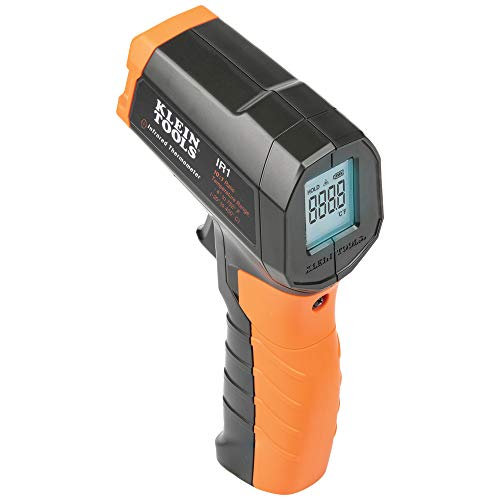
- -4°F to 752°F measurement range
- 10:1 distance-to-spot ratio
- Laser targeting, backlit display, and auto-hold
Best For: Indoor maintenance and routine surface checks
Best for High-Heat Cooking

- -58°F to 1112°F temperature range
- 12:1 targeting distance and single laser
- Adjustable emissivity with large LCD
Best For: Ovens, grills, candy making, and pool maintenance
Best Industrial Pick

- -22°F to 932°F range
- 10:1 laser targeting
- IP54, drop-resistant design
Best For: HVAC, electrical, mechanical, and automotive checks
Best for Pizza Ovens
Ooni Digital Infrared Thermometer

- Calibrated for Ooni baking stones
- Readings in under 300 milliseconds
- Adjustable emissivity and scan mode
Best For: Pizza ovens, baking stones, barbecue, and cooking surfaces
Best Budget Cooking Option

- -58°F to 932°F range
- Backlit LCD with 0.1° resolution
- Scan, hold, and auto-shutoff functions
Best For: BBQ, pizza ovens, and everyday cooking surfaces
Best Everyday Value – Etekcity Lasergrip 774
The Etekcity Lasergrip 774 is a practical infrared thermometer for home use, offering quick, non-contact readings for surfaces around the house, garage, workshop, or yard. Its 12:1 distance-to-spot ratio, backlit display, and broad -58°F to 842°F range make it a versatile general-purpose option.
Best For: Everyday household checks, cooking surfaces, HVAC components, appliances, and automotive tasks.
Pros:
- Measures temperatures in about 0.5 seconds.
- 12:1 distance-to-spot ratio supports readings from a comfortable distance.
- Backlit LCD is easy to read in low light.
- Includes two AAA batteries and a two-year warranty.
Cons:
- Measures surface temperature rather than human temperature.
- The 842°F maximum is lower than some advanced models.
For most home projects, the Lasergrip 774 balances useful range, simple operation, and affordability. Its average-surface reading feature is helpful for broader checks, but users should follow the recommended measuring distance for best results.
Best With Probe – Klein Tools IR07
Klein Tools IR07 Dual Infrared (IR) and Probe Thermometer | Pocket Size LCD Digital Thermometer
Check Price On AmazonThe Klein Tools IR07 combines infrared scanning with a contact probe, making it a flexible infrared thermometer for home HVAC and maintenance work. It reads from -40°F to 752°F and adds a hands-free hanging hook for checking vents, ducts, and liquids.
Best For: HVAC troubleshooting, air vents, ducts, liquids, and users who need both non-contact and probe measurements.
Pros:
- Dual IR and probe modes cover more measurement tasks.
- 8:1 distance-to-spot ratio supports readings at a distance.
- Calculates differential temperature between IR and probe readings.
- Includes a pouch, batteries, and a hanging hook for vents.
Cons:
- Its 752°F upper range is narrower than the range of some competitors.
- Intended for indoor use and is not a medical device.
The IR07 is a strong choice when a basic surface scanner is not enough. Its probe and differential-temperature functions make it particularly useful for diagnosing temperature differences in household systems.
Best High-Heat Range – Etekcity Lasergrip 1080
For demanding home projects, the Etekcity Lasergrip 1080 extends infrared thermometer coverage from -58°F to 1,130°F. It adds adjustable emissivity, maximum-temperature display, a 12:1 distance-to-spot ratio, and a backlit screen for more controlled surface measurements.
Best For: Heat-gun work, ovens, grills, automotive projects, and other high-temperature surface checks.
Pros:
- Wide -58°F to 1,130°F measurement range.
- Adjustable emissivity from 0.1 to 1.0 supports different surfaces.
- Displays maximum temperature and provides readings in about 0.5 seconds.
- Includes a backlit LCD and battery indicator.
Cons:
- Emissivity adjustment requires more setup than a basic thermometer.
- Designed for surface temperatures, not people.
The Lasergrip 1080 is the better fit when high-heat capability matters more than simplicity. Its expanded range and emissivity control offer useful flexibility for advanced household and workshop measurements.
Best Heavy-Duty Pick – Fluke 62 MAX+
Fluke 62 Max+ Infrared Thermometer (Not for Human Temp), -20 to +1202 Degree F Range
Check Price On AmazonThe Fluke 62 MAX+ is a rugged, professional-oriented infrared thermometer for home users who want advanced measurement controls. It covers up to 1,202°F, uses dual rotating lasers to define the measurement area, and carries an IP54 rating for dust and splashing-liquid protection.
Best For: Electrical, mechanical, HVAC, automotive, and other demanding maintenance checks.
Pros:
- Measures from -22°F to 1,202°F according to the supplied range.
- Dual rotating lasers help identify the measurement area.
- Displays minimum, maximum, difference, and average temperatures.
- Compact design, backlit display, and three-year warranty.
Cons:
- Not intended for human temperature measurement.
- Its professional features may be more than casual household users need.
- Requires one AA battery rather than included AAA batteries.
The 62 MAX+ stands out for users who value durability, measurement statistics, and precise targeting. It is a premium infrared thermometer for home workshops and maintenance jobs where repeatable readings are important.
Best All-Around Range – TempPro TempScan
If you want an infrared thermometer for home projects, cooking, and vehicle checks, the TempPro TempScan offers a versatile temperature range and adjustable emissivity. Its 12:1 distance-to-spot ratio, fast response, and MAX/MIN/AVG readings make it practical for checking surfaces from a safe distance.
Best For: Pizza ovens, griddles, HVAC vents, car engines, and general home repairs.
Pros:
- Measures from -58°F to 1022°F for hot and cold applications.
- Adjustable emissivity from 0.1–1.0 helps match different surface materials.
- Fast readings in under 500 milliseconds with a 12:1 distance-to-spot ratio.
- Backlit display shows MAX, MIN, and AVG readings.
Cons:
- Requires two AAA batteries.
- Laser targeting is limited to a single laser.
Its broad range and customizable settings make this a strong choice when one thermometer needs to cover several household tasks. The plastic construction and compact size also suit routine indoor and outdoor use.
Best Simple Professional Pick – Klein Tools IR1
The Klein Tools IR1 is a straightforward infrared thermometer for home maintenance and indoor temperature checks. It uses a 10:1 distance-to-spot ratio, laser targeting, and auto-hold functionality to make readings easier to take without touching the measured surface.
Best For: Indoor maintenance tasks where consistent readings and simple operation matter.
Pros:
- Measures temperatures from -4°F to 752°F.
- 10:1 optical resolution supports measurements from a distance.
- Includes laser targeting, a backlit display, and auto power off.
- Comes with a custom pouch and one 9V battery.
Cons:
- Fixed emissivity of 0.95 offers less flexibility across materials.
- Its range is narrower than some models designed for extreme temperatures.
- It is intended for non-medical use and not for people or animals.
Choose the IR1 if you prefer a focused feature set from an established tool brand. Its fixed emissivity simplifies operation, though users measuring varied surfaces may prefer an adjustable model.
Best for High-Heat Cooking – KNINE OUTDOORS TG-2024-OG
For high-heat cooking and outdoor tasks, the KNINE OUTDOORS infrared thermometer for home use reaches up to 1112°F. It combines a 12:1 distance-to-spot ratio with adjustable emissivity and a large LCD, making it useful for checking ovens, grills, candy, and other surfaces without contact.
Best For: Oven and grill checks, candy making, pool maintenance, and other outdoor temperature tasks.
Pros:
- Wide -58°F to 1112°F measurement range.
- Adjustable emissivity from 0.1–1.0 supports different materials.
- 12:1 distance-to-spot ratio allows measurements from a safer distance.
- Large eye-protect LCD display and selectable Fahrenheit/Celsius units.
Cons:
- Requires two AAA batteries.
- Uses single-laser targeting.
- Its plastic body may be less suited to demanding work environments.
The unusually high upper limit gives this model an advantage for very hot cooking surfaces. Adjustable emissivity adds useful flexibility, while the large display helps keep readings visible during hands-on tasks.
Best Industrial Pick – Fluke 62 MAX
If you need an infrared thermometer for home projects involving HVAC equipment, electrical systems, mechanical components, or automotive work, the Fluke 62 MAX offers a rugged, professional-oriented option. It measures non-contact surface temperatures from -22°F to 932°F and includes laser targeting for more precise aiming.
Best For: Home maintenance tasks that require a durable thermometer for equipment and surface checks—not human temperature measurement.
Pros:
- Wide -22°F to 932°F measurement range
- 10:1 distance-to-spot ratio with laser sighting
- IP54 protection against dust and splashing liquid
- Rugged design rated to withstand a 3-meter drop
Cons:
- Not designed for measuring human temperature
- More specialized than many casual household users need
- Uses a single AA battery and has a stated 500-millisecond response time
The Fluke 62 MAX is a strong choice when durability and dependable targeting matter more than basic kitchen convenience. Its industrial focus makes it especially useful for homeowners who regularly troubleshoot systems or maintain vehicles.
Best for Pizza Ovens – Ooni Digital Infrared Thermometer
For cooking-focused shoppers seeking an infrared thermometer for home use, the Ooni Digital Infrared Thermometer is tailored to pizza ovens and baking stones. It reads temperatures in under 300 milliseconds, offers adjustable emissivity for different materials, and uses a backlit color display for easy viewing.
Best For: Ooni oven owners and home cooks checking pizza stones, steel, barbecue surfaces, and other cooking materials.
Pros:
- Calibrated for Ooni cordierite baking stones
- Fast readings in less than 300 milliseconds
- Temperature Scan Mode shows minimum, maximum, and average readings
- Includes two AAA Duracell batteries and a removable hang loop
Cons:
- Primarily geared toward cooking and oven surfaces
- Accuracy is stated within 4°F
- Does not provide a human-temperature measurement feature
The Ooni model is a practical match for pizza-making because its calibration and scan features help assess baking-stone temperatures quickly. Adjustable emissivity also gives it added flexibility for steel and other surfaces.
Best Budget Cooking Option – Digital IR Thermometer Gun
This handheld infrared thermometer for home cooking covers a broad -58°F to 932°F range, making it suitable for checking pizza ovens, grills, and other hot surfaces. Its backlit LCD, trigger-based scan and hold functions, and compact design keep the controls straightforward for occasional household use.
Best For: Home cooks who want a wide-range, non-contact tool for barbecue, pizza ovens, and general surface-temperature checks.
Pros:
- Wide -58°F to 932°F measurement range
- 0.1°F/0.1°C display resolution with unit conversion
- Backlight supports use in darker conditions
- Includes two AAA batteries and automatic shutoff
Cons:
- Not for measuring human temperature
- Preset emissivity may give inaccurate readings on shiny or polished metals
- Listed response time is up to 10 seconds
This thermometer offers useful range and simple controls for cooking applications, but users should account for its fixed 0.95 emissivity setting. For reflective surfaces, the supplied guidance recommends covering the area with masking tape or flat black paint before measuring.
How We Picked the Best Infrared Thermometer for Home
We focused on handheld, non-contact models suitable for common household tasks, including cooking, grilling, pizza making, HVAC troubleshooting, automotive checks, and general DIY work. Selection factors included usable temperature range, measurement accuracy, distance-to-spot ratio, laser targeting, display readability, response speed, controls, and overall practicality.
We also considered specialized features such as probe thermometers, emissivity adjustment, auto-hold, backlighting, protective ratings, and rugged construction. A wide range is useful, but it does not automatically make a thermometer better for every home. The most suitable choice depends on the surfaces and temperatures you plan to measure.
Quick Comparison
| Best For | What to Look For |
|---|---|
| Pizza ovens and griddles | High-temperature range, quick readings, and a clear display |
| HVAC and home maintenance | Better distance-to-spot ratio, adjustable emissivity, and dependable targeting |
| General household use | Simple controls, broad range, auto-hold, and affordable replacement batteries |
| Professional or demanding work | Rugged construction, protective rating, accuracy documentation, and a reliable brand |
| Measuring internal food temperature | A model with a contact probe; infrared readings only measure the surface |
Key Buying Factors for an Infrared Thermometer for Home
Temperature Range and Accuracy
Choose a range that comfortably covers your intended use. Pizza ovens, cast-iron cookware, and grills can require higher limits than refrigerators, walls, or air vents. Accuracy matters most when comparing small differences, so check the stated accuracy and understand that shiny, reflective, or transparent surfaces can produce unreliable infrared readings.
Distance-To-Spot Ratio
This ratio indicates how far you can stand from a target while measuring a defined area. A higher ratio is helpful for HVAC ducts, electrical components, engines, and other difficult-to-reach surfaces. For close-up cooking, a standard ratio is often sufficient.
Emissivity and Targeting
Adjustable emissivity improves results on materials with different surface finishes. A laser pointer helps identify the measurement area, but it does not improve accuracy by itself. Keep the laser aimed at the center of the surface and avoid measuring through glass or plastic.
Display, Speed, and Durability
A backlit display is useful in ovenside or workshop lighting, while auto-hold and quick response make repeated checks easier. If the thermometer will travel between a garage, kitchen, or job site, prioritize a sturdy housing and, when relevant, an IP-rated design.
Who Should Buy Which Infrared Thermometer for Home?
Home cooks and pizza makers should prioritize fast readings, a high upper temperature limit, and an easy-to-read screen. Those checking HVAC systems or appliances should look for a stronger distance-to-spot ratio and emissivity controls. For occasional household tasks, a straightforward budget model with a broad range is usually enough.
Choose a Klein Tools or Fluke model when ruggedness, repeatable measurements, and professional-oriented features matter more than the lowest price. A probe-equipped thermometer is the better option when you need both surface readings and contact measurements. Whichever model you select, use it on clean, non-reflective surfaces when possible and follow the manufacturer’s guidance for the most dependable results.