Choosing the best stand mixer for bread dough means balancing kneading power, bowl capacity, stability, controls, and kitchen space. The right model should handle your usual batch size without overheating, walking across the counter, or making cleanup unnecessarily difficult.
This roundup compares 10 stand mixers across several budgets and formats, including bowl-lift and tilt-head designs, compact mixers, and dough-focused machines with specialized features.
Best 10 Stand Mixer for Bread Dough Picks for 2026
Professional Dough Performance

- Spiral system targets stronger gluten development
- 58 speeds from 60 to over 1,000 RPM
- Includes four versatile attachments
Best For: Frequent bread and pizza bakers seeking precise dough control
Mix-and-Proof Convenience
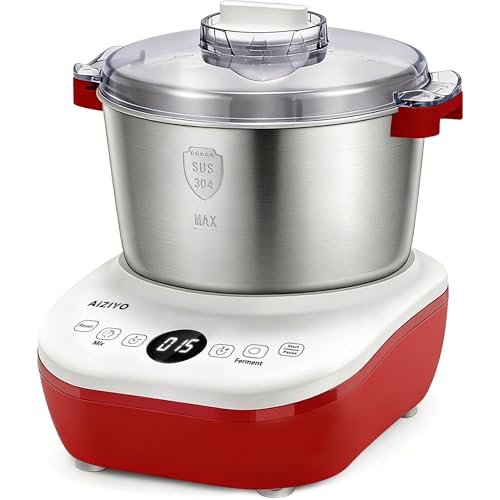
- Mixes and ferments dough in one appliance
- 77–100°F constant-temperature ferment mode
- Large 7.4-quart stainless steel bowl
Best For: Beginners wanting simpler bread and pizza dough preparation
Classic All-Purpose Mixer
KitchenAid Artisan 5-Qt Stand Mixer
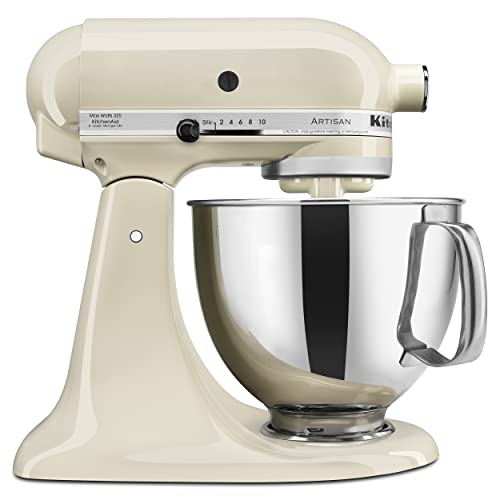
- 10 speeds for mixing, kneading, and whipping
- Durable metal construction with 5-quart bowl
- Tilt head and pouring shield improve usability
Best For: Everyday bakers wanting one versatile countertop mixer
Budget-Friendly Bread Mixer
Hamilton Beach 4 Qt Stand Mixer

- 300-watt motor with slow first speed
- Planetary action covers the bowl evenly
- Includes dough hook, whisk, beater, and splash guard
Best For: Occasional bakers seeking simple, movable dough-mixing equipment
Heavy-Duty Choice
KitchenAid 5.5-Qt Bowl-Lift Mixer
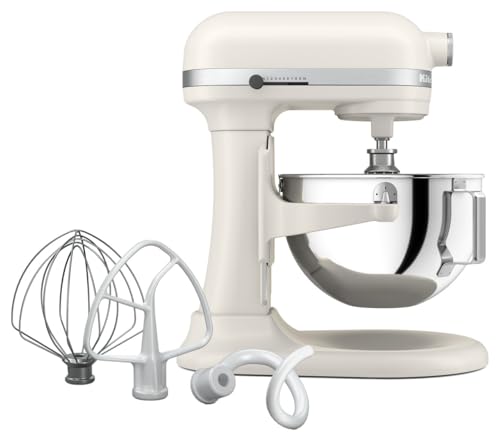
- Kneads over 7 pounds of bread dough
- 3-point locking bowl for stability
- 11 speeds with gentle folding setting
Best For: Frequent bread baking and larger batches
Budget Capacity Pick

- Large 6.5-quart stainless steel bowl
- 660-watt motor with pulse function
- Includes dough hook and splash guard
Best For: Large everyday baking batches on a budget
Compact Control
Martha Stewart 5.3QT Tilt-Head Mixer
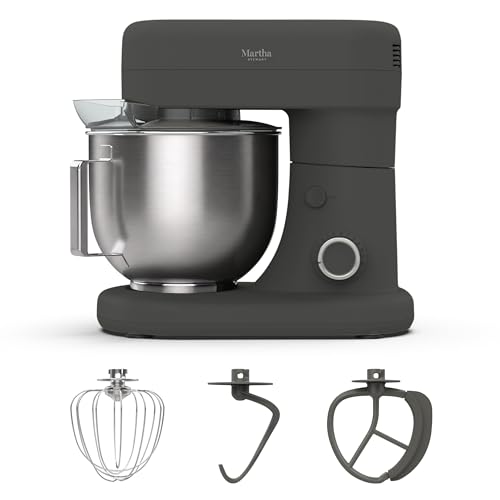
- 12 speeds for precise mixing control
- 5.3-quart bowl with dough hook included
- Slim design and dishwasher-safe accessories
Best For: Smaller kitchens and versatile home baking
Compact Pick
Kitchen in the box 3.2Qt Mini Mixer
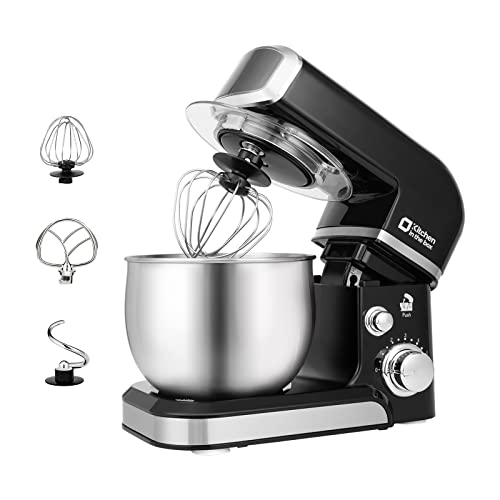
- Lightweight 7-pound design saves storage space
- Includes dough hook and six speed settings
- Best suited to small batches and kitchens
Best For: Apartments, couples, and occasional small-batch baking
Large-Batch Value
VIVOHOME 6-Quart Tilt-Head Mixer

- 660-watt motor with 10 speed settings
- 6-quart bowl supports larger dough batches
- Includes dough hook and splash guard
Best For: Families and frequent larger-batch home baking
Long-Term Classic
KitchenAid Classic Series 4.5-Quart Mixer
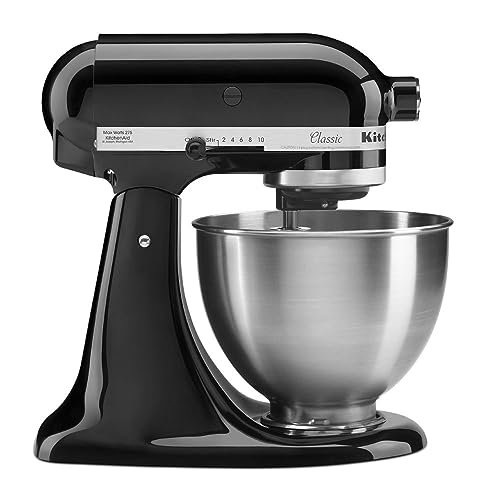
- Durable metal construction with 10 speeds
- 4.5-quart stainless steel bowl for everyday baking
- Supports more than 10 optional attachments
Best For: Home bakers seeking durability and expandability
Professional Dough Performance – Ooni Halo Pro Spiral Mixer
If you want a stand mixer for bread dough that prioritizes gluten development and precise control, the Ooni Halo Pro uses professional-style spiral mixing technology. Its rotating bowl, spiral dough hook, and removable breaker bar are designed to develop stronger dough, while 58 speed settings support everything from slow mixing to high-speed whisking.
Best For: Home bakers who make bread and pizza dough regularly and want advanced mixing control.
Pros:
- Spiral mixing system with rotating bowl and breaker bar is designed for stronger gluten networks.
- 58 speed settings range from 60 to more than 1,000 RPM.
- Includes a spiral dough hook, flexible beater, geared whisk, and breaker bar.
- Large 7.3-quart stainless steel bowl with removable-bowl convenience.
Cons:
- Its 14.6 kg weight makes it less convenient to move and store.
- The advanced feature set may be more than occasional bakers need.
The Halo Pro is a specialized choice for dough-focused baking. Its spiral design and unusually broad speed range make it appealing when dough quality and control matter more than a compact footprint.
Mix-and-Proof Convenience – AIZIYO DoughChief Dough Mixer
The AIZIYO DoughChief is a stand mixer for bread dough with a built-in fermentation function. Its mix-pause-mix program uses an S-shaped blade to simulate hand kneading, while the temperature-controlled ferment mode helps support more consistent proofing for bread, pizza, and pasta dough.
Best For: Beginners and families who want one appliance for mixing and fermenting dough.
Pros:
- Combines dough mixing and constant-temperature fermentation in one machine.
- Ferment mode maintains a stated 77–100°F range.
- Wide top opening allows ingredients to be added while mixing.
- Large 7.4-quart 304 stainless steel bowl and touch controls.
Cons:
- Only one speed is listed, so it offers less mixing flexibility than conventional multi-speed mixers.
- The fermentation function requires yeast or fermentation powder.
- Its 75 dB listed noise level may be noticeable during operation.
The DoughChief stands out for simplifying the full dough process rather than offering broad attachment or speed options. It is a practical fit if consistent proofing and reduced hands-on work are priorities.
Classic All-Purpose Mixer – KitchenAid Artisan 5-Qt Stand Mixer
The KitchenAid Artisan is a versatile stand mixer for bread dough and everyday baking. Its durable metal construction, 5-quart stainless steel bowl, and 10 speeds provide useful flexibility for kneading, mixing, and whipping, while the tilt-head design makes adding ingredients and changing attachments easier.
Best For: Home bakers who want a familiar, all-purpose mixer for dough, batters, cookies, and whipped recipes.
Pros:
- Ten speeds accommodate tasks from gentle stirring to whipping.
- 5-quart bowl handles small or large batches and is dishwasher safe.
- Durable metal construction and 59 touchpoints support thorough mixing.
- Tilt-head design improves bowl access and includes a pouring shield.
Cons:
- Its 5-quart capacity is smaller than the 7.3- and 7.4-quart models in this roundup.
- At 11 kg, it is not especially lightweight for frequent storage.
- The supplied notes do not list a dough-specific spiral mixing system.
The Artisan is a balanced choice when bread dough is only part of your baking routine. It offers more general-purpose flexibility than a dough-only machine while retaining a useful dough hook and sturdy construction.
Budget-Friendly Bread Mixer – Hamilton Beach 4 Qt Stand Mixer
The Hamilton Beach 4 Qt is a practical stand mixer for bread dough when you want straightforward features and easy handling. Its 300-watt motor, dough hook, slow first speed, and planetary mixing action are designed to support bread making while also handling batters, cookies, and other common recipes.
Best For: Budget-conscious home bakers who want a compact, easy-to-move mixer for smaller batches.
Pros:
- Slow first speed helps with kneading and reducing splatter.
- Planetary mixing action provides full bowl coverage.
- Includes a dough hook, whisk, flat beater, splash guard, and stainless steel bowl.
- Built-in handle makes the mixer easier to lift, move, and store.
Cons:
- Its 4-quart capacity is the smallest in this selection.
- Seven speeds offer less control than the 10- and 58-speed alternatives.
- It has a manual knob control rather than digital or touch controls.
This Hamilton Beach model keeps the essentials in place without adding specialty dough functions. It is a sensible option for occasional bread baking, especially if storage and simple controls matter.
Heavy-Duty Choice – KitchenAid 5.5-Qt Bowl-Lift Mixer
If you need a stand mixer for bread dough, the KitchenAid 5.5-quart bowl-lift model emphasizes stability and kneading capacity. Its 3-point locking bowl, 500-watt motor, and coated dough hook are suited to substantial batches, including up to 7 pounds of bread dough according to the supplied specifications.
Best For: Bakers who prioritize a stable bowl-lift design, broad speed control, and large bread-dough capacity.
Pros:
- 5.5-quart bowl can knead over 7 pounds of bread dough.
- 3-point locking bowl adds stability during mixing and kneading.
- 11 speeds include a gentle 1/2-speed folding setting.
- Includes a dough hook, flat beater, and 6-wire whip.
Cons:
- Additional stand mixer attachments are sold separately.
- Bowl-lift design may be less convenient than a tilt-head model for quick access.
Choose this KitchenAid when dough capacity and secure bowl positioning matter more than compactness. It is a strong fit for frequent bread baking and other larger-batch tasks.
Budget Capacity Pick – Aucma 6.5-Qt Tilt-Head Mixer
For shoppers seeking a stand mixer for bread dough with a generous bowl, the Aucma combines a 6.5-quart stainless steel bowl with a 660-watt motor. Its dough hook, six speeds, pulse function, and splash guard cover the basic features needed for everyday bread and baking projects.
Best For: Home bakers who want a large-capacity mixer with included accessories and a tilt-head layout.
Pros:
- 6.5-quart bowl provides ample room for larger recipes.
- 660-watt pure copper motor with six speeds and pulse function.
- Includes dough hook, whisk, beater, and splash guard.
- Dual bowl handles make the bowl easier to hold.
Cons:
- Offers six speeds, fewer than the other mixers in this roundup.
- Rated operating noise is up to 76 dB.
- The supplied notes do not specify a maximum bread-dough weight.
The Aucma is a practical option when bowl size and included tools are priorities. Consider it for general home baking, while keeping its six-speed control and stated noise level in mind.
Compact Control – Martha Stewart 5.3QT Tilt-Head Mixer
The Martha Stewart 5.3-quart mixer is a space-conscious stand mixer for bread dough and other home-baking tasks. It offers 12 speed settings, a dough hook, and a heavy-duty base, while the tilt-head design and removable splash shield make ingredient access and cleanup straightforward.
Best For: Home bakers who want many speed settings, a tilt-head design, and a slimmer countertop profile.
Pros:
- 5.3-quart bowl handles large batches and bread dough.
- 12 speeds provide fine control from gentle folding to thicker mixtures.
- Includes a dough hook, whisk, and silicone-edge flat beater.
- Dishwasher-safe accessories and removable splash shield simplify cleanup.
Cons:
- The supplied notes do not specify a maximum bread-dough weight.
- Tilt-head construction may provide less bowl stability than a bowl-lift design for very heavy doughs.
This model suits smaller kitchens that still need useful capacity and detailed speed control. Its heavy-duty base and dough hook support bread making, though bakers handling especially dense or very large dough batches may prefer a dedicated bowl-lift option.
Compact Pick – Kitchen in the box 3.2Qt Mini Mixer
If you need a stand mixer for bread dough but have limited counter or storage space, this lightweight 3.2-quart model is a practical option. Its six speeds, dough hook, and four suction feet make it suitable for smaller baking jobs, while the tilt-head design simplifies bowl and attachment access.
Best For: Small kitchens, apartments, couples, and occasional bread-dough mixing.
Pros:
- Compact 7-pound design is easy to store and move.
- Includes a dough hook, flat beater, whisk, and stainless steel bowl.
- Six speeds and suction feet support varied mixing tasks and stability.
- Transparent splash lid and dishwasher-safe accessories simplify cleanup.
Cons:
- The 3.2-quart bowl is better suited to small batches than family-size baking.
- Its 300-watt motor may be less appropriate for frequent heavy dough work than larger models.
This mixer prioritizes portability and space savings over capacity. It is a sensible stand mixer for bread dough when you usually make modest batches and want a straightforward, compact appliance.
Large-Batch Value – VIVOHOME 6-Quart Tilt-Head Mixer
For shoppers seeking a stand mixer for bread dough with more room and motor power, the VIVOHOME combines a 6-quart bowl with a 660-watt copper motor. Ten speeds, planetary mixing, and a dough hook give it flexibility for bread, batter, and other recipes.
Best For: Families and bakers who want larger batches, with capacity for up to three bread loaves according to the supplied specifications.
Pros:
- 6-quart bowl accommodates up to 3 bread loaves or 2.2 pounds of flour.
- 660-watt motor and 10 speeds provide useful power and control.
- Includes a whisk, aluminum dough hook, beater, and egg separator.
- Suction cups, a splash guard, and flex-edge beater improve convenience during mixing.
Cons:
- Its 11-pound, 18.8-inch-tall design requires more storage space than a compact mixer.
- The larger bowl may be more capacity than needed for one- or two-person households.
This is a capable middle-ground choice for regular home baking. Its larger bowl and stronger motor make it more practical for bread dough than a mini mixer, while the tilt head and included accessories keep everyday use manageable.
Long-Term Classic – KitchenAid Classic Series 4.5-Quart Mixer
The KitchenAid Classic is a durable stand mixer for bread dough with a 4.5-quart stainless steel bowl, metal construction, and 10 speeds. Its tilt-head design provides bowl access, while the included coated dough hook handles standard mixing tasks.
Best For: Home bakers who value durable construction, a familiar tilt-head layout, and access to a broad attachment ecosystem.
Pros:
- Durable metal construction is designed for long-term use.
- 4.5-quart bowl provides useful capacity for everyday baking.
- Ten speeds cover tasks from stirring to whipping.
- Compatible with more than 10 optional attachments for expanded functions.
Cons:
- At 22 pounds, it is substantially heavier than the other listed mixers.
- Optional attachments are sold separately.
- The supplied 275-watt specification is lower than the VIVOHOME’s listed motor rating.
This model stands out for its established design, metal build, and expandability. It is a strong fit for bakers who want a substantial countertop mixer for regular dough work and may add attachments over time.
How We Picked the Best Stand Mixer for Bread Dough
We focused on the features that matter most when mixing and kneading yeast dough: motor performance, bowl capacity, dough-hook design, stability, speed control, and ease of handling. We also considered whether each mixer suits occasional bread baking, frequent family-size batches, or more demanding home use.
Capacity figures are useful, but they do not tell the whole story. A mixer’s recommended flour or dough limit, transmission design, and ability to maintain a steady speed are more meaningful than bowl size alone. Attachments, warranty support, counter footprint, and cleanup also influenced the comparison.
Quick Comparison
| Best For | Recommended Type | What to Prioritize |
|---|---|---|
| Frequent large batches | Bowl-lift mixer or spiral mixer | Stability, torque, and high dough capacity |
| General family baking | 5- to 6-quart stand mixer | Balanced power, useful attachments, and a sturdy bowl |
| Small kitchens | Compact tilt-head mixer | Light weight, smaller footprint, and easy storage |
| Occasional bread making | Entry-level tilt-head mixer | Reliable dough hook, manageable price, and simple controls |
Key Buying Factors for a Stand Mixer for Bread Dough
Motor and Kneading Performance
Bread dough is substantially more demanding than cake batter. Look for a mixer that stays stable at low speed and has enough torque for stiff dough. Use the manufacturer’s dough or flour capacity as a safer guide than wattage alone, since motor ratings are not standardized across brands.
Bowl Size and Batch Capacity
A 4- to 5-quart bowl is often sufficient for everyday loaves, rolls, and pizza dough. Choose a 5.5- to 7-quart model if you regularly double recipes or bake for a crowd. Larger bowls can be less convenient for very small batches, so match capacity to your normal recipes.
Tilt-Head Versus Bowl-Lift Design
Tilt-head mixers make it easier to add ingredients and change attachments, while bowl-lift models typically provide greater stability for heavy dough. A spiral mixer can be especially appealing to bread and pizza enthusiasts, but it may offer less versatility for general baking.
Stability, Controls, and Cleanup
Rubber feet, a solid base, and gradual speed control help prevent movement during kneading. Check whether the bowl, dough hook, and other attachments are dishwasher-safe, and consider the mixer’s weight if you need to move it after use.
Who Should Buy Which Stand Mixer for Bread Dough?
Choose a spiral or high-capacity mixer if bread, pizza, or enriched dough is a regular part of your baking routine. These designs are best suited to repeated or larger batches.
Choose a 5- to 6-quart bowl-lift mixer if you want a durable all-purpose machine that can handle heavier dough while remaining useful for cakes, cookies, and whipped mixtures.
Choose a mid-size tilt-head mixer for the best balance of versatility, accessibility, and counter space. This is the practical choice for most households that bake bread occasionally or weekly.
Choose a compact mixer if storage space is limited or you usually make single loaves and small batches. Confirm its dough capacity before attempting dense or doubled recipes.