Choosing among the best water quality meters for home kitchens can be difficult when product listings promise everything from simple TDS readings to app-connected, multi-parameter analysis. The right choice depends on whether you want a quick screening tool, routine filter checks, or broader insight into your water chemistry.
This roundup compares 10 handheld testers across measurement range, functions, portability, accuracy claims, and ease of use. Use the guide below to narrow the options based on your water source, testing goals, and comfort with interpreting results.
Best 10 Water Quality Meters for Home Kitchens Picks for 2026
Best Everyday TDS Pick
Digital TDS, EC & Temperature Meter
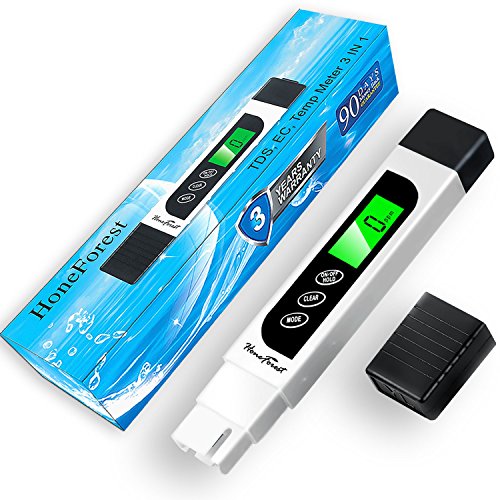
- Measures TDS, EC, and temperature
- Backlit LCD with auto-lock readings
- Useful for RO/DI and filter checks
Best For: Routine home filtration and drinking-water checks
Best App-Connected Upgrade

- Measures six water-quality parameters
- Records results in a companion app
- Uses color-coded readings for quick interpretation
Best For: Tracking filtered, tap, well, or RV water over time
Best Simple TDS Meter
HM Digital TDS-3 Handheld Tester

- 0–9,990 ppm range with 1 ppm resolution
- Stated ±2% readout accuracy
- Includes case, hold function, and thermometer
Best For: Straightforward TDS and filtration checks
Best Comprehensive Analyzer
Envig Gen4 9-in-1 Water Tester

- Measures nine water-quality parameters
- Adds turbidity, salinity, hardness, and organic indicators
- Displays color-coded quality scores
Best For: Detailed testing across household and outdoor water sources
Best Overall Versatility
MEXYBE 4-in-1 TDS Water Tester

- Measures TDS, EC, and temperature
- Backlit display with hold function
- Useful for RO systems and household water
Best For: Versatile everyday testing across kitchen and home water sources
Best Budget-Friendly Portability

- 0-9990 PPM TDS range
- Lightweight pocket-sized design
- Automatic calibration and large LCD
Best For: Quick TDS checks at home, while traveling, or outdoors
Best Multi-Indicator Testing
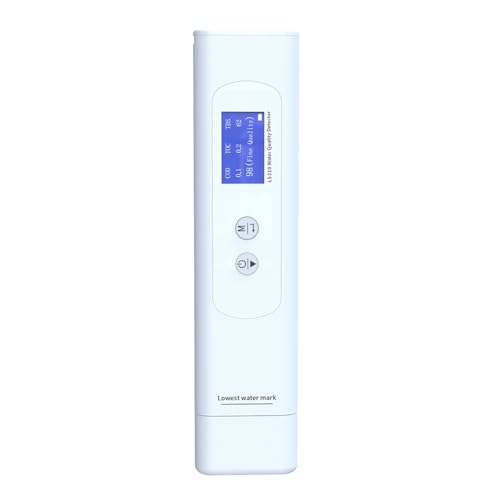
- Measures six water-quality indicators
- Color-coded quality assessment LEDs
- Calibration uses distilled or purified water
Best For: Comprehensive portable screening across household and outdoor water sources
Best All-Around Pick

- Measures TDS, EC, and temperature
- Large color-backlit display
- Two-year warranty and included battery
Best For: Home users testing drinking water, RO systems, and more
Most Informative Display

- Tracks six water-quality indicators
- Four-color quality rating system
- Uses two included AAA batteries
Best For: Home and travel users wanting broader screening information
Simple Budget-Friendly Option

- Measures TDS, EC, and temperature
- Backlit display with hold function
- 0–9,990 ppm range for varied uses
Best For: Routine home checks of drinking and filtered water
Best Everyday TDS Pick – Digital TDS, EC & Temperature Meter
For shoppers comparing water quality meters for home kitchens, this compact tester offers a straightforward way to check TDS, electrical conductivity, and temperature. Its backlit display, auto-lock readings, and automatic shutoff make routine checks of drinking water and filtration systems simple.
Best For: Home users checking drinking water, RO/DI performance, filter replacement timing, aquariums, or hydroponic setups.
Pros:
- Measures TDS, EC, and temperature in one handheld device.
- Backlit LCD and auto-lock function make readings easier to view and record.
- Offers a broad 0–9,990 ppm measurement range.
- Includes a portable carrying case.
Cons:
- Focuses on TDS, EC, and temperature rather than a broader set of water-quality indicators.
- Battery-powered operation requires keeping replacement batteries available.
This is a practical, budget-friendly style of tester for quick comparisons before and after filtration. It is best suited to monitoring dissolved solids and system performance, not making a complete safety assessment.
Best App-Connected Upgrade – 6-in-1 Drinking Water Tester
Among water quality meters for home kitchens, this app-connected model stands out for combining several measurements with digital record keeping. It measures TDS, EC, TOC, COD, UV275, and temperature, then presents stabilized readings through a color-coded display and a companion app.
Best For: Users who want broader daily water checks, saved results, and comparisons across tap, well, RV, or filtered water.
Pros:
- Provides six measurements, including organic-contamination indicators such as TOC and COD.
- App support allows users to save readings and track changes over time.
- Four color levels provide a quick visual interpretation of results.
- Compact pen-style design supports portable testing.
Cons:
- App connectivity adds setup and dependence on a phone for record keeping.
- Calibration requires purified or distilled water.
- The supplied notes do not specify the app’s device compatibility or battery details.
This is a better fit than a basic TDS meter when trend tracking and multiple indicators matter. Its color grades simplify interpretation, while the additional readings provide more context than dissolved-solids measurements alone.
Best Simple TDS Meter – HM Digital TDS-3 Handheld Tester
For a no-frills approach to water quality meters for home kitchens, the HM Digital TDS-3 keeps the job focused on TDS measurement. It offers 1 ppm resolution, a stated ±2% readout accuracy, a hold function, and a built-in digital thermometer in a compact handheld design.
Best For: Buyers who primarily need quick TDS checks for drinking water or filtration monitoring and prefer a simple interface.
Pros:
- Measures TDS from 0 to 9,990 ppm with 1 ppm resolution.
- Provides a stated ±2% readout accuracy.
- Hold function helps with reading and recording results.
- Includes a carrying case with belt clip and batteries.
Cons:
- Offers fewer measurement types than multi-parameter testers.
- Listed battery life is approximately three hours.
- Automatic shutoff occurs after 10 minutes, which may be longer than necessary for brief checks.
The TDS-3 is a sensible choice when you want a familiar, focused meter rather than app features or organic-contamination indicators. Its carrying case and hold function are useful for repeat measurements, but it cannot replace broader water testing.
Best Comprehensive Analyzer – Envig Gen4 9-in-1 Water Tester
For shoppers seeking the broadest coverage among water quality meters for home kitchens, the Envig Gen4 measures nine parameters in about two seconds. It combines TDS and EC with turbidity, salinity, hardness, temperature, and organic-indicator readings including TOC, COD, and UV254.
Best For: Households wanting detailed comparisons across tap, well, pool, aquarium, hydroponic, or filtered water.
Pros:
- Measures nine parameters in a single handheld device.
- Includes turbidity and salinity readings in addition to TDS and EC.
- Color-coded screen scores readings as Excellent, Good, Fair, or Poor.
- Compact design and distilled-water recalibration support repeated testing.
Cons:
- Its extensive parameter set may be more than needed for basic kitchen checks.
- Interpretation still requires understanding what each measurement indicates.
- Requires a lithium-polymer battery.
This is the most feature-rich option in the group for users who want a wider snapshot of water conditions. It can help compare filtration results and monitor varied water sources, while remaining portable enough for household testing.
Best Overall Versatility – MEXYBE 4-in-1 TDS Water Tester
For shoppers comparing water quality meters for home kitchens, the MEXYBE is a versatile option for checking TDS, electrical conductivity, and temperature. Its backlit display, hold function, and broad measurement range make routine checks easier, whether you are monitoring tap water or an RO system.
Best For: Households wanting one portable meter for drinking water, RO/DI filters, aquariums, hydroponics, and other water-testing tasks.
Pros:
- Measures TDS, EC, and temperature in Celsius or Fahrenheit.
- Large backlit LCD is designed for easier reading.
- Includes hold, auto-lock, factory calibration, and two-minute auto-off features.
- Colorful TDS chart helps interpret PPM readings quickly.
Cons:
- It provides TDS, EC, and temperature readings rather than a broad chemical contaminant analysis.
- The listed two-minute auto-off may be short for some testing routines.
The MEXYBE stands out for everyday convenience and flexibility. It is a practical pick when you need quick comparative readings and filter monitoring rather than laboratory-style water analysis.
Best Budget-Friendly Portability – Compact TDS Water Tester
If you want a straightforward choice among water quality meters for home kitchens, this compact TDS tester focuses on fast PPM readings. Its lightweight pen-style design and large LCD make it convenient for checking household water, filters, pools, wells, and aquariums.
Best For: Buyers seeking a simple, portable TDS meter for quick household and travel checks.
Pros:
- Measures TDS across a 0-9990 PPM range.
- Premium titanium alloy probe is designed for quick readings.
- Large LCD and pocket-friendly size support portable use.
- Automatic calibration adjusts for water temperature and quality.
Cons:
- Its supplied features focus on TDS rather than multiple water-quality indicators.
- The notes do not specify a temperature display or additional measurement modes.
This tester is best suited to uncomplicated TDS comparisons, such as checking tap water or deciding when to inspect an RO filter. Choose it if portability and simplicity matter more than multifunction testing.
Best Multi-Indicator Testing – LS310 6-in-1 Water Tester
For shoppers who need more than basic TDS readings, the LS310 is one of the more comprehensive water quality meters for home kitchens. It measures six indicators—COD, TOC, UV275, TDS, EC, and temperature—and adds color-coded quality ratings for faster interpretation.
Best For: Users who want broad, portable water screening for drinking water, tap and well water, RO/DI systems, hydroponics, pools, and aquariums.
Pros:
- Measures six indicators, including COD, TOC, UV275, TDS, EC, and temperature.
- Color-coded LEDs categorize readings as excellent, fair, moderate, or low.
- Calibration requires distilled or purified water rather than calibration powder.
- Compact pen design and included AAA batteries support portable testing.
Cons:
- Its broader feature set may be more than needed for simple kitchen TDS checks.
- Calibration requires suitable distilled or purified water and should not use mineral or natural drinking water.
- The supplied notes do not list a waterproof rating or storage case.
The LS310 is the strongest fit when you want multiple indicators and an at-a-glance rating system in one handheld device. Its expanded testing scope makes it more versatile, though basic users may prefer a simpler TDS meter.
Best All-Around Pick – 4-in-1 TDS/EC Meter
For shoppers comparing water quality meters for home kitchens, this compact 4-in-1 tester offers a straightforward way to check TDS, EC, and temperature in tap, drinking, or filtered water. Its large color-backlit display and simple one-tap mode switching make routine checks easy to read.
Best For: Home users who want a compact meter for drinking water, RO systems, aquariums, or hydroponics.
Pros:
- Measures TDS, EC, and temperature in Celsius or Fahrenheit.
- Large dual-color LCD supports day-or-night readability.
- Titanium probe, ABS housing, auto-shutoff, and included CR2032 battery.
- Includes a two-year warranty and extended customer-service availability.
Cons:
- Uses a coin-cell battery rather than common AAA batteries.
- The color-alert threshold is presented as a simple screening guide, not a complete water-safety analysis.
This is a practical, versatile choice when you want quick readings and broad compatibility in a kitchen drawer. The 0–9,999 ppm range and temperature modes also make it useful beyond drinking-water checks.
Most Informative Display – 6-in-1 Drinking Water Tester
Among water quality meters for home kitchens, this portable 6-in-1 model stands out for displaying several screening values, including TDS, EC, TOC, COD, UV275, and temperature. Its four-color rating system is designed to make results easier to interpret at a glance.
Best For: Users who want a portable tester for home, well, tap, purified, or travel water and prefer color-coded readings.
Pros:
- Offers six measurements or indicators: TOC, COD, EC, UV275, temperature, and TDS.
- Four backlight colors correspond to fine, good, average, and poor ratings.
- Compact design with two included AAA batteries.
- Calibration can be performed with distilled or pure water without calibration powder.
Cons:
- Its broader set of readings may be more than needed for simple TDS checks.
- Calibration instructions specify distilled or pure water, not mineral or natural drinking water.
- Experimental use may require weekly calibration.
This model is appealing if you want more than a basic TDS reading and value an immediate color-coded rating. Its portable size also suits RV trips, camping, hiking, and emergency-preparedness kits.
Simple Budget-Friendly Option – Hofun 3-in-1 TDS Meter
If you want water quality meters for home kitchens without unnecessary complexity, the Hofun 3-in-1 focuses on the essentials: TDS, EC, and temperature. Its titanium-alloy probe, backlit screen, hold function, and automatic shutoff support quick checks of tap, well, drinking, or filtered water.
Best For: Households seeking an easy-to-use meter for monitoring drinking water, RO/DI systems, aquariums, pools, or hydroponics.
Pros:
- Measures TDS, EC, and temperature with a 0–9,990 ppm range.
- Backlit LCD and hold function make readings easier to view and stabilize.
- Titanium-alloy probe supports quick measurements.
- Auto-lock and two-minute auto-shutoff help conserve power.
Cons:
- Provides three measurement types rather than the broader readings of a 6-in-1 tester.
- The supplied notes do not list a battery type or included battery.
This is a sensible pick for routine household monitoring, especially when you mainly need TDS, conductivity, and temperature. Its broad application range makes it useful for both kitchen water checks and other home projects.
How We Picked the Best Water Quality Meters for Home Kitchens
We compared these meters by looking at the measurements they provide, stated testing ranges, display and operating simplicity, portability, included accessories, and suitability for everyday kitchen use. Basic TDS meters are useful for checking dissolved-solids changes before and after filtration, while advanced models add readings such as EC, temperature, salinity, turbidity, TOC, COD, or UV-related indicators.
We also considered whether a meter is best suited to quick household checks or more detailed monitoring. A larger feature list does not automatically mean a more accurate or useful result, so buyers should match the device to a specific testing routine.
Quick Comparison
- Best for simple checks: Choose a standard TDS, EC, and temperature meter for quick readings and filter comparisons.
- Best for portability: Look for a compact handheld design, clear display, protective case, and simple calibration process.
- Best for broader monitoring: Multi-function testers can provide additional readings, but they may require more setup and interpretation.
- Best for connected tracking: An app-enabled tester may help users record and review measurements over time.
Key Buying Factors for Water Quality Meters for Home Kitchens
Measurement Type
TDS estimates the concentration of dissolved solids, while EC measures electrical conductivity and temperature helps compensate for changing conditions. These readings are useful indicators, but they do not identify individual contaminants such as lead, bacteria, pesticides, or PFAS.
Range and Resolution
A range near 0–9,990 or 0–9,999 ppm covers common household screening needs. Resolution and stated accuracy matter when comparing small changes, especially when checking a reverse-osmosis system or deciding when to replace a filter.
Calibration and Maintenance
Favor meters with straightforward calibration instructions and, ideally, a replaceable or protected sensor. Rinse the probe after use, avoid storing it in contaminated water, and follow the manufacturer’s guidance for calibration solution and storage.
Extra Functions
Additional measurements can be valuable for well-water owners or technically minded users, but terms such as TOC, COD, turbidity, and UV-related readings may be estimates or screening indicators rather than laboratory-grade analyses. Confirm what each mode actually measures before relying on it.
Who Should Buy Which Water Quality Meters for Home Kitchens?
Renters and everyday households will usually be happiest with an affordable TDS/EC/temperature meter that is quick to use. Reverse-osmosis owners should prioritize repeatable readings, calibration support, and a clear display for checking treated-water performance. Private-well households may prefer a broader multi-function tester, but should pair it with certified laboratory testing for health-related decisions. Data-focused users may benefit from an app-connected model for logging readings over time.
Whichever meter you choose, treat results as screening information rather than a complete safety certification. If readings change suddenly, taste or odor shifts, or a health concern exists, contact your water provider or arrange professional laboratory testing.