Reliable pH testing can make home fermentation and canning more consistent, especially when recipes depend on reaching a safe acidity level. The right meter should be accurate, easy to calibrate, and suited to thick foods, liquids, or hot sauces.
We compared 10 pH testing options for home cooks, from affordable pocket testers to specialized spear-probe and benchtop instruments. Use the guide below to match features, accuracy, and maintenance requirements to the way you prepare food.
Best 10 Ph Meters for Home Kitchens Picks for 2026
Smart Fermentation Monitor
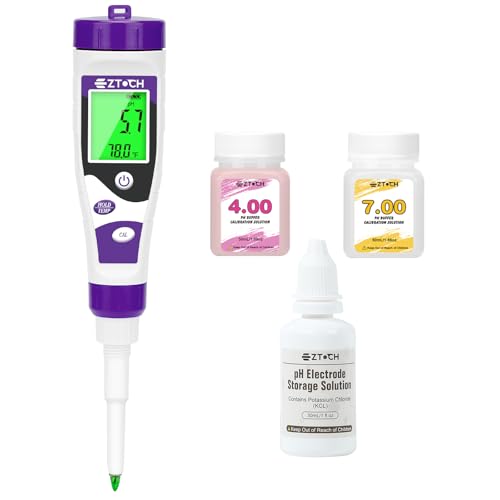
- Logs up to 1,000 readings through the YINMIK app
- Designed for canning, sourdough, brewing, and fermentation
- Includes calibration and probe-protection solutions
Best For: Home cooks tracking pH across recurring fermentation and canning projects
Precision Pocket Tester

- Offers ±0.01 pH accuracy and a -2.00 to 16.00 range
- Uses a replaceable glass probe with temperature compensation
- Includes solutions, batteries, storage supplies, and carrying case
Best For: Frequent testers prioritizing accuracy and long-term probe replaceability
Spear-Tip Food Tester
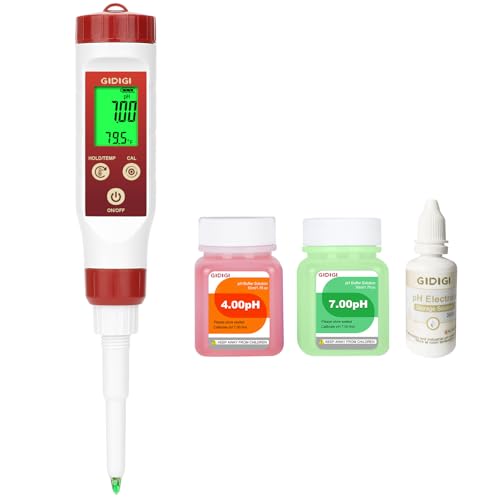
- Penetrates semi-solid foods with a spear-shaped probe
- Supports a 0–14 pH range for varied kitchen projects
- Includes calibration and electrode-protection solutions
Best For: Fermentation and canning users testing cheese, meat, bread, and other solid foods
Simple Everyday Tester

- Provides automatic calibration and temperature compensation
- Waterproof body with stable-value recognition
- Offers up to 2,000 hours of continuous operation
Best For: Budget-minded users needing a simple reusable general-purpose tester
Best Spear-Probe Pick
GIDIGI Food Fermentation pH Meter

- Spear probe handles dough, meat, and cheese
- 0.01 pH readings with automatic temperature compensation
- Includes three buffer solutions and a replaceable electrode
Best For: Frequent fermentation and semi-solid food testing
Best Waterproof Flat-Surface Option

- IP67 waterproof construction
- Flat-surface electrode with temperature LCD
- Reusable design with protective cap
Best For: General-purpose wet-area pH testing
Best Value Fermentation Tester

- Spear probe tests sourdough and semi-solid foods directly
- 0.00–14.00 range with stated ±0.1 accuracy
- Includes six buffer packets and a KCl-moistened probe cap
Best For: Home sourdough and fermented-food projects
Benchtop Precision Pick
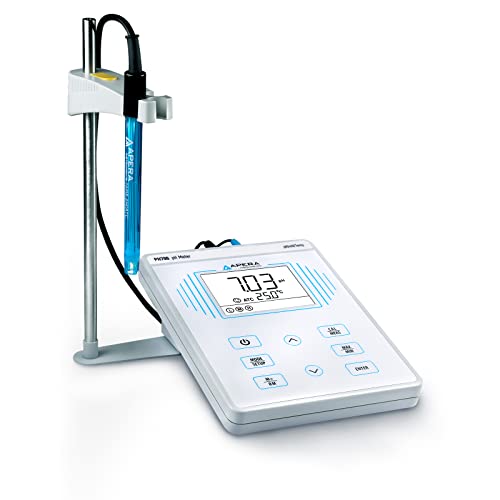
- 0.01 pH accuracy with 1–3-point auto calibration
- Measures pH and temperature with ATC
- Stores up to 50 data sets
Best For: Organized benchtop testing of general water solutions
Connected Food Testing Pick

- Tests liquids, semi-solids, and solid foods
- Stores up to 1,000 readings in a mobile app
- Includes ATC and a backlit display
Best For: Food testing with app-based measurement tracking
Simple Fermentation Pick

- Spear probe handles soft-solid foods
- ±0.01 accuracy across a 0.00–14.00 range
- ATC and KCl-moistened protective cap
Best For: Fermentation, sauces, and direct food-sample testing
Smart Fermentation Monitor – Bluetooth Food pH Meter
For shoppers comparing ph meters for home kitchens, this food-focused model stands out for fermentation and canning projects. It connects to the YINMIK app, stores readings, and includes calibration and probe-protection solutions for regular kitchen use.
Best For: Home cooks who want logged pH readings for canning, sourdough, brewing, and other fermentation projects.
Pros:
- Bluetooth connectivity and automatic storage for up to 1,000 readings
- Suitable for foods and beverages including sourdough, yogurt, kombucha, sauces, pickles, and wine
- Includes pH 4.00 and 7.00 calibration solutions plus probe-protection solution
- Backlit display and automatic shutoff support convenient operation
Cons:
- Bluetooth and app features may be unnecessary for users who only need occasional readings
- The supplied notes do not specify a measurement accuracy rating
This is a feature-rich choice for kitchen projects where tracking measurements over time matters. Its included maintenance supplies also make it easier to start using immediately.
Precision Pocket Tester – Apera PH60 Premium pH Kit
This Apera PH60 is a strong option among ph meters for home kitchens when measurement precision and broad testing flexibility are priorities. It offers ±0.01 pH accuracy, automatic temperature compensation, a replaceable probe, and a complete portable kit.
Best For: Users who want a highly accurate pocket tester for beverages, water solutions, and other regular testing applications.
Pros:
- Provides ±0.01 pH accuracy across a -2.00 to 16.00 pH range
- Replaceable glass probe helps extend the tester’s usable life
- Automatic temperature compensation supports readings from 32 to 122°F
- Includes calibration solutions, storage solution, batteries, and a rugged case
Cons:
- Its broader water, pool, hydroponics, and environmental applications may exceed basic kitchen needs
- The kit requires four AAA batteries
The PH60 is the most precision-oriented option in this roundup. Its color-backlit display, stability indicator, and replaceable probe make it practical for users who expect to test frequently and maintain the instrument properly.
Spear-Tip Food Tester – GIDIGI Fermentation pH Meter
Among ph meters for home kitchens, this GIDIGI model is tailored to direct testing of foods rather than only liquid samples. Its spear-shaped probe can penetrate semi-solid ingredients, while the water-resistant design and included solutions support routine fermentation and canning work.
Best For: Cooks testing semi-solid foods such as cheese, meat, bread, and fermented products.
Pros:
- Spear-tip probe is designed for semi-solid samples
- Works across a 0–14 pH range for varied food and fermentation applications
- Includes pH 4.00 and 7.00 calibration solutions and electrode-protection solution
- Detachable probe and water-resistant construction support maintenance and cleaning
Cons:
- The supplied notes do not provide a specific accuracy figure
- Additional pH 10.01 calibration solution may be needed for alkaline-food testing
This is a practical food-testing design for users who need to measure inside thicker samples. It is especially well matched to fermentation, canning, dairy, meat, and bread-related projects.
Simple Everyday Tester – Apera PH20 Value pH Kit
APERA INSTRUMENTS AI209 Value Series PH20 Waterproof pH Tester Kit, ±0.1 pH Accuracy
Check Price On AmazonFor shoppers seeking straightforward ph meters for home kitchens, the Apera PH20 focuses on dependable basic testing without app connectivity or extra data features. It has automatic calibration, temperature compensation, waterproof construction, and a long stated battery life.
Best For: Users who want a simple, reusable pH tester for routine liquid testing and general household applications.
Pros:
- Automatic calibration with buffer recognition simplifies setup
- Automatic temperature compensation supports use from 32 to 122°F
- Waterproof design and stable-value recognition make routine testing easier
- Rated for up to 2,000 hours of continuous operation
Cons:
- ±0.1 pH accuracy is lower than the PH60’s stated ±0.01 accuracy
- The approximately 1-inch immersion depth may be limiting for some containers or samples
- The supplied kit includes pH 4 and 7 buffers but no probe-protection solution is listed
The PH20 is a sensible value pick when ease of use and battery longevity matter more than laboratory-level precision. Its waterproof body and automatic stability recognition make it a convenient general-purpose tester.
Best Spear-Probe Pick – GIDIGI Food Fermentation pH Meter
For home cooks comparing pH meters for home kitchens, the GIDIGI stands out when you need to test semi-solid foods rather than only liquids. Its spear probe, automatic temperature compensation, backlit display, and included calibration buffers make it suited to fermentation and food-preparation projects.
Best For: Sourdough, fermented meats, cheese, kombucha, wine, canning, and other kitchen fermentation tasks.
Pros:
- Spear tip penetrates dough, meat, and cheese for semi-solid sample testing.
- Provides 0.01 pH readings with automatic temperature compensation across 32–140°F.
- Includes pH 4.00, 7.00, and 10.01 buffer solutions, a carrying case, and a replaceable probe.
- Backlit display, waterproof body, and temperature measurement add everyday convenience.
Cons:
- Its specialized spear probe may be more than needed for occasional liquid testing.
- Calibration is required for accurate use, even though the process is designed to be quick.
The replaceable spear electrode gives this meter a practical advantage for frequent kitchen use. It is a strong choice for cooks who want one tester for fermentation, canning, and semi-solid food samples.
Best Waterproof Flat-Surface Option – Extech PH100 ExStik II
The Extech PH100 is a compact waterproof pH meter for kitchen users who prefer a reusable instrument with a flat-surface electrode and temperature display. Its IP67-rated housing and protective sensor cap make it practical for repeated testing, provided you follow the electrode-care instructions.
Best For: Users seeking a durable, waterproof pH meter for general sample testing and temperature-aware readings.
Pros:
- IP67 waterproof construction supports use around wet kitchen work areas.
- Flat-surface electrode and LCD display provide a straightforward testing format.
- Displays temperature and responds quickly.
- Reusable design includes a protective sensor cap and a one-year meter warranty.
Cons:
- The supplied notes do not specify a spear probe, so it may be less suitable for dough, meat, or cheese.
- Electrode care requires rinsing with distilled water after use.
- The listed package information does not mention included calibration buffers.
Choose the PH100 when waterproof construction and a flat-surface design matter more than specialized food penetration. Its temperature LCD and reusable build make it a sensible general-purpose option.
Best Value Fermentation Tester – YINMIK Food pH Meter
For shoppers seeking pH meters for home kitchens with a food-focused probe, the YINMIK offers a practical setup for sourdough and fermented foods. Its spear tip works directly in many semi-solid samples, while automatic temperature compensation and three-point calibration support more consistent readings.
Best For: Home bakers and fermenters testing sourdough, sausages, cheese, sauces, salsa, jam, and sushi rice.
Pros:
- Proprietary spear probe is designed for sourdough dough and other food samples.
- Measures across a 0.00–14.00 pH range with stated ±0.1 accuracy.
- Automatic temperature compensation and additional internal chips are intended to improve reading stability.
- Includes six buffer-solution powder packets and a cap with a KCl-moistened sponge.
Cons:
- Its stated ±0.1 accuracy is less precise than some higher-resolution food meters.
- Buffer powders must be prepared before calibration.
- The spear design is specialized for direct sample testing rather than flat surfaces.
The YINMIK is a focused option for home fermentation, especially if you want direct testing without preparing slurries. Its included buffer packets and probe-moistening cap add useful support for ongoing use.
Benchtop Precision Pick – Apera AI501 PH700
For home cooks who want a more capable setup among pH meters for home kitchens, the Apera AI501 is a benchtop option with 0.01 pH accuracy, automatic temperature compensation, and support for general water solutions. Its electrode condition display and calibration diagnostics add useful reassurance during regular testing.
Best For: Home kitchens needing a stable benchtop meter for repeated water-solution testing and organized measurements.
Pros:
- Provides 0.01 pH accuracy with one- to three-point automatic calibration.
- Combines pH and temperature readings through its 3-in-1 electrode with ATC.
- Includes calibration solutions, an electrode holder, and storage for 50 data sets.
- Max/min reading mode helps review measurements taken over a period.
Cons:
- Its benchtop design is less portable than a handheld pen-style tester.
- The included electrode is intended for general water solutions rather than specifically solid foods.
- IP54 protection helps with spills and dust but does not make the unit waterproof.
This is the most lab-oriented choice in the group, especially if you value calibration support, data storage, and a dedicated holder over compact portability.
Connected Food Testing Pick – GIDIGI pH03A Food Meter
The GIDIGI pH03A is designed specifically for cooks comparing acidity in foods, fermented products, sauces, and beverages. As pH meters for home kitchens go, it stands out for its spear-shaped electrode, temperature readings, backlit display, and phone connectivity for storing and annotating results.
Best For: Home cooks and food-safety enthusiasts who want to test varied food textures and track results in a mobile app.
Pros:
- Measures from 0.00 to 14.00 pH with 0.01 pH resolution.
- Spear-shaped electrode is designed for liquids, semi-solids, and solid foods.
- App connectivity supports storage of up to 1,000 measurements, notes, sharing, and range alerts.
- Includes ATC, a backlit display, and one-key temperature conversion.
Cons:
- Phone connectivity and app features may be more than needed for occasional testing.
- Its broad food-focused design may be less suitable if you primarily need a benchtop water meter.
- The supplied notes do not specify the included calibration solutions or calibration-point count.
Choose this model when food testing is the priority and digital recordkeeping matters. Its electrode design and app make it particularly versatile for fermentation and recipe monitoring.
Simple Fermentation Pick – GISNPA Food pH Tester
The GISNPA food pH tester is a compact option for cooks checking hot sauces, canned foods, fermented products, and other soft solids. It offers a 0.00–14.00 range, 0.01 accuracy, automatic temperature compensation, and a spear probe intended to be inserted directly into food samples.
Best For: Home fermenters and sauce makers who want a straightforward handheld tester for soft-solid foods.
Pros:
- Uses a spear-shaped probe for foods such as meats, cheeses, doughs, jams, and sauces.
- Offers a 0.00–14.00 pH range with stated ±0.01 accuracy.
- ATC helps maintain measurement accuracy as sample temperatures change.
- Protective cap includes a KCl-moistened sponge to help keep the probe hydrated.
Cons:
- Calibration is described at pH 4.00 and 7.00, with no additional calibration points specified.
- The supplied notes do not mention app connectivity or measurement storage.
- Testing requires waiting for the value to stabilize after inserting the probe.
This is a practical choice for direct food sampling without a benchtop footprint or app ecosystem. Probe care remains important, but the moistened protective cap supports longer electrode service life.
How We Picked These Ph Meters for Home Kitchens
We focused on meters and testers designed for food-related tasks such as fermentation, canning, salsa, hot sauce, and other acidic preparations. The selection includes handheld meters, spear-probe designs, test strips, and a benchtop model so different kitchen workflows are represented.
Important criteria included stated pH accuracy and resolution, waterproofing, calibration features, temperature compensation, probe design, display readability, replaceable electrodes, and whether calibration solutions are included. A food pH meter should be practical to clean and maintain, not merely precise on paper.
Quick Comparison
- Best for maximum precision: Apera PH60 and Apera PH700 models offer fine resolution and more advanced calibration capabilities.
- Best for straightforward home use: Basic digital food meters and the Apera PH20 keep operation relatively simple.
- Best for thick foods: Spear-probe models from Apera, YINMIK, and similar food-focused testers can penetrate samples more effectively.
- Best for portability: Pocket testers and smart strips are compact for occasional checks.
- Best for flat samples: The Extech PH100’s flat-surface electrode is useful when a standard probe is awkward to position.
Key Buying Factors for Ph Meters for Home Kitchens
Accuracy and Resolution
For safety-sensitive recipes, look beyond the number of decimal places shown on the display. Stated accuracy is more important than display resolution. A meter claiming ±0.01 pH accuracy can provide tighter readings than a model rated at ±0.1, provided it is calibrated and maintained correctly.
Probe Design and Sample Type
Liquids are generally easy to test with a standard electrode, while salsa, sauces, and semi-solid foods may require a spear probe or food-specific electrode. A flat-surface electrode can help with shallow samples. Always follow the manufacturer’s instructions for inserting, cleaning, and sanitizing the probe.
Calibration and Temperature Compensation
Calibration solutions may be included, but they eventually need replacement. Look for one-, two-, or three-point calibration when accuracy matters. Automatic temperature compensation, often labeled ATC, can improve consistency when sample temperatures vary, although it does not replace proper sample preparation.
Maintenance and Durability
Electrodes are consumable components. Replaceable probes can make a higher-priced meter more economical over time. Waterproof construction helps with kitchen spills, but it does not mean the entire device should be submerged unless the instructions explicitly allow it. Rinse the probe after every use and store it in the recommended solution.
Who Should Buy Which Ph Meters for Home Kitchens?
Choose a basic digital tester if you occasionally check ferments or canned foods and want a low-cost alternative to repeated strips. Choose a spear-probe model if you regularly test salsa, thick sauces, or other semi-solid foods. Choose a high-accuracy pocket tester if you want portability without giving up precise readings.
Choose the Extech flat-electrode design for shallow or flat samples, while the Apera PH700 benchtop meter is better suited to frequent, organized testing where a stable workstation and advanced calibration are worthwhile. Test strips can work for quick screening, but digital meters are generally easier to read precisely. Regardless of your choice, follow tested recipes and established food-safety guidance; a pH meter should verify a process, not replace it.