Choosing among pH meters for food storage is easier when you focus on probe design, calibration accuracy, temperature compensation, and maintenance requirements. The right tester can make checks for fermented foods, sauces, salsa, and canning more consistent.
We compared 10 food-focused meters across accuracy, usability, probe style, included accessories, and replacement options to help match each model with your preservation routine.
Best 10 Ph Meters for Food Storage Picks for 2026
Top Food-Specific Pick

- Food-grade replaceable Swiss spear sensor
- ±0.01 pH accuracy with -2.00–16.00 range
- Complete calibration and storage kit included
Best For: Solid and semi-solid food testing
Best for Data Tracking
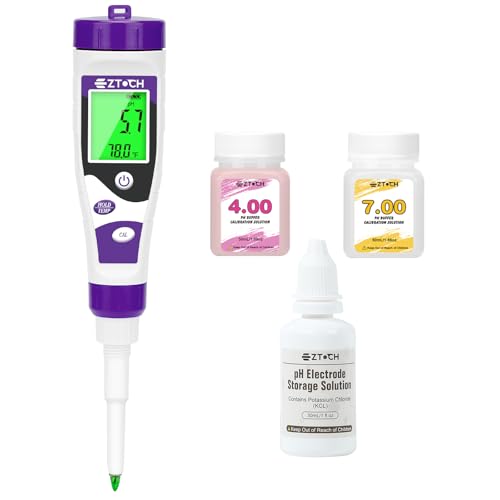
- Bluetooth connection to the YINMIK app
- Stores up to 1,000 measurements
- Includes calibration and probe-protection solutions
Best For: Logged canning and fermentation readings
Best Value General Tester
Apera PH20 Waterproof pH Tester

- ±0.1 pH accuracy for routine measurements
- Waterproof design with automatic calibration
- Up to 2,000 hours of continuous operation
Best For: General liquid testing on a budget
Best for Fermentation Projects

- Spear probe for solids, semi-solids, and liquids
- ATC with separate temperature sensor
- Includes three calibration solutions
Best For: Fermentation, sourdough, and canning
Best Calibration Bundle

- Includes pH 4.00 and 7.00 calibration solutions
- Conical probe suits sourdough and semi-solid foods
- ATC and 0–14 pH range
Best For: Home fermentation and sourdough testing
Best Replaceable-Probe Option
GIDIGI Food Fermentation pH Meter

- Replaceable spear electrode
- Includes three buffer solutions
- Backlit display with temperature measurement
Best For: Frequent, varied fermentation and food testing
Best Lightweight Food Tester

- Lightweight 3.2-ounce design
- 0.00–14.00 range with ±0.01 stated accuracy
- Spear probe for soft-solid foods
Best For: Portable home testing of sauces, dough, meats, and cheeses
Best All-Inclusive Kit
Digital pH Meter for Food Fermentation
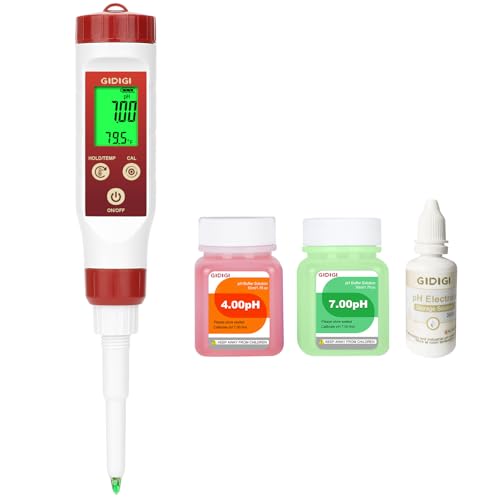
- Includes 4.00 and 7.00 calibration solutions
- Spear tip tests liquids and semi-solid foods
- Useful for fermentation and canning
Best For: Home fermenters and canners wanting calibration supplies included
Best for Stable Readings

- 0.00-14.00 range with stated ±0.1 accuracy
- ATC helps compensate for temperature changes
- Includes six buffer-solution packets
Best For: Fermentation users testing dough, sauces, cured foods, and jams
Best Replacement-Value Option
YINMIK pH Meter with Extra Probe

- Includes an extra replaceable pH probe
- Spear tip works with dough and meat samples
- ATC and stability-focused design support consistent readings
Best For: Frequent users wanting a backup probe for food testing
Top Food-Specific Pick – Apera PH60S Food pH Meter
For shoppers comparing ph meters for food storage and preparation, the Apera PH60S stands out for its replaceable food-grade Swiss spear electrode. It is designed for solid and semi-solid samples while also handling general water solutions, with ±0.01 pH accuracy and automatic temperature compensation.
Best For: Testing cheese, sushi rice, fruit, dairy, sauces, and other solid or semi-solid foods.
Pros:
- Food-grade, replaceable spear sensor is suited to thick and semi-solid samples.
- Offers ±0.01 pH accuracy across a -2.00 to 16.00 pH range.
- Includes automatic calibration, ATC, stable-reading indication, and high/low alarms.
- Complete kit includes calibration solutions, storage solution, batteries, and a carrying case.
Cons:
- The feature-rich kit may be more than casual water-testing users need.
- The supplied notes do not specify a waterproof rating.
The PH60S is a strong choice when food-contact testing and precision matter more than a basic low-cost design. Its replaceable spear electrode and included maintenance supplies make it particularly practical for recurring food measurements.
Best for Data Tracking – Smart Food pH Meter
This smart food pH meter is a useful option among ph meters for food storage if you want to document readings over time. Bluetooth connectivity links it to the YINMIK app, where measurements can be saved and reviewed for canning, fermentation, sourdough, and other food projects.
Best For: Home users tracking pH readings for canning, fermentation, sourdough, brewing, and food preservation.
Pros:
- Bluetooth app support can automatically store up to 1,000 data points.
- Designed for foods and processes including sauces, dairy, pickles, yogurt, kombucha, and sourdough.
- Includes pH 4.00 and 7.00 calibration solutions plus probe protective solution.
- Backlit display and automatic shutoff support convenient use.
Cons:
- The supplied notes do not provide a stated accuracy specification.
- App-based features may be unnecessary for users who only need occasional readings.
- The notes do not identify a food-specific spear probe.
Choose this model when recordkeeping is central to your workflow. Its app connectivity and large data capacity are more compelling for repeat batches than for quick, one-off checks.
Best Value General Tester – Apera PH20 Waterproof pH Tester
APERA INSTRUMENTS AI209 Value Series PH20 Waterproof pH Tester Kit, ±0.1 pH Accuracy
Check Price On AmazonThe Apera PH20 is a straightforward choice for shoppers seeking ph meters for food storage alongside general liquid testing. It provides ±0.1 pH accuracy, automatic calibration and temperature compensation, and a waterproof design in a compact kit.
Best For: Budget-conscious users who mainly test liquid solutions and want a durable, simple tester.
Pros:
- Waterproof construction suits routine handling around liquids.
- Automatic calibration with buffer recognition simplifies setup.
- Automatic stable-value recognition helps improve measurement consistency.
- Includes pH 4 and 7 buffers, a lanyard, batteries, and a rugged carrying case.
Cons:
- ±0.1 pH accuracy is less precise than the PH60S listed in this roundup.
- The supplied notes do not describe a food-specific spear electrode.
- Its listed immersion depth is 1 inch, which may limit how deeply it can sample.
The PH20 makes sense for general-purpose liquid measurements where ease of use and durability are priorities. For thick foods or applications demanding tighter accuracy, a food-specific spear model is likely a better fit.
Best for Fermentation Projects – GIDIGI Food pH Meter
The GIDIGI food pH meter is built around a spear probe for measuring liquids, semi-solids, and thicker foods. For ph meters for food storage, its ATC, color backlit display, and included calibration solutions make it a practical match for fermentation, canning, and kitchen quality checks.
Best For: Home fermentation, sourdough, sauces, dairy, meat, and canning applications.
Pros:
- Spear tip probe penetrates semi-solid foods and emulsions.
- ATC and a separate extended temperature sensor are designed to reduce reading fluctuations.
- Includes 4.00, 7.00, and 10.01 calibration solutions.
- Color backlit display supports reading in low-light conditions.
Cons:
- The supplied notes do not state a numerical accuracy rating.
- The 1.17-pound listed weight is heavier than some compact testers.
- AAA batteries are required, and the notes do not specify battery life.
This model is most appealing for users who regularly work with thick or semi-solid foods rather than clear liquids alone. Its probe design and calibration range support varied food projects, while the display keeps readings easy to view.
Best Calibration Bundle – YINMIK Food pH Tester
For shoppers comparing pH meters for food storage and fermentation, the YINMIK is a practical option when calibration supplies and dough testing matter. It includes pH 4.00 and 7.00 solutions, automatic temperature compensation, and a conical probe designed for semi-solid foods.
Best For: Home fermenters and bakers testing sourdough, sauces, cheese, canned foods, and other semi-solid products.
Pros:
- Includes pH 4.00 and 7.00 calibration solutions.
- Conical, open-junction electrode is designed for bread and dough.
- 0–14 pH range with automatic temperature compensation.
- Protective cap includes a KCL-moistened sponge to help keep the probe hydrated.
Cons:
- The included calibration range is limited to pH 4.00 and 7.00.
- Uses three LR44 batteries.
Its included calibration kit and dough-focused probe make it especially appealing for sourdough and fermentation projects. Regular calibration and proper probe storage will still be important for consistent readings.
Best Replaceable-Probe Option – GIDIGI Food Fermentation pH Meter
If you want pH meters for food storage that can also handle fermentation and semi-solid samples, this GIDIGI model offers a broad feature set. Its spear probe, temperature display, backlit screen, and replaceable electrode support repeated kitchen and craft use.
Best For: Users testing dough, meat, cheese, kombucha, wine, sauces, and other food or formulation projects.
Pros:
- Replaceable spear electrode can extend the meter’s usable life.
- Includes pH 4.00, 7.00, and 10.01 buffer solutions.
- Provides automatic temperature compensation across 32–140°F samples.
- Backlit display, waterproof pen-style body, carrying case, and temperature readings add convenience.
Cons:
- At 1.01 pounds, it is heavier than the other listed meters.
- The product’s broader features may be more than needed for occasional testing.
The replaceable probe and three-point calibration kit make this the most serviceable choice in the group. It is a strong fit for users who expect to test multiple food types or want temperature information alongside pH.
Best Lightweight Food Tester – GISNPA Digital Food pH Meter
Among pH meters for food storage, the GISNPA stands out as a compact tester for soft solids and fermented foods. Its spear probe, 0.01 resolution, backlit LCD, and automatic temperature compensation are suited to checking sauces, meats, doughs, jams, and cheeses.
Best For: Shoppers seeking a lightweight food pH meter for home preparation, fermentation, and canned or hot sauces.
Pros:
- Measures from 0.00–14.00 pH with stated ±0.01 accuracy.
- Spear probe is designed for soft-solid samples.
- Backlit LCD and automatic temperature compensation support convenient readings.
- Protective cap includes a KCL-moistened sponge to help maintain probe moisture.
Cons:
- Calibration is specified at pH 4.00 and 7.00 only.
- The product notes do not mention a replaceable electrode.
At just 3.2 ounces, this is the easiest option to keep on hand for routine checks. Its focused food-testing design is useful for soft samples, though buyers wanting a replaceable probe or three-point calibration may prefer another model.
Best All-Inclusive Kit – Digital pH Meter for Food Fermentation
If you want a ready-to-use option among pH meters for food storage, this GIDIGI model includes calibration and electrode-protection solutions. Its spear-shaped probe is designed for testing both liquids and semi-solid foods, making it practical for fermentation and canning projects.
Best For: Home fermenters and canners who want included calibration supplies and a probe for foods such as cheese, meat, bread, sauces, and canned goods.
Pros:
- Includes 7.00 and 4.00 calibration solutions plus electrode protection solution.
- Spear-tip probe can penetrate semi-solid foods without requiring a slurry.
- Measures across a 0-14 pH range and has a clear, well-lit display.
- Water-resistant design is suited to wet kitchen environments.
Cons:
- The included calibration solutions are not described as covering alkaline measurements; a 10.01 solution may need to be purchased separately.
- Regular calibration and proper probe care are still required for dependable readings.
With its included setup supplies, detachable probe, and food-focused spear tip, this is a convenient choice for buyers who want one meter for fermentation, canning, and general kitchen testing.
Best for Stable Readings – YINMIK Spear Probe pH Tester
This YINMIK tester is a versatile pick among pH meters for food storage, especially if you work with sourdough, sauces, cured foods, or canned recipes. It combines a spear probe with automatic temperature compensation and included calibration powder for repeat testing.
Best For: Fermentation-focused users testing dough, sausages, salami, cheese, sushi rice, jams, sauces, and similar products.
Pros:
- Proprietary spear probe makes direct testing of dough and other samples convenient.
- Offers a 0.00-14.00 pH range with stated ±0.1 accuracy.
- ATC system supports readings across changing temperatures.
- Includes six bags of buffer-solution powder and a KCL-moistened protective cap sponge.
Cons:
- Calibration requires preparing the supplied buffer powder according to the manual.
- The notes emphasize food and cosmetic testing but do not specify a water-resistance rating.
The combination of direct-penetration testing, temperature compensation, and probe-moisture storage makes this a strong choice for users who prioritize stable readings across recurring fermentation projects.
Best Replacement-Value Option – YINMIK pH Meter with Extra Probe
For shoppers comparing pH meters for food storage, this YINMIK model stands out because it includes an extra replaceable calibration probe. That spare can help extend the meter’s useful life, while the spear design supports direct testing of sourdough, meat, sauces, and other food samples.
Best For: Frequent home users who want a backup probe for ongoing fermentation, meat, sauce, and canning-related measurements.
Pros:
- Includes an additional replacement pH probe for added service life and convenience.
- Spear tip is designed for direct testing of sourdough dough and meat samples.
- ATC system and stability-focused circuitry are intended to reduce fluctuating readings.
- Compact design is convenient for on-site testing.
Cons:
- The replacement probe must be calibrated before use.
- The notes do not specify included buffer-solution quantities or a water-resistance rating.
If probe replacement is a priority, the included spare gives this model a practical advantage over basic meters. It is particularly appealing for frequent users who test multiple food types over time.
How We Picked the Best Ph Meters for Food Storage
We evaluated these meters for the tasks home preservers most often perform: checking fermented foods, testing sauces and salsa, monitoring sourdough mixtures, and verifying acidity before canning. Priority went to models with food-appropriate spear probes, readable displays, straightforward calibration, and useful included supplies such as calibration solutions or storage caps.
Accuracy claims were considered alongside practical design. A meter that lists fine resolution is not automatically the best choice if its probe is difficult to clean or it lacks a reliable calibration process. For food safety decisions, always follow tested recipes and current preservation guidance; a pH meter should support, not replace, those instructions.
Quick Comparison
| What to Compare | Best For | Why It Matters |
|---|---|---|
| High stated accuracy | Frequent testing and precise recipes | Provides finer readings when properly calibrated |
| Food-grade spear probe | Meat, cheese, dough, and semi-solid foods | Can reach samples more effectively than a flat general-purpose probe |
| ATC | Warm or changing-temperature samples | Helps compensate for temperature-related measurement variation |
| Included calibration solution | New users | Lets you begin calibration without buying supplies separately |
| Replaceable probe | Long-term use | May extend the meter’s useful life when the electrode wears out |
Key Buying Factors for Ph Meters for Food Storage
Accuracy, Resolution, and Calibration
Look beyond a display that shows two decimal places. Check the stated accuracy, supported calibration points, and whether calibration solutions are included. Calibrate regularly, especially before important batches, and use fresh solutions suited to the meter.
Probe Shape and Food Compatibility
Spear-style probes are particularly useful for thicker foods and semi-solid samples. A food-grade electrode should be easy to rinse and sanitize according to the manufacturer’s instructions. Avoid contaminating the probe by repeatedly inserting it directly into a storage container or finished jar.
Temperature Compensation and Range
Automatic temperature compensation, or ATC, is helpful when samples are not at a consistent temperature. It does not correct every testing problem, so allow samples to stabilize and follow the meter’s instructions. A broad pH range can also be useful when testing different recipes.
Maintenance and Replacement Costs
pH electrodes are consumable components. Confirm that the probe can be stored correctly, that storage solution is available, and whether a replacement electrode can be purchased. Never store a probe dry unless the manufacturer specifically permits it.
Who Should Buy Which Ph Meters for Food Storage?
Choose a premium, high-accuracy model if you test frequently, develop recipes, or want the clearest measurement feedback. These meters are worthwhile when consistent calibration and careful maintenance are part of your routine.
Choose a basic waterproof tester for occasional fermentation or canning checks when you want simple operation and lower upfront cost. Verify its accuracy and budget for calibration supplies.
Choose a spear-probe food meter if your main samples include sourdough, meat, thick sauces, salsa, or other foods that are difficult to test with a standard flat electrode.
Choose a model with replacement probes for regular home preservation, since replacing an electrode can be more economical than replacing the entire meter. Regardless of which model you select, clean the probe between samples, calibrate on schedule, and use validated recipes for safe food storage.