The best portable pH meters make it easier to check acidity accurately without relying on bulky benchtop equipment. The right model depends on whether you test food, water, hydroponic solutions, pools, or laboratory samples.
We compared these 10 portable options for accuracy, probe design, calibration, durability, temperature compensation, and everyday usability so you can choose with confidence.
Best 10 Portable Ph Meters Picks for 2026
Best Lab-Grade Kit
Apera SX711 Portable pH/mV/Temperature Meter

- 0.01 pH measurement with ATC
- Automatic calibration and self-diagnosis
- Stores up to 100 data sets
Best For: Field and lab-style testing with data logging
Best for Food Projects
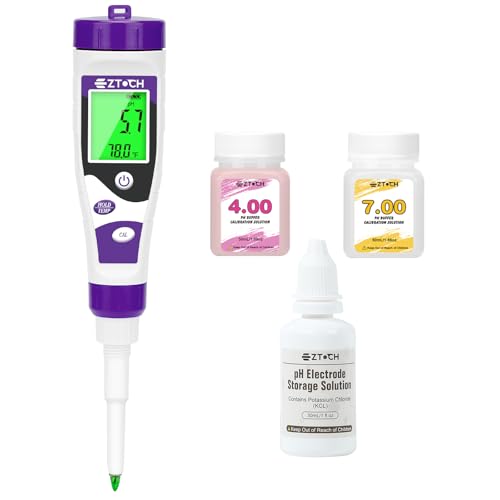
- Built for canning and fermentation
- Bluetooth app tracks measurements
- Stores up to 1,000 readings
Best For: Food safety, sourdough, and fermentation tracking
Best Pocket Tester
Apera PH60 Waterproof pH Tester

- Compact 10-ounce design
- Replaceable glass pH probe
- 0.01 pH accuracy with ATC
Best For: Portable water testing and long-term probe use
Best Simple Value
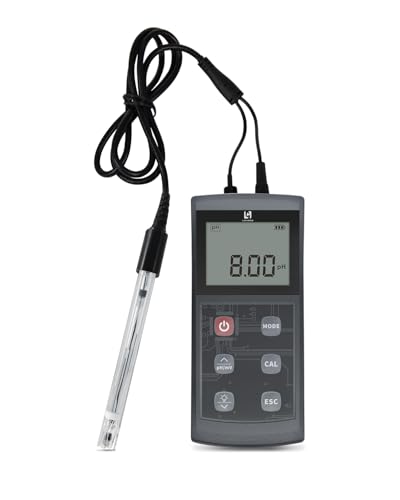
- 0–14 pH measuring range
- ATC displays compensated readings
- One-click calibration and carrying case
Best For: Straightforward pool, aquarium, and hydroponics testing
Versatile Field Tester

- IP67 waterproof construction
- Flat-surface electrode
- LCD temperature display
Best For: Outdoor and flat-surface pH testing
Budget Cable-Probe Pick
Milwaukee MW100 Economy pH Meter
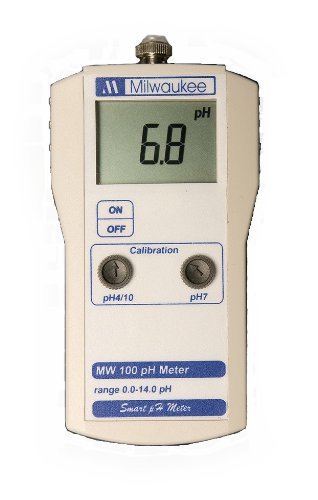
- Low-cost, no-frills design
- 1-meter double-junction electrode cable
- Large LED display
Best For: Budget-conscious routine testing
Easy Auto-Calibration Choice
Apera PH20 Waterproof pH Tester

- Automatic buffer-recognition calibration
- Automatic temperature compensation
- Case, buffers, and lanyard included
Best For: Convenient routine pH testing
Best Food Spear Meter

- Direct spear testing for foods and semi-solids
- Three-point auto-calibration with six buffer packets
- ATC and KCL-moistened probe cap
Best For: Home fermentation, canning, and cosmetic testing
Best General-Purpose Kit

- 0.01 pH accuracy across a 0-14.00 range
- Simultaneous pH and temperature display
- Buffers and rugged carrying case included
Best For: General-purpose and outdoor pH testing
Best Precision Food Meter

- Food-grade replaceable Swiss spear electrode
- ±0.01 accuracy with a -2.00-16.00 range
- Alarms, ATC, and color backlit display
Best For: Precise food and semi-solid sample testing
Best Lab-Grade Kit – Apera SX711 Portable pH/mV/Temperature Meter
For shoppers comparing portable pH meters for fieldwork or laboratory-style testing, the Apera SX711 emphasizes accuracy, automation, and organized recordkeeping. It measures to 0.01 pH, includes automatic temperature compensation, and stores up to 100 readings.
Best For: Users who need a rugged, lab-grade portable kit with data logging and guided calibration.
Pros:
- Measures at 0.01 pH accuracy with automatic temperature compensation.
- Includes a lead-free ATC pH electrode for field testing.
- Offers 1- to 3-point automatic calibration and self-diagnosis.
- Stores and recalls up to 100 data sets.
Cons:
- Heavier and less pocket-friendly than a basic tester at 1.85 pounds with its kit dimensions.
- Its broader functions may be more than casual users need.
The SX711 is a strong choice when dependable measurements and documentation matter more than the smallest possible form factor. Its carrying case and automated features also suit mobile testing.
Best for Food Projects – YINMIK Smart Food pH Meter
This food-focused option stands out among portable pH meters for canning, fermentation, and baking. Bluetooth connectivity, app-based history, and storage for up to 1,000 readings make it useful when measurements need to be tracked over time.
Best For: Home cooks, bakers, and fermenters checking foods such as sauces, sourdough, yogurt, kombucha, and wine.
Pros:
- Designed for food pH testing, including canning and fermentation.
- Connects to the YINMIK app through Bluetooth for historical records.
- Automatically stores up to 1,000 data points.
- Includes pH 7.00 and pH 4.00 calibration solutions plus probe storage solution.
Cons:
- Its food-specific focus may be less suitable for users seeking a general-purpose laboratory meter.
- App connectivity adds a setup requirement compared with a simple standalone tester.
Choose this model if recording food measurements is central to your workflow. The backlit display, automatic shutoff, and included solutions help make routine testing more convenient.
Best Pocket Tester – Apera PH60 Waterproof pH Tester
The Apera PH60 is a compact choice among portable pH meters, combining a replaceable glass probe with 0.01 pH accuracy. Its waterproof pocket design, automatic temperature compensation, and stable-reading indicator make it practical for repeated water testing.
Best For: Pool, spa, hydroponics, beverage, and environmental water testing where portability and probe replacement are valuable.
Pros:
- Compact 10-ounce tester with a replaceable glass pH probe.
- Provides 0.01 pH accuracy across a -2.00 to 16.00 pH range.
- Uses automatic temperature compensation from 32 to 122°F.
- Includes calibration solutions, storage solution, batteries, and a carrying case.
Cons:
- The 8-minute automatic shutoff may interrupt extended measurements.
- Its operating temperature range is limited to 32–122°F.
The PH60 is especially appealing for users who want a small tester without treating the probe as disposable. The color backlit LCD and smiley stability icon simplify routine readings.
Best Simple Value – LOHAND Portable pH Meter
For straightforward testing, the LOHAND is one of the simpler portable pH meters to operate. It combines a 0–14 measuring range, claimed ±0.01 pH accuracy, automatic temperature compensation, and one-click calibration in a compact carrying case.
Best For: Pool, aquarium, hydroponics, drinking-water, and general on-site water checks.
Pros:
- Offers a 0–14 pH range with claimed ±0.01 pH accuracy.
- Automatically compensates for temperature while displaying pH and temperature values.
- Includes calibration buffer powder and a carrying case.
- Large backlit display supports use in lower-light conditions.
Cons:
- The notes do not specify a data-logging function.
- Temperature reading accuracy is listed as ±0.5°C.
- Its included electrode is not described as replaceable.
The LOHAND makes sense for buyers who prioritize an uncomplicated workflow and broad water-testing applications. It is less compelling for users who need advanced records or a replaceable probe.
Versatile Field Tester – Extech PH100 ExStik II
The Extech PH100 is a waterproof option for shoppers comparing portable ph meters for field, outdoor, or flat-surface testing. Its LCD shows temperature alongside pH readings, while the flat-surface electrode and protective cap add flexibility for reusable testing.
Best For: Outdoor users and applications involving flat surfaces or variable temperatures.
Pros:
- Waterproof IP67 design for outdoor use.
- Flat-surface electrode supports more flexible testing.
- LCD temperature display and adjustable stainless steel probe.
- Includes a protective sensor cap and four lithium metal batteries.
Cons:
- The meter is powered by batteries rather than a rechargeable system.
- The supplied warranty is limited to one year for the meter.
Choose the PH100 if waterproof construction, temperature visibility, and a flat-surface electrode matter more than a minimalist tester format. Rinsing the electrode with distilled water after use is part of its care requirements.
Budget Cable-Probe Pick – Milwaukee MW100 Economy pH Meter
The Milwaukee MW100 is a straightforward choice among portable ph meters for buyers who want a low-cost, manual-calibration instrument. It combines a double-junction electrode with a 1-meter cable, a larger LED display, and a lighter case.
Best For: Budget-focused users who prefer a simple meter with a cabled electrode.
Pros:
- Low-cost design with no-frills operation.
- Double-junction electrode with a 1-meter cable.
- Larger, easier-to-read LED display.
- Manual calibration and a stated 0.1 pH resolution.
Cons:
- Calibration is manual rather than automatic.
- Listed accuracy is ±0.2 pH.
- The supplied notes do not identify waterproof construction or included calibration buffers.
The MW100 makes sense when affordability and a cable-mounted electrode are priorities. Its simpler manual-calibration approach may suit routine users, while the stated 0.0–14.0 pH range covers standard pH measurement needs.
Easy Auto-Calibration Choice – Apera PH20 Waterproof pH Tester
APERA INSTRUMENTS AI209 Value Series PH20 Waterproof pH Tester Kit, ±0.1 pH Accuracy
Check Price On AmazonThe Apera PH20 is a convenient option among portable ph meters, offering automatic buffer recognition, automatic temperature compensation, and stable-value recognition. Its waterproof tester comes in a rugged carrying case with pH 4 and pH 7 buffers.
Best For: Users who want guided calibration, consistent readings, and a compact kit for routine testing.
Pros:
- Automatic calibration with buffer recognition.
- Automatic temperature compensation from 32 to 122°F.
- Waterproof design with a rugged carrying case.
- Up to 2,000 hours of continuous operation on included AAA batteries.
Cons:
- The stated immersion depth is 1 inch.
- Temperature compensation is specified for 32–122°F.
- The electrode warranty is six months, shorter than the instrument’s two-year warranty.
For buyers prioritizing convenience, the PH20’s auto-calibration and stable-value recognition reduce guesswork during measurements. The included buffers, lanyard, case, and long battery life make it particularly practical as a ready-to-use tester kit.
Best Food Spear Meter – YINMIK Food pH Meter
For cooks and fermenters comparing portable pH meters, the YINMIK Food pH Meter is designed for direct testing of foods and semi-solid mixtures. Its spear probe, 0.00-14.00 range, and stated ±0.1 accuracy make it practical for sourdough, fermented foods, canning, cosmetics, and lotions.
Best For: Home food fermentation, sourdough, canning, sauces, and cosmetic formulations.
Pros:
- Spear probe enables direct testing without making a slurry.
- Offers three-point automatic calibration and includes six buffer-solution packets.
- ATC and a KCL-moistened protective cap support consistent readings and probe care.
Cons:
- Its stated ±0.1 accuracy is less precise than the Apera meters in this roundup.
- The notes do not specify a waterproof rating or replaceable probe.
The YINMIK is a focused choice when direct food sampling matters more than laboratory-level precision. Its included calibration supplies and probe-storage design add convenience for regular home use.
Best General-Purpose Kit – Apera PH400 Portable pH Meter
Among portable pH meters for general water and temperature checks, the Apera PH400 stands out as a complete, field-friendly kit. It measures pH and temperature simultaneously, provides 0.01 pH accuracy across a 0-14.00 range, and includes ready-to-use buffers in a rugged carrying case.
Best For: General-purpose pH testing where portability, temperature readings, and a complete kit are priorities.
Pros:
- Measures pH and temperature with automatic temperature compensation from 0 to 100°C.
- Supports one- to three-point automatic calibration with self-diagnosis.
- Waterproof design, two-second response time, and a rugged carrying case suit mobile use.
Cons:
- Its standard electrode is not specifically described as a food-grade spear probe.
- Uses three AA batteries, which may add bulk compared with smaller battery formats.
The PH400 is a balanced option for users who want a portable meter with clear simultaneous readings and practical calibration support. Its included buffers, case, and two-year instrument warranty strengthen its value as an all-around kit.
Best Precision Food Meter – Apera PH60S Food pH Meter
For shoppers seeking portable pH meters made specifically for food and semi-solid samples, the Apera PH60S combines a food-grade Swiss spear electrode with ±0.01 pH accuracy. Its wide -2.00-16.00 range, automatic calibration, and temperature compensation support detailed testing of foods, sauces, dairy, and skincare products.
Best For: Precision testing of cheese, sushi rice, dairy, sauces, skincare products, and other semi-solid samples.
Pros:
- Food-grade, replaceable Swiss spear sensor is designed for solid and semi-solid measurements.
- Provides ±0.01 pH accuracy with a wide -2.00-16.00 measuring range.
- Includes automatic calibration, ATC, high/low alarms, and a three-color backlit display.
Cons:
- The specialized food electrode may be more than needed for basic water testing.
- The notes do not specify the instrument’s response time or waterproof rating.
The PH60S is the strongest fit here when measurement precision and direct food sampling are the main priorities. Its replaceable spear sensor and complete storage-and-calibration kit also make it a practical long-term choice.
How We Picked the Best Portable Ph Meters
We focused on the features that have the greatest effect on real-world testing: stated accuracy, measurement range, calibration method, automatic temperature compensation, electrode design, waterproofing, display readability, and replacement-probe availability. We also considered the intended application, since a spear-tip food probe is better for cheese or meat while a flat-surface electrode suits samples that are difficult to immerse.
Models with data logging, broader ranges, multiple calibration points, and included storage or calibration solutions generally offer more flexibility. Simpler meters can still be useful when affordability and basic spot checks matter most.
Quick Comparison
- Best for advanced field work: Look for a handheld meter with data logging, temperature measurement, and a durable replaceable electrode.
- Best for food testing: Choose a food-specific spear probe with a hygienic, easy-to-clean design.
- Best for occasional checks: A pocket tester with automatic calibration is compact and simple to operate.
- Best for budget testing: Basic manual-calibration models can work well when extreme precision is not required.
Key Buying Factors for Portable Ph Meters
Accuracy and Resolution
Accuracy describes how close the reading should be to the actual value, while resolution describes the smallest displayed increment. For fermentation, food safety, hydroponics, and laboratory-style work, prioritize approximately ±0.01 pH accuracy. General aquarium, pool, or educational checks may not need that level of precision.
Probe Type and Sample
The electrode is often more important than the meter body. Spear probes penetrate semi-solid foods, flat electrodes contact surfaces, and standard bulb probes work well in liquids. Confirm that the probe is suitable for your sample and can be replaced when its performance declines.
Calibration and Temperature Compensation
Automatic calibration reduces setup time, while three-point calibration can improve performance across a wider range. Automatic temperature compensation helps account for temperature-related measurement changes, but it does not replace proper calibration. Use fresh buffer solutions and follow the manufacturer’s storage instructions.
Durability and Usability
Waterproof construction, a clear LCD, stable readings, and simple controls matter when testing outdoors or around wet samples. A meter with a protective case, batteries, calibration buffers, and a storage solution may deliver better value than a cheaper unit requiring separate accessories.
Who Should Buy Which Portable Ph Meters?
Home fermenters and cooks should choose a food pH meter with a spear-style food-grade probe and straightforward calibration. Hydroponic growers, aquarium owners, and pool users should prioritize waterproofing, ATC, readable displays, and a probe designed for liquid samples. Students and occasional users can save money with a basic pocket tester, provided its accuracy meets the task. Professionals and serious hobbyists should consider data logging, multiple calibration points, temperature measurement, and replaceable electrodes.
Whichever model you select, calibrate it regularly, rinse the probe between samples, and keep the electrode properly hydrated. Those maintenance steps often have as much impact on dependable readings as the meter’s advertised specifications.